Category: Bonnethead shark

  • Where the Water Moves Before the Storm: Sharks, Estuaries, and the Illusion of Shelter in Onslow County

    Where the Water Moves Before the Storm: Sharks, Estuaries, and the Illusion of Shelter in Onslow County

    Where the Water Turns Before the Storm

    There’s a version of this story that shows up often—sometimes in films, sometimes in passing explanations—that when a large storm approaches, sharks move into estuaries to escape the violence of the open ocean.

    It makes intuitive sense.

    The ocean becomes something unmanageable—waves building, wind stacking energy across the surface. And just inland, the estuary appears contained. Narrower. Protected. A place where the water feels like it should be quieter.

    But if you stand at the edge of a tidal creek before a storm, what you see first isn’t protection.

    It’s change.

    The surface tightens. Wind presses across it—not yet breaking it into waves, but organizing it into long, directional movement. The irregular texture of a normal day disappears into something aligned. Purposeful.

    Water levels begin to rise before rainfall arrives. The boundary between water and marsh softens. Spartina no longer holds a sharp edge. The ground beneath your feet gives way more easily, saturated beyond its usual resistance.

    Water moving through a beach access during storm conditions, as rising levels and wind-driven flow begin to overtake the boundary between ocean and land. | Image credit: Jaime Armstrong
    Water moving through a beach access during storm conditions along the North Carolina coast, as rising levels and wind-driven flow begin to overtake the boundary between ocean and land. | Image credit: J. Armstrong

    This is the first shift.

    Not force, but redistribution.

    And everything in the system is already responding.

    What Lives Here When the System Starts Moving

    The sharks that use estuaries are not here because these places offer protection from storms.

    They are here because of what you can’t always see at first glance.

    A juvenile blacktip shark (Carcharhinus limbatus) doesn’t move through open water the way people imagine sharks do. It stays in the shallows—along the edges where the water darkens slightly, where small schools of fish break apart and reform, where the bottom shifts from sand to scattered shell. These areas are harder for larger predators to move through quickly. Not impossible—but slower, more complicated.

    Blacktip sharks move through estuaries in Onslow County, North Carolina, using shallow coastal water where movement, depth, and structure shape where they travel. | Image credit: kseym001. iNaturalist
    Blacktip sharks move through estuaries in Onslow County, North Carolina, using shallow water where depth, structure and movement shape where they travel. | Image credit: kseym001, iNaturalist

    That difference matters when you’re small.

    What scientists describe as “structure” is this: broken bottom, uneven depth, patches of grass, oyster shell, shadow, current seams. From the shoreline, it just looks like variation. To a young shark, it’s the difference between being exposed and being able to disappear for a second.

    That’s why these areas are used as nurseries—not because they are safe, but because they are less predictable in a way that favors smaller animals (Heupel et al., 2007).

    From a distance, it looks like open water. Up close, it’s a series of edges—grass, mud, and channels—where movement slows, shifts, and concentrates. | Image credit: A. Mitchell
    From a distance, it looks like open water. Up close, it’s a series of edges—grass, mud, and channels—where movement slows, shifts, and concentrates. | Image credit: A. Mitchell

    An Atlantic sharpnose shark (Rhizoprionodon terraenovae) uses that same space differently. You wouldn’t see it cruising the center of a channel. You’d find it where things intersect—along the drop where shallow water slips into deeper flow, near the edges of grass beds, or where current carries small prey out of the marsh and into open water.

    It’s not avoiding predators in the same way a juvenile blacktip is.

    It’s positioning itself where food moves, while still staying just out of the most exposed water (Ulrich et al., 2007).

    Even the bonnethead shark (Sphyrna tiburo)—often described as a “benthic feeder”—is easier to understand if you ignore the word and watch the behavior. It spends time over the bottom, moving slowly across seagrass beds and sandy patches, nosing through the substrate for crabs and small invertebrates.

    You’re most likely to notice it not by seeing the whole animal, but by the movement it leaves behind.

    A subtle disturbance. A shift in the grass. A shape that doesn’t hold still long enough to resolve.

    It’s also one of the few sharks you’re likely to find deeper into the estuary, where the water begins to lose its salt edge. Bonnetheads can tolerate lower salinity than many coastal sharks, which allows them to follow food farther into these mixed waters rather than staying closer to the inlet (Bethea et al., 2007).

    Not because it’s calmer there.

    Because the feeding opportunities extend into that space.

    These sharks are here because the estuary offers layers—places to feed, places to pass through, places where movement is broken up just enough to matter (Knip et al., 2010; Bangley et al., 2018).

    But all of those layers depend on something staying consistent—edges holding their shape, water moving in predictable directions, and clarity allowing animals to track one another.

    And those are the first things a storm begins to take apart.

    The Problem With “Shelter”

    When a hurricane approaches, an estuary does not become a refuge.

    It becomes harder to read.

    If you stand on the ocean side of Topsail Island, you’ll see the change first as energy—waves building, spacing tightening, the surface lifting and falling with more force than it did the day before. But if you cross to the other side of the island—along the Intracoastal Waterway or into Stump Sound—it doesn’t look like that.

    There, it rises.

    Steadily. Quietly. Without the same visible force.

    And that difference is exactly why the idea of “shelter” feels convincing.

    On the ocean side, the storm is easier to recognize. Energy builds into waves, making the movement visible in a way it isn’t on the other side of the island. | Image credit: WITN-TVFrom this side, it doesn’t look like a storm in the same way. The water rises and shifts along the shoreline, even as the system is already building offshore. | Image credit: A. Mitchell
    On the ocean side, the storm is easier to recognize. Energy builds into waves, making the movement visible in a way it isn’t on the other side of the island. | Image credit: WITN-TV. On the sound side, it doesn’t look like a storm in the same way. The water rises and shifts along the shoreline, even as the system is already building offshore. | Image credit: A. Mitchell

    Under normal conditions, these waters are connected—but they don’t move together. Ocean tides enter through New River Inlet and New Topsail Inlet, then work their way through the back-barrier system—the marshes, the Intracoastal, the sounds. That movement slows as it spreads out, which is why tides behind the island can lag the ocean by hours (Friedrichs & Aubrey, 1988).

    From the shoreline, it feels like separation.

    Like the ocean is doing one thing, and the water behind the island is doing another.

    As a storm approaches, that timing begins to compress. Wind pushes water through the inlets faster than the system can distribute it, while water already inside has less opportunity to drain back out.

    What was once staggered in time begins to overlap.

    Storm surge doesn’t just raise water levels—it disrupts the normal exchange between ocean and estuary, forcing water inland and holding it there longer than a typical tidal cycle (National Oceanic and Atmospheric Administration, 2023).

    That’s why the sound side doesn’t look violent at first.

    It’s not because it’s protected.

    It’s because it’s filling.

    You can watch it happen without measuring anything. The usual drop after high tide doesn’t come when you expect it. Water continues to rise or holds in place. The difference between ocean and sound begins to disappear—not because the ocean calms down, but because the back-barrier system begins to behave more like a single body of water under pressure.

    Edges blur as marsh grass floods from below. The bottom disappears as suspended sediment increases, and runoff and resuspension mix material into the water column faster than it can settle (Mallin et al., 1999).

    The system is no longer cycling. It’s shifting faster than it can recover, with the patterns that usually hold it together breaking down in real time (Resh et al., 1988).

    It’s accumulating.

    And once that happens, the things that made this environment usable begin to disappear with it.

    Where the Larger Sharks Actually Go

    If an estuary loses the very structure that makes it usable during a storm, then the question shifts.

    Sharks are not staying in place and enduring that change.

    They are moving with it.

    But not in the way we tend to imagine.

    They don’t need to move into something more protected, because the ocean itself isn’t uniform. What looks chaotic at the surface is layered, and that layering holds even as a storm passes overhead. Wave energy dissipates quickly with depth, which means that the violence you see from the beach does not extend indefinitely downward.

    A few meters below the surface, movement changes.

    Deeper still, it stabilizes.

    From above, the structure becomes visible—shallow bars, deeper channels, and the connections between ocean and estuary that shape how water moves through the system. | Image credit: Town of Topsail Beach
    From above, the structure becomes visible—shallow bars, deeper channels, and the connections between ocean and estuary that shape how water moves through the system. | Image credit: Town of Topsail Beach

    For larger coastal sharks like the bull shark (Carcharhinus leucas), that difference matters more than distance from shore. They are not choosing between rough ocean and calm estuary.

    They are moving within a three-dimensional space.

    And they sense the change before it arrives. It’s the same shift you feel before a storm—the air getting heavier, the pressure dropping, something changing before you can point to it. In the water, that change travels differently, and sharks begin responding to it well before anything looks different at the surface (Papastamatiou et al., 2015).

    From the shoreline, it can feel like the storm suddenly arrives. But for animals in the water, it doesn’t. The change builds, and they are already moving within it—shifting position, adjusting depth, following the parts of the system that are still holding together as everything else begins to change long before it’s visible from the shoreline (Heupel et al., 2003).

    Where the Shallow-Water Sharks Go

    The sharks that spend their time in these shallow systems don’t have the same options as those offshore, because there is no deeper layer to move into when conditions begin to change. Instead, their response is tied to what parts of the system still hold together. As water levels rise and flow patterns begin to shift, the backs of creeks and the shallowest flats are often the first places to lose definition. These are areas where water can become cut off or overly mixed, where direction is no longer consistent, and where the features that usually structure movement begin to disappear.

    What follows is not a movement further inland, but a gradual pulling back toward places that remain more stable. That often means deeper channels, intersections where water is still moving in a defined direction, or areas closer to inlets where exchange is still occurring. Rather than leaving the estuary entirely, many individuals consolidate within the portions of it that continue to function in a recognizable way. This kind of movement—shifting position as conditions change rather than holding in place—has been observed in coastal sharks as these systems begin to break down (Heupel et al., 2003).

    At the same time, the system itself is expanding beyond its usual boundaries. Storm surge and flooding connect environments that are typically separate, allowing water to move across marsh, into low-lying land, and through built spaces like roads, canals, and retention areas. When that happens, animals already present in the water column move with it, not because they are selecting those environments, but because the physical structure that normally contains them is temporarily absent. Observations of sharks and other marine species in flooded coastal areas are most often associated with these short-lived hydrological connections rather than deliberate movement into unfamiliar habitats (Snelson et al., 1984).

    As water spreads across the landscape, the system expands with it—connecting marsh, channels, and developed areas into a single, continuous space. | Image credit: C. Mitchell, AccuWeather
    As water spreads across the landscape, the system expands with it—connecting marsh, channels, and developed areas into a single, continuous space. | Image credit: C. Mitchell, AccuWeather

    As water recedes, those connections close just as quickly as they formed. The system contracts, and the pathways that briefly allowed movement into those spaces disappear. Animals either move back with the retreating water or are left in conditions that no longer support them. What appears from the outside as unusual behavior is, in most cases, the result of a system that has temporarily lost its boundaries and then reestablished them.

    Where the Assumption Breaks

    The idea that sharks move into estuaries for shelter during storms rests on a simple assumption: that calmer-looking water offers protection. From the shoreline, that assumption is easy to make. The ocean side of Topsail Island shows the storm first—waves building, energy increasing—while the waters behind the island, along the Intracoastal Waterway and within Stump Sound, often appear quieter in the early stages. But that difference is not a separation of systems. It is a difference in timing.

    Under normal conditions, tidal exchange through New River Inlet and New Topsail Inlet distributes ocean energy into the back-barrier environment with a delay, shaped by channel geometry and friction. That lag creates the appearance that one side of the island is responding differently than the other, when in reality both are part of the same connected system (Friedrichs & Aubrey, 1988). As storm conditions intensify, that delay compresses. Water is pushed through the inlets more rapidly than the system can accommodate, and the distinction between ocean and estuary begins to collapse into a single, continuous response driven by surge, wind, and pressure (NOAA, 2023).

    Sharks are responding to that shift the entire time, not by seeking out calm water, but by staying within parts of the system that hold their structure for as long as they can. Offshore, that structure exists vertically, allowing movement into deeper, more stable layers. Within estuaries, it exists horizontally and can disappear quickly as gradients break down. The concept of “shelter” depends on the persistence of those gradients—clear edges, directional flow, and predictable relationships between different parts of the system—but during a storm, those features are among the first to be altered.

    What remains after the storm is not evidence of animals moving into safer spaces, but the memory of contrast between what those spaces usually are and what they became under changing conditions. That contrast is compelling enough to shape interpretation, even when the underlying processes point to a different explanation.

    After the water recedes, the boundary remains shifted—marking where movement passed through, rather than where it began. | Image credit: J. Lester
    After the water recedes, the boundary remains shifted—marking where movement passed through, rather than where it began. | Image credit: J. Lester

    References

    Bangley, C. W., Paramore, L., Shiffman, D. S., & Rulifson, R. A. (2018). Increased abundance and nursery habitat use of the bull shark (Carcharhinus leucas) in response to a changing environment in a warm-temperate Estuary. Scientific Reports, 8(1). https://doi.org/10.1038/s41598-018-24510-z

    Bethea, D., Buckel, J., & Carlson, J. (2004). Foraging ecology of the early life stages of four sympatric shark species. Marine Ecology Progress Series, 268, 245-264. https://doi.org/10.3354/meps268245

    Ebert, D. A., Dando, M., & Fowler, S. (2021). Sharks of the world: A complete guide. Princeton University Press.

    Friedrichs, C. T., & Aubrey, D. G. (1988). Non-linear tidal distortion in shallow well-mixed estuaries: A synthesis. Estuarine, Coastal and Shelf Science, 27(5), 521-545. https://doi.org/10.1016/0272-7714(88)90082-0

    Heupel, M., Carlson, J., & Simpfendorfer, C. (2007). Shark nursery areas: Concepts, definition, characterization and assumptions. Marine Ecology Progress Series, 337, 287-297. https://doi.org/10.3354/meps337287

    Heupel, M. R., Simpfendorfer, C. A., & Hueter, R. E. (2003). Running before the storm: Blacktip sharks respond to falling barometric pressure associated with tropical storm Gabrielle. Journal of Fish Biology, 63(5), 1357-1363. https://doi.org/10.1046/j.1095-8649.2003.00250.x

    Knip, D., Heupel, M., & Simpfendorfer, C. (2010). Sharks in nearshore environments: Models, importance, and consequences. Marine Ecology Progress Series, 402, 1-11. https://doi.org/10.3354/meps08498

    Mallin, M. A., Posey, M. H., Shank, G. C., McIver, M. R., Ensign, S. H., & Alphin, T. D. (1999). Hurricane effects on water quality and benthos in the cape fear watershed: Natural and anthropogenic impacts. Ecological Applications, 9(1), 350. https://doi.org/10.2307/2641190

    NOAA. (2024, June 16). What is storm surge? National Ocean Service website. https://oceanservice.noaa.gov/facts/stormsurge-stormtide.html

    Papastamatiou, Y. P., Watanabe, Y. Y., Bradley, D., Dee, L. E., Weng, K., Lowe, C. G., & Caselle, J. E. (2015). Drivers of daily routines in an ectothermic marine predator: Hunt warm, rest warmer? PLOS ONE, 10(6), e0127807. https://doi.org/10.1371/journal.pone.0127807

    Pine, W. E., Pollock, K. H., Hightower, J. E., Kwak, T. J., & Rice, J. A. (2003). A review of tagging methods for estimating fish population size and components of mortality. Fisheries, 28(10), 10-23. https://doi.org/10.1577/1548-8446(2003)28[10:arotmf]2.0.co;2

    Resh, V. H., Brown, A. V., Covich, A. P., Gurtz, M. E., Li, H. W., Minshall, G. W., Reice, S. R., Sheldon, A. L., Wallace, J. B., & Wissmar, R. C. (1988). The Role of Disturbance in Stream Ecology. Journal of the North American Benthological Society; Freshwater Science, 7(4). https://doi.org/10.2307/1467300

    Ulrich, G. F., Jones, C. M., Driggers III, W. B., Drymon, J. M., Oakley, D., & Riley, C. (2007). Habitat Utilization, Relative Abundance, and Seasonality of Sharks in the Estuarine and Nearshore Waters of South Carolina. American Fisheries Society Symposium, 50, 125-139. https://lowcountryinstitute.org/images/research/dox/Ulrichetal2007.pdf

    Valiela, I., & Cole, M. L. (2002). Comparative evidence that salt marshes and mangroves may protect seagrass meadows from land-derived nitrogen loads. Ecosystems, 5(1), 92-102. https://doi.org/10.1007/s10021-001-0058-4
  • How Sharks Carry the Future: Life Histories Written in Tide and Time

    How Sharks Carry the Future: Life Histories Written in Tide and Time

    The Season Beneath the Surface

    Along the North Carolina coast, spring does not arrive all at once. It filters in through temperature gradients, longer light, and currents that shift almost imperceptibly until the water itself feels different. Animals respond before people do. Some move north. Some move inshore. Others arrive carrying a process already underway — reproduction unfolding quietly inside bodies designed to measure time in seasons rather than days.

    This post explores shark reproduction in North Carolina, not as spectacle, but as a system of time, geography, and survival.

    Shark reproduction is rarely visible. There are no surface displays, no spectacle to announce the moment. Instead, lineage advances through anatomical engineering and geographic choreography. The coastline becomes a corridor through which inheritance travels. What appears to be migration is often the hidden architecture of the next generation. Across shark species, reproductive strategies are tightly bound to life history pacing — longevity, growth rate, and investment per offspring — forming evolutionary solutions calibrated to risk and time (Cortés, 2000; Musick & Ellis, 2005).

    Sharks do not share a single blueprint for reproduction. Some lay eggs encased in protective capsules that anchor to the seafloor. Others carry embryos internally and give birth to fully formed young. Between those extremes lies a spectrum of strategies — eggs retained inside the mother, embryos nourished in different ways, gestation stretched across seasons rather than weeks. The diversity is not incidental. It is the result of a lineage experimenting with how best to move the future through water: protect it externally, carry it internally, or invest in a few individuals built to survive from the first moment they enter open ocean (Carrier et al., 2012; Cortés, 2000).

    The Long Circuit of the Dogfish

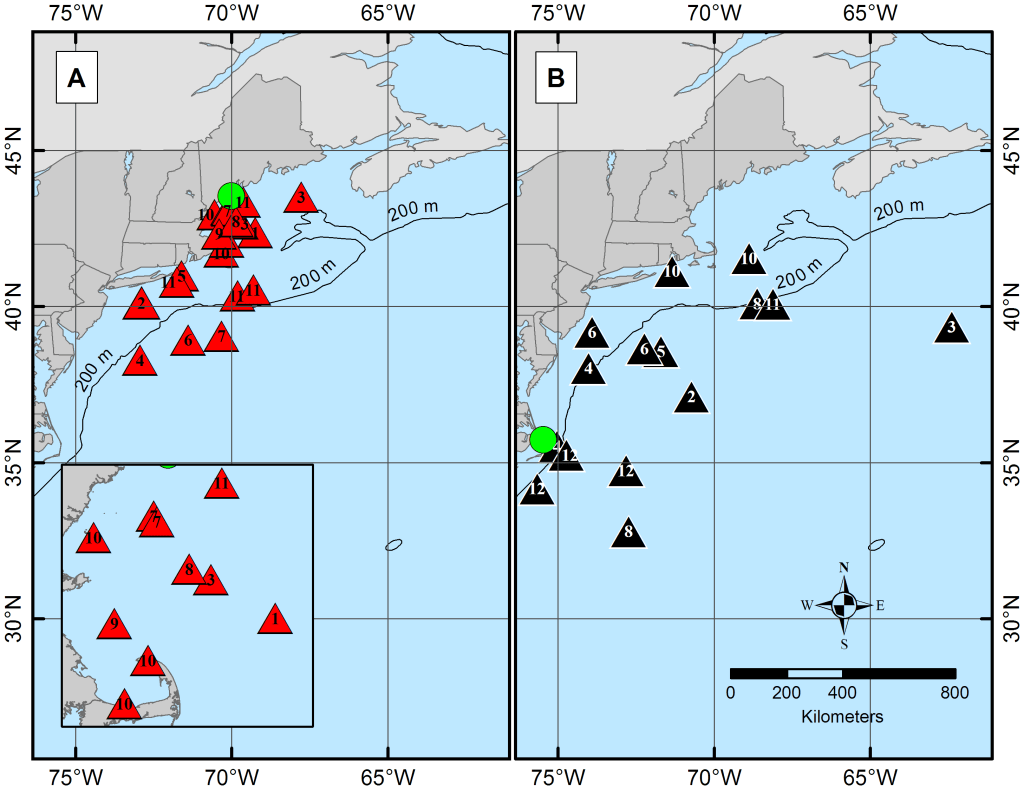
    Each winter, Atlantic spiny dogfish (Squalus acanthias) thin from our nearshore waters. Their absence is not disappearance but redistribution. Along the Northwest Atlantic coast the species occupies a broad range from Canada to the Carolinas, but this range is not a single undifferentiated mass. Seasonal movements reveal two general latitudinal tendencies — a northern contingent centered toward New England and Canadian waters, and a southern contingent extending toward North Carolina. In spring, portions of both groups converge in mid-Atlantic shelf waters, where overlapping migrations create temporary reproductive mixing before adults disperse again toward their habitual ranges (Carlson et al., 2014).

    This convergence is not random drift. It is structured migration. Satellite tracking shows that spiny dogfish follow repeatable north–south circuits tied to temperature and habitat gradients rather than wandering opportunistically (Carlson et al., 2014). During these seasonal overlaps, sex and maturity stage influence where individuals position themselves within the shared corridor. Females and mature animals use space differently from juveniles, reflecting reproductive status and energetic demand (DeVries et al., 2025). The result is a coastline briefly braided by lineage: individuals from distant home waters exchanging genetic material before returning south or north to complete gestation.

    migration patterns atlantic spiny dogfish

    Atlantic spiny dogfish do not disappear when they leave our waters; they redistribute. Each triangle marks where a tagged shark surfaced months after deployment, tracing seasonal circuits that braid northern and southern populations together before they separate again. The shaded regions show the broad envelope of movement and the smaller core areas used most consistently. Migration here is not wandering — it is structure. Reproduction moves along these same corridors, written into geography long before it is visible at the surface. | Graphic credit: Carlson et al., 2014

    After fertilization, females carry embryos for nearly two years — among the longest gestation periods recorded in sharks (Hamlett, 2005). A single pregnancy produces relatively small litters, commonly averaging six to twelve pups, each representing a substantial maternal investment spread across seasons rather than weeks (Hamlett, 2005; Cortés, 2000). Birth does not occur in the same waters where mating took place. Instead, adults retreat toward their familiar temperature zones and feeding grounds, and the next generation enters the ocean already geographically sorted. Migration and reproduction form a loop rather than a point. Each cycle redistributes genes across the coast while preserving the regional rhythms that structure the population.

    This extraordinary investment in time creates vulnerability. Sharks with slow growth, delayed maturity, and extended gestation replace themselves gradually, making populations sensitive to elevated fishing pressure (Cortés, 2000; Musick & Ellis, 2005). Removing a late-term female represents not a single loss, but the collapse of years of biological investment in a species evolved for endurance rather than speed.

    Reading the Body

    Female sharks often carry scars along their flanks and fins — pale arcs and punctures that appear deliberate enough to invite explanation. These marks are frequently attributed to mating, and sometimes that interpretation is correct. During copulation, males grip females with their teeth to maintain position in moving water, producing patterned abrasions consistent with tooth spacing (Pratt & Carrier, 2005). But the body of a coastal predator is an archive of many encounters, not all of them reproductive.

    Mating scars recorded on female blue sharks.
The pale arcs and punctures along the flank, gill region, and fins are bite marks left during courtship, when males grip females to maintain position in open water. Some individuals carry a single mark; others bear layered evidence of repeated encounters. These scars are not pathology but record — the body retaining brief moments of reproductive contact long after the act itself has vanished into current. What remains visible is the aftermath: lineage written lightly into skin. | Image credit: Vossgaetter et al., 2025
    Mating scars recorded on female blue sharks. The pale arcs and punctures along the flank, gill region, and fins are bite marks left during courtship, when males grip females to maintain position in open water. Some individuals carry a single mark; others bear layered evidence of repeated encounters. These scars are not pathology but record — the body retaining brief moments of reproductive contact long after the act itself has vanished into current. What remains visible is the aftermath: lineage written lightly into skin. | Image credit: Vossgaetter et al., 2025

    Fishing gear produces different signatures: hooks damage the jaw, entanglement leaves constricting linear abrasions, and vessel strikes create irregular trauma. Healed injuries accumulate across a lifetime, recording survival rather than singular events. Marine biologists interpret these marks through context — season, species behavior, wound geometry — understanding that a scar is evidence, not confession (Pratt & Carrier, 2005). The ocean rarely supplies a single explanation.

    The skin of a white shark carries a record of encounters.
Different wounds trace different histories: restrained bite marks associated with courtship (A & B), deeper bites from conflict (C & D), punctures and scratches left by struggling prey (E & F), abrasions from contact with reef or hard bottom (G), and the unmistakable geometry of propeller strikes (H). Each mark is a fragment of interaction preserved after the moment has passed. To read a shark’s body is to read a map of relationships — mating, hunting, collision, survival — written not as drama, but as accumulation. | Photo credit: Anderson et al., 2025
    The skin of a white shark carries a record of encounters. Different wounds trace different histories: restrained bite marks associated with courtship (A & B), deeper bites from conflict (C & D), punctures and scratches left by struggling prey (E & F), abrasions from contact with reef or hard bottom (G), and the unmistakable geometry of propeller strikes (H). Each mark is a fragment of interaction preserved after the moment has passed. To read a shark’s body is to read a map of relationships — mating, hunting, collision, survival — written not as drama, but as accumulation. | Photo credit: Anderson et al., 2025

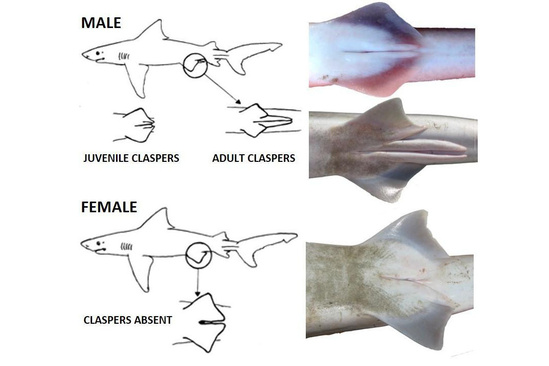
    Scars are only one layer of interpretation. Sharks also carry quieter markers of sex and maturity written into their form. Males develop elongated claspers — modified fins that trail beneath the body — visible even at a distance once the animal reaches reproductive age. In immature males these structures are short and flexible, almost decorative. With maturity they lengthen and calcify, projecting clearly behind the pelvic fins like paired shadows. A school viewed from a pier often reveals this difference in motion: some bodies carry that trailing geometry, others do not. Even without knowing species, an observer is watching a mixed population divided by sex and age.

    Females, lacking claspers, present a cleaner silhouette. During pregnancy their bodies shift subtly. The abdomen rounds, not dramatically but enough to change how light moves across the flank. Experienced observers recognize gravid females less by size than by proportion — a redistribution of mass that suggests internal cargo rather than surface injury.

    The clasper itself is an evolutionary innovation — a modification of pelvic fins that allows internal fertilization in a fluid environment where external fertilization would disperse gametes too widely to ensure success (Hamlett, 2005). It is a structural solution to a problem posed by water: how to keep lineage from dissolving into current.

    Sex in sharks is written into the silhouette.
Males carry paired claspers — elongated extensions of the pelvic fins that lengthen and stiffen with maturity — while females lack them entirely. Even at a distance, the trailing geometry changes how the body reads in motion. What looks like a uniform school from the surface is already divided by anatomy: juveniles, adults, males, females, each stage visible to anyone patient enough to watch. | 
Photo credit: National Oceanic and Atmospheric Administration
    Sex in sharks is written into the silhouette. Males carry paired claspers — elongated extensions of the pelvic fins that lengthen and stiffen with maturity — while females lack them entirely. Even at a distance, the trailing geometry changes how the body reads in motion. What looks like a uniform school from the surface is already divided by anatomy: juveniles, adults, males, females, each stage visible to anyone patient enough to watch. |
    Photo credit: National Oceanic and Atmospheric Administration

    These signals are quiet. They require patience. To read a shark in the water is to read a body moving through stages — juvenile, mature, gravid — each phase revealing that reproduction is not a single event but a condition carried across seasons. The distinction is anatomical literacy learned slowly, the way birdwatchers learn silhouettes or botanists learn leaf shape. Bodies announce their histories to those patient enough to look.

    Timing Written Into the Body

    Maturity does not arrive uniformly across a population. In many coastal sharks, size is a better predictor of reproductive readiness than age. Warmer water accelerates metabolism and growth, allowing juveniles in southern nurseries to reach maturity sooner than their northern counterparts (Cortés, 2000; Musick & Ellis, 2005). Temperature becomes a developmental force. A difference of a few degrees can compress or extend the timeline by years, shaping when an individual enters the reproductive pool.

    Juveniles and adults often sort themselves accordingly. Young sharks cluster in shallower, warmer margins where rapid growth offsets vulnerability. Larger, mature individuals occupy deeper or more exposed water, their size granting a margin of safety (Heupel et al., 2007). When mixed schools appear near piers, the variation in body shape reflects overlapping life stages sharing temporary habitat. What looks like a single group is often a layered demographic — future breeders moving alongside current ones.

    During mating seasons, additional cues surface. Mature males display fully calcified claspers held stiff against the body, while gravid females carry the rounded proportions of pregnancy. These changes are not theatrical. They are subtle adjustments in geometry, visible only to observers willing to compare silhouettes over time.

    Nurseries and Geographic Memory

    Many coastal shark species rely on estuaries as nursery grounds, where shallow, structured habitat increases juvenile survival by buffering predators and concentrating prey (Heupel et al., 2007). Young sharks enter a world scaled to their size. Warmer water accelerates growth, and complex shoreline geometry provides refuge during early vulnerability.

    Some females exhibit fidelity to nursery regions, returning to the same coastal systems that once sheltered them (Heupel et al., 2007). Habitat becomes inheritance. When nursery grounds degrade, the disruption extends beyond a single generation — it interrupts geographic memory embedded in the population itself.

    Multiple Ways to Continue

    Sandbar Sharks — Durability Over Speed

    A sandbar shark range from New England to Brazil. | Photo Credit: G.P. Schmahl/NOAA

    Sandbar shark | Photo Credit: G.P. Schmahl/NOAA

    Sandbar sharks (Carcharias plumbeus) invest heavily in durability. They mature late, produce relatively small litters, and rely on long development to generate robust juveniles capable of extended survival (Musick & Ellis, 2005). This strategy favors stability over speed. When mortality rises, recovery unfolds slowly because the species was never designed for rapid turnover.

    Sandbar shark reproduction unfolds slowly even by shark standards. Gestation lasts roughly 9–12 months, with litters typically ranging from 6 to 13 pups, though regional variation is common (Musick & Ellis, 2005). Along the mid-Atlantic coast mating generally occurs in spring and early summer, while birthing follows the next year in warmer estuarine margins. The delay is part of the design. Juveniles arrive when prey is abundant and water temperature accelerates growth, aligning birth with a narrow ecological window where survival odds briefly tilt in their favor.

    In Onslow County waters, juvenile sandbar sharks use shallow estuary margins as thermal accelerators. Warm, protected water shortens the time required to reach a size less vulnerable to predation. Growth in these early months is not cosmetic; it is survival measured in centimeters. A difference of a few inches can determine whether a young shark passes unnoticed beneath larger predators or becomes part of their diet (Heupel et al., 2007). The nursery functions as a buffer against probability. By compressing early growth into a brief window of ecological generosity, sandbars convert geography into longevity.

    Blacktip Sharks — Timing as Opportunity

    Atlantic blacktip sharks | Photo credit: Shutterstock
    Atlantic blacktip sharks | Photo credit: Shutterstock

    Blacktip sharks (Carcharhinus limbatus) align reproduction with seasonal pulses. Birth coincides with warm water and prey abundance, creating a temporary ecological advantage for juveniles. This strategy accepts higher early mortality but compensates through timing — survival synchronized with opportunity (Heupel & Simpfendorfer, 2008).

    Blacktip sharks compress their timeline. Gestation averages 10–12 months and litters often contain 1 to 10 pups, with smaller litters more common in northern portions of their range (Heupel & Simpfendorfer, 2008). Mating occurs in late spring and summer; pups are born the following late spring when baitfish concentrations peak in shallow coastal waters. Their strategy hinges on synchronization. Birth is timed not to safety, but to opportunity — a calculated arrival into abundance.

    Along our piers in late spring and summer, blacktip juveniles appear in pulses that mirror the prey fields they depend on. Schools of baitfish create moving refuges — density as defense — and young blacktips learn to survive inside motion itself. Survival belongs to individuals able to exploit brief windows, grow fast, and disperse before scarcity returns (Heupel & Simpfendorfer, 2008).

    Bonnethead Sharks — Redundancy and Retention

    Bonnethead shark | Photo credit: NC Aquariums
    Bonnethead shark | Photo credit: NC Aquariums

    Bonnethead sharks (Sphyrna tiburo) operate on one of the shortest reproductive cycles among coastal sharks. Gestation lasts approximately 4–5 months, and litters commonly range from 4 to 16 pups depending on female size (Hamlett, 2005). Mating generally occurs in late summer, but sperm storage allows fertilization to be delayed until environmental conditions favor gestation. Pups are born in late spring and early summer, entering warm shallow waters that function as immediate nurseries. The speed of the cycle reflects a species built for resilience through repetition — rapid turnover as insurance against instability.

    Bonnetheads add evolutionary contingency. Rare cases of parthenogenesis — reproduction without fertilization — demonstrate biological redundancy when mates are scarce (Chapman et al., 2007). Such flexibility underscores a principle of lineage persistence: survival tolerates complexity if complexity improves continuity.

    Bonnetheads, often glimpsed in shallow surf or near pilings, compress life history into shorter cycles, allowing populations to respond quickly to environmental change. Unlike many coastal sharks, females are capable of storing viable sperm for extended periods, delaying fertilization until conditions favor successful gestation (Hamlett, 2005). This ability decouples mating from pregnancy, allowing reproduction to align with environmental timing rather than immediate opportunity. Redundancy becomes insurance in a fragmented coastal landscape. Their persistence is not brute strength but flexibility — an evolutionary acknowledgment that coastlines are rarely stable for long (Cortés, 2000).

    Sand Tiger Sharks — Survival Before Birth

    Sand tiger shark | Photo credit: Mitchell, 2024
    Sand tiger sharks | Photo credit: Mitchell, 2024

    Sand tiger sharks (Carcharias taurus) represent an uncompromising alternative. Embryos compete within the uterus, and only the strongest survive to birth through intrauterine cannibalism — a process that produces a small number of highly developed juveniles (Hamlett, 2005). From a human perspective the mechanism appears brutal. In evolutionary terms it is a concentrated investment in pre-birth survival.

    Sand tiger gestation stretches close to 9–12 months, but the internal competition that defines their development reduces litters to one or two surviving pups per uterus despite a much larger initial embryo count (Hamlett, 2005; Branstetter & Musick, 1994). Mating occurs offshore in cooler months, and births typically follow in spring or early summer. The resulting juveniles are large at birth — already capable hunters — trading quantity for immediate competence. Survival is front-loaded. The species invests in a few individuals built to endure rather than many built to gamble.

    For sand tigers occasionally seen near South Topsail Island, this pre-birth selection produces juveniles that enter the water already comparable in size to many adult coastal fish. They arrive as functioning predators. Instead of a long vulnerable childhood, sand tigers begin life past the most dangerous bottleneck. Their subsequent behavior reflects this early security: slow movement, energy conservation, and longevity built on having cleared the lethal threshold before birth (Branstetter & Musick, 1994).

    It is tempting to read personality into origin. Yet adult sand tigers move with calm efficiency, rarely engaging in unnecessary conflict. A harsh developmental filter does not predict a harsh adulthood. It simply ensures survival past the most intense threshold.

    Together, these strategies map the same coastline through different biological clocks. Some sharks survive by accelerating early growth. Others invest in a few individuals built to last. Still others hedge their future with redundancy. Diversity is not excess — it is resilience expressed through bodies.

    The Coast as a Clock

    Longevity is the silent partner in every reproductive strategy. Long-lived sharks can afford to reproduce slowly, distributing investment across decades. Shorter-lived species compress reproduction into tighter intervals. Neither strategy is superior in isolation. Each is calibrated to environmental tempo (Cortés, 2000).

    The coastline holds many clocks at once — tides measured in hours, migrations in seasons, lineage in centuries. Sharks survive by aligning their bodies to the clock that fits their niche. Gestation becomes a wager on stability. Migration becomes inheritance in motion. A nursery becomes infrastructure for continuity.

    To observe a pregnant shark offshore is to witness a process already years in motion. The animal carries not only embryos but evolutionary decisions accumulated across millennia: how many to produce, when to move, where to shelter, how long to live. Reproduction is less an event than a continuity. Its future depends not on spectacle, but on whether the slow mathematics of these lives can continue unfolding inside waters still capable of carrying them forward.

    References

    Branstetter, S., & Musick, J. A. (1994). Age and growth estimates for the sand tiger in the northwestern Atlantic Ocean. Transactions of the American Fisheries Society, 123(2), 242-254. https://doi.org/10.1577/1548-8659(1994)123<0242:aageft>2.3.co;2

    Carlson, A. E., Hoffmayer, E. R., Tribuzio, C. A., & Sulikowski, J. A. (2014). The use of satellite tags to redefine movement patterns of spiny dogfish (Squalus acanthias) along the U.S. East Coast: Implications for fisheries management. PLoS ONE, 9(7), e103384. https://doi.org/10.1371/journal.pone.0103384

    Carrier, J. C., Musick, J. A., & Heithaus, M. R. (2012). Biology of sharks and their relatives (2nd ed.). CRC Press.

    Chapman, D. D., Shivji, M. S., Louis, E., Sommer, J., Fletcher, H., & Prodöhl, P. A. (2007). Virgin birth in a hammerhead shark. Biology Letters, 3(4), 425-427. https://doi.org/10.1098/rsbl.2007.0189

    Cortés, E. (2000). Life history patterns and correlations in Sharks. Reviews in Fisheries Science, 8(4), 299-344. https://doi.org/10.1080/10408340308951115

    DeVries, C., Gartland, J., & Latour, R. J. (2025). Patterns in spiny dogfish consumption by sex and maturity stage relate to prey availability and environmental forcing in the Northwest Atlantic. Frontiers in Marine Science, 12. https://doi.org/10.3389/fmars.2025.1621343

    Heupel, M., Carlson, J., & Simpfendorfer, C. (2007). Shark nursery areas: Concepts, definition, characterization and assumptions. Marine Ecology Progress Series, 337, 287-297. https://doi.org/10.3354/meps337287

    Heupel, M., & Simpfendorfer, C. (2008). Movement and distribution of young bull sharks Carcharhinus leucas in a variable estuarine environment. Aquatic Biology, 1, 277-289. https://doi.org/10.3354/ab00030

    Musick, J. A., & Ellis, J. K. (2005). Reproductive evolution of chondrichthyans. In Reproductive Biology and Phylogeny of Chondrichthyes (1st ed., pp. 45-79). Science Publishers.

    Pratt, H. L., & Carrier, J. C. (2005). Elasmobranch courtship and mating behavior. In Reproductive Biology and Phylogeny of Chondrichthyes (1st ed., pp. 129-169). Science Publishers.

  • Shark Sleigh Bells: How Sharks Track Vibrations in the Winter Sea

    Shark Sleigh Bells: How Sharks Track Vibrations in the Winter Sea

    Winter’s Quiet Chorus

    December hushes the coastline of Onslow County. The marshgrass stiffens in the cold, the surf stills between storms, and the New River Inlet carries the metallic stillness of early winter. Yet beneath that calm, the water hums with motion — tiny pulses, ripples, and vibrations that weave a hidden holiday soundtrack, a kind of underwater sleigh bells rung in pressure waves.

    Sharks, lingering along the nearshore troughs or cruising the outer edge of the estuary, sense these disturbances with remarkable clarity. Every mullet tail-beat, crab scuttle, and sediment shift radiates through the water as a low-frequency pressure wave. In the quiet of December, these signals travel farther and cleaner, strengthened by winter’s denser water, slower prey, and reduced turbidity (Mickle & Higgs, 2021; Mogdans, 2019).

    To sharks, these vibrations form a map, a three-dimensional winter soundscape that reveals direction, distance, and urgency (Montgomery, Baker & Carton, 2000; Montgomery et al., 2000). And layered beneath these hydrodynamic cues, the faint electric fields produced by the heartbeat and muscle activity of nearby prey glow through the water, detectable at nanovolt precision (Anderson et al., 2017; England et al., 2021).

    This “music” is not metaphor — it is the sensory world sharks inhabit, sharpened by the very conditions winter imposes.

    The Winter Sea as a Soundscape

    Illustration showing how different animals create underwater vibrations detectable by sharks. A school of fish at the top produces wide, rolling displacement waves. A crab on the sandy seafloor generates small, intermittent pulse rings. Two individual fish create subtle fin-flick ripple patterns. Concentric circles radiate from each animal to visually represent hydrodynamic cues in the water.
    Sharks detect a wide range of underwater vibrations—from the rolling displacement waves of schooling fish to the intermittent pulses of crabs and the subtle fin flicks of solitary prey—using their highly sensitive mechanosensory systems.

    Cold water shifts the physics of survival. As temperatures fall, prey metabolism slows, creating weaker and more irregular movement patterns — the exact low-frequency signatures sharks detect most easily (Sisneros & Rogers, 2016). Reduced plankton and sediment yield a clearer path for particle motion, allowing hydrodynamic cues to propagate farther through the winter water column (Mogdans, 2019).

    This turns the estuary into a rich field of vibrations. Fish schooling tightly create rolling displacement waves. Crabs shifting beneath the sand produce intermittent pulses. Even subtle fin flicks produce particle motion detectable by sharks’ sensory systems (Maruska, 2001).

    Winter looks barren to us.
    To sharks, it resonates.

    Hydrodynamic “Bells”: The Lateral Line

    A scientific-style illustration explaining how a shark’s lateral line detects underwater vibrations. A sandbar shark is shown with a highlighted lateral line running along its body and head. Concentric rings radiate from a struggling fish, a crustacean on the seafloor, and a distant object to demonstrate low-frequency hydrodynamic signals. Icons represent cold water, low light, prey movement, and inlet geometry as factors that enhance vibration transmission in winter. Text describes neuromasts encoding direction and amplitude to create a spatial map of nearby activity.
    Sharks use their lateral line to “feel” tiny vibrations in the water. Winter makes these signals even easier to detect, helping sharks follow the movement of fish, crabs, and other prey in low-light conditions.

    The shark’s lateral line is a mechanosensory canal system tuned to detect water displacement in the exact frequency range produced by struggling fish and crustaceans (Montgomery, Baker & Carton, 2000). Neuromasts within the canal encode both direction and amplitude, transforming low-frequency motion into a spatial map of nearby activity (Mogdans, 2019).

    In December, this system excels:

    • cold water enhances transmission of pressure waves,
    • prey move more predictably and more weakly,
    • low-light conditions reduce visual noise,
    • and inlet geometry funnels vibrations along natural corridors.

    Even acoustic cues — particle motion at frequencies under ~300 Hz — become part of this integration. Sharks are most sensitive to these low-frequency bands, enabling discrimination of movement types in murky or dark winter water (Poppelier et al., 2022).

    To a shark, each pulse is information.
    Each ripple is direction.
    Each vibration is a bell rung underwater.

    Watch how sharks use their lateral line system to sense ripples and vibrations long before they see their prey. | Video courtesy of National Aquarium – “Sharks Lateral Line”

    Closer Than Sight: The Ampullae of Lorenzini

    When a shark closes the final distance, tracking transitions from vibration to electricity. The Ampullae of Lorenzini detect microvolt-scale electric fields emitted by the body of every living animal. Sensitivity thresholds fall into the tens of nanovolts per centimeter — among the most refined biological detection limits known (Anderson et al., 2017; Newton, Gill & Kajiura, 2019; England et al., 2021).

    Electroreception enables sharks to:

    • locate prey buried beneath sand,
    • perceive fish hidden in silt clouds,
    • detect immobile or slow-moving animals,
    • and navigate complex, low-light environments.

    Classic electroreception work demonstrated these capacities decades ago, and modern experimental studies in hammerheads confirm high-resolution electro-sensitivity during close-range hunting (Kajiura & Holland, 2002; Kalmijn, 2000).

    In winter, when storms churn the sediment and twilight comes early, this sense becomes even more essential.

    Sharks do not need light — they follow electricity.

    Video courtesy of PBS Deep Look, illustrating how sharks use electroreception to locate prey invisible to sight or sound.

    A December Hunt at the New River Mouth

    Illustration of a juvenile Atlantic sharpnose shark approaching a partially buried mullet in shallow winter water. Orange concentric lines show the mullet’s electric field and the shark’s detection of hydrodynamic and electrical cues through its lateral line and Ampullae of Lorenzini.
    A juvenile Atlantic sharpnose shark follows the faint hydrodynamic pulse of a cold-slowed mullet, then locks onto its electric field—an underwater hunt guided by vibration and microvolts.

    Picture a December evening at the New River Inlet. The ebb tide pulls cold water from the sound toward the ocean. A juvenile Atlantic sharpnose shark glides along a shallow bar, guided not by sight, but by the underwater vibrations pulsing through its lateral line.

    A faint, uneven pressure wave reaches the shark — the hydrodynamic signature of a mullet slowed by the cold (Montgomery et al., 2000). The shark turns. Another pulse follows, the rhythm revealing both direction and weakness.

    Within a few body lengths, electric cues rise above the hydrodynamic noise. The Ampullae of Lorenzini detect microvolt-scale oscillations from the mullet’s buried body (Newton, Gill & Kajiura, 2019; England et al., 2021). One quick strike completes the hunt.

    This is winter’s choreography:
    vibrations at a distance,
    electricity up close,
    all woven seamlessly through still December water.

    The Importance of Winter Hunting

    four-panel educational graphic titled “Winter Survival: How Sharks Thrive When Other Animals Slow Down.” The top panels show a shark pursuing a slow-moving fish labeled “Winter Energy Reserves” and a shark navigating an inlet with arrows labeled “Predictable Movement Corridors.” The bottom panels show a shark approaching a weakened fish with vibration rings labeled “Removing Weakened Individuals” and a shark outlined by sensory icons—spiral wave, lightning bolt, and low-light symbol—labeled “Low Visibility Navigation.” The artwork illustrates how sharks use sensory advantages to hunt effectively during winter.
    Even as the season quiets the coast, sharks thrive—reading vibrations, following winter corridors, finding weakened prey, and navigating the dim water with senses far beyond our own.

    Although prey slow in winter, sharks must continue to feed. Their dual sensory systems allow efficient predation in the season that challenges most marine animals. These abilities help sharks:

    • build winter energy reserves,
    • exploit predictable movement corridors,
    • maintain population stability by removing weakened individuals (Tricas & McCosker, 1984),
    • and navigate cold, low-visibility environments effectively (Mickle & Higgs, 2021).

    Even as water temperatures drop, species like Atlantic sharpnose sharks, bonnetheads, and offshore Atlantic spiny dogfish remain active, relying heavily on the interplay of hydrodynamic and electroreceptive cues (Maruska, 2001).

    Winter is not lifeless.
    It is a sensory masterclass.

    Bells That Never Stop Ringing

    While we celebrate the holidays with sleigh bells, carols, and glowing lights, the Atlantic hums with its own winter rhythms. Sharks navigate December through vibrations, particle motion, and faint electrical fields — signals older than any tradition and tuned to the pulse of life beneath the cold.

    Their bells are not made of metal.
    They are made of motion.
    Of electricity.
    Of the quiet echoes of survival beneath the tide. These are the Shark Sleigh Bells, ringing softly beneath Onslow County’s winter waters.

    References

    Anderson, J. M., Clegg, T. M., Véras, L. V., & Holland, K. N. (2017). Insight into shark magnetic field perception from empirical observations. Scientific Reports, 7(1). https://doi.org/10.1038/s41598-017-11459-8

    England, S. J., & Robert, D. (2021). The ecology of electricity and electroreception. Biological Reviews, 97(1), 383-413. https://doi.org/10.1111/brv.12804

    Kajiura, S. M., & Holland, K. N. (2002). Electroreception in juvenile scalloped hammerhead and sandbar sharks. Journal of Experimental Biology, 205(23), 3609-3621. https://doi.org/10.1242/jeb.205.23.3609

    Kalmijn, A. J. (2000). Detection and processing of electromagnetic and near–field acoustic signals in elasmobranch fishes. Philosophical Transactions of the Royal Society of London. Series B: Biological Sciences, 355(1401), 1135-1141. https://doi.org/10.1098/rstb.2000.0654

    Maruska, K. P. (2001). Morphology of the Mechanosensory lateral line system in elasmobranch fishes: Ecological and behavioral considerations. Environmental Biology of Fishes, 60(1-3), 47-75. https://doi.org/10.1023/a:1007647924559

    Mickle, M. F., & Higgs, D. M. (2021). Towards a new understanding of elasmobranch hearing. Marine Biology, 169(1). https://doi.org/10.1007/s00227-021-03996-8

    Mogdans, J. (2019). Sensory ecology of The Fish lateral‐line system: Morphological and physiological adaptations for the perception of hydrodynamic stimuli. Journal of Fish Biology, 95(1), 53-72. https://doi.org/10.1111/jfb.13966

    Montgomery, J., Carton, G., Voigt, R., Baker, C., & Diebel, C. (2000). Sensory processing of water currents by fishes. Philosophical Transactions of the Royal Society of London. Series B: Biological Sciences, 355(1401), 1325-1327. https://doi.org/10.1098/rstb.2000.0693

    Montgomery, J. C., Baker, C. F., & Carton, A. G. (1997). The lateral line can mediate rheotaxis in fish. Nature, 389(6654), 960-963. https://doi.org/10.1038/40135

    Newton, K. C., Gill, A. B., & Kajiura, S. M. (2019). Electroreception in marine fishes: Chondrichthyans. Journal of Fish Biology, 95(1), 135-154. https://doi.org/10.1111/jfb.14068

    Poppelier, T., Bonsberger, J., Berkhout, B. W., Pollmanns, R., & Schluessel, V. (2022). Acoustic discrimination in the grey bamboo shark Chiloscyllium griseum. Scientific Reports, 12(1). https://doi.org/10.1038/s41598-022-10257-1

    Tricas, T. C., & McCosker, J. E. (1984). Predatory behavior of the white shark (Carcharodon carcharias) and other large sharks. Proceedings of the California Academy of Sciences, 43(14), 221-238. https://ia801302.us.archive.org/16/items/biostor-78396/biostor-78396.pdf 

  • More than Armor: How Shark Skin Shapes Survival

    More than Armor: How Shark Skin Shapes Survival

    Have you ever wondered why, if you touch a shark from head to fin, it feels smooth—but from fin to head, it’s skin is rough like sandpaper? Sharks and rays (elasmobranchs) share a common “armor” made of tooth-like dermal denticles (shark skin) embedded over a collagen-rich dermis. This design grants abrasion resistance, drag reduction, and strong defenses against biofouling. And they heal fast!

    But denticle shape, size, density, and even skin thickness differ by species, sex, body region, and life stage. Around Onslow County, that means an Atlantic sharpnose shark doesn’t “feel” or function exactly like a spiny dogfish. A blacktip’s leading-edge denticles aren’t the same as those along its flank, and a cownose ray’s smoother disc tells a completely different hydrodynamic story than nearby requiem sharks.

    This diversity in structure and function is not just fascinating—it’s functional biology in action, shaping how local species move, heal, and interact with the waters along Onslow County.

    What all elasmobranch skin has in common

    Dermal denticles (placoid scales)

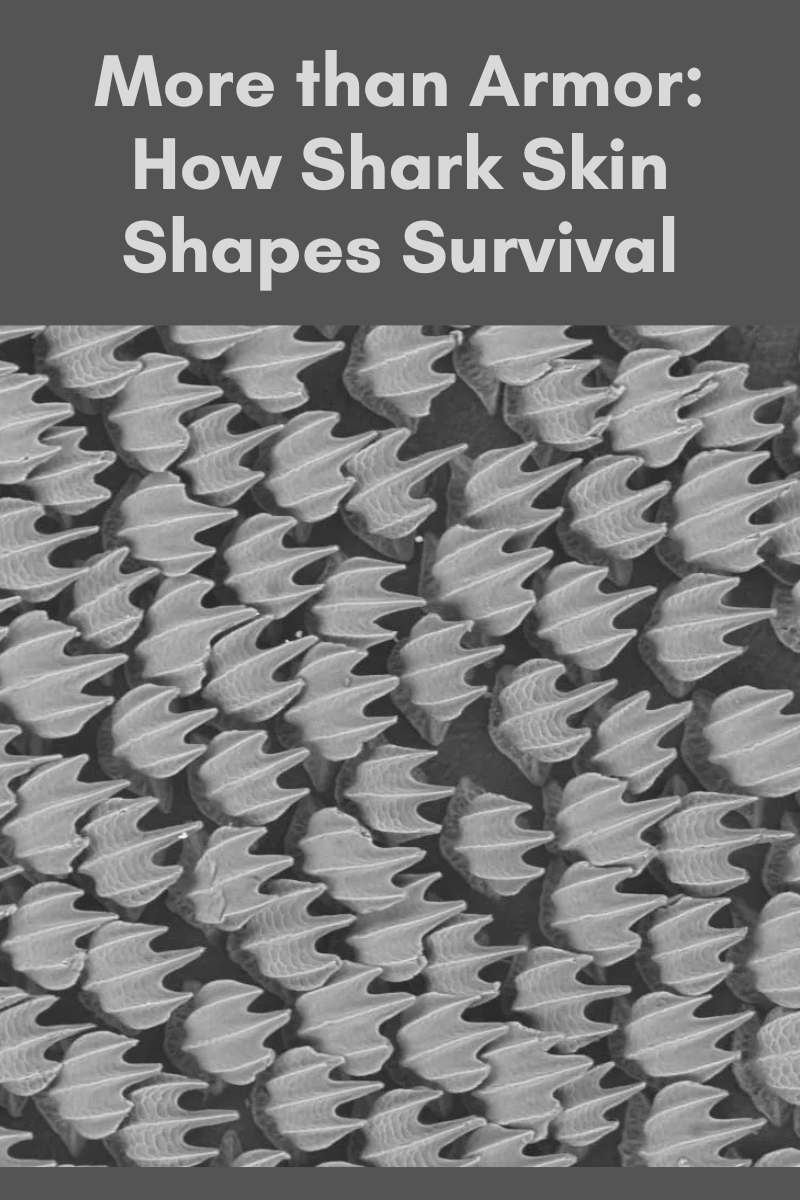
    Great white shark denticles
    Great white shark denticles | © Trevor Sewell/Electron Microscope Unit, University of Cape Town

    Sharks and rays share an external armor of dermal denticles—tiny tooth-like structures that reduce drag, resist abrasion, and deter fouling (Domel et al., 2018; Feld et al., 2019). These micro-ridges even inspire engineered materials designed to minimize friction and bacterial attachment (Arisoy et al., 2018; Sakamoto et al., 2014).

    A collagen-rich dermis

    Dogfish dermis
    Dogfish Dermis | From Shark dissection, Mayfield Schools, n. d. https://www.mayfieldschools.org/Downloads/sharkdissection%20%281%29.pdf

    Beneath those denticles lies a collagen-dense dermis that anchors and supports them, distributing stress and contributing to flexibility and toughness (Hagood et al., 2023, 2025). 

    Rapid wound healing

    Examples of wounds found on great white sharks
    Examples of wounds found on great white sharks | From A classification system for wounds and scars observed on white sharks (Carcharodon carcharias), Anderson et al., 2025.

    Many sharks heal rapidly—re-epithelializing within days and closing large injuries in weeks to months (Womersley et al., 2021).

    Where shark skin differs: species, sex, body region & ontogeny

    Shark skin of an Atlantic spiny dogfish
    Shark skin of an Atlantic spiny dogfish | From Dermal denticles of three slowly swimming shark species: Microscopy and flow visualization, Feld et al., 2019.

    Species differences.
    Denticle shape, ridge count, and spacing vary by ecology. Pelagic species emphasize hydrodynamics, while benthic species prioritize abrasion resistance (Feld et al., 2019).

    Body-region mosaics.
    Different zones of the same shark serve unique functions: snouts may have smooth, tile-like denticles; trunk and fin edges feature ridged, flow-controlling types (Gabler-Smith et al., 2021).

    Sexual dimorphism and mechanical variation.
    Hagood et al. (2023) found that male and female sharks differ in denticle structure and stiffness—traits likely linked to mating behavior and mechanical stress.

    Ontogenetic and ecomorphological changes.
    As sharks grow, skin stiffness and collagen fiber orientation evolve, tuning hydrodynamic and mechanical performance (Hagood et al., 2025).

    Sharks vs. rays (and skates): same toolkit, different emphasis

    Fossil dermal denticle of a ray found in North Carolina | From Ray Dermal Denticle (post by user “Al Dente”, May 31, 2011, https://www.thefossilforum.com/topic/21344-ray-dermal-denticle/

    Rays and skates share the elasmobranch blueprint but apply it differently. Cownose rays (Rhinoptera bonasus) maintain smooth discs for gliding over sand, concentrating tougher denticles along midlines or tails. Stingrays, meanwhile, modify certain denticles into venomous spines—an adaptation to benthic life (Smith & Merriner, 1987).

    Mucus: the invisible modifier

    Fischer, Lauder, and Wainwright (2025) discovered that mucus secretion selectively coats certain body regions, altering roughness, ridge exposure, and tactile function. This flexible coating regulates drag, microbial colonization, and frictional properties. Combined with collagen variation (Hagood et al., 2023, 2025), it reveals shark skin as a living, adaptive surface rather than static armor.

    Mucus being collected from blacktip reef sharks | By Mauvis Gore

    Local lens: Onslow County species & mucus implications

    • Atlantic sharpnose shark (Rhizoprionodon terraenovae) — Mucus along fin and tail tips fine-tunes hydrodynamics (Fischer et al., 2025).
    • Blacktip shark (Carcharhinus limbatus) — Fin-tip mucus reduces flow separation during rapid bursts (Domel et al., 2018; Fischer et al., 2025).
    • Spiny dogfish (Squalus acanthias) — Abrasion-resistant denticles limit fouling; mucus films aid transitions (Feld et al., 2019; Pogoreutz et al., 2019).
    • Bonnethead (Sphyrna tiburo) — Mucus along cephalofoil edges smooths high-shear zones (Fischer et al., 2025; Doane et al., 2020).
    • Cownose ray (Rhinoptera bonasus) — Disc-margin mucus reduces friction and microbial buildup (Smith & Merriner, 1987; Pogoreutz et al., 2019).

    Microflow around denticles: visualizing eddies and recirculation

    Feld et al. (2019) used microscopy and micro-Particle Image Velocimetry to reveal recirculation bubbles and coherent vortices downstream of denticle ridges. Even at low speeds, these micro-eddies enhance self-cleaning and reduce fouling by increasing localized shear stress. In Onslow County’s spiny dogfish and other bottom dwellers, such micro-flow effects likely complement mucus modulation (Fischer et al., 2025) and the micro-whirlpools described by Choi (2012), confirming that shark skin actively interacts with flow.

    Microstructure and biomimetic insights

    Gabler-Smith et al. (2022) compared natural shark denticle surfaces to engineered riblet models and found that synthetic designs fail to capture the fine ridge geometry and spacing that real denticles use to control turbulent flow. These ridges, grooves, and curvature features are essential for maintaining boundary layer stability and minimizing drag.

    Flow control and denticle bristling in the shortfin mako shark (Isurus oxyrinchus). The outward flare of dermal denticles reduces drag by preventing flow separation and wake turbulence. |
    From “The speedy secret of shark skin,” by A. W. Lang, 2020, Physics Today, 73(4), 62–63. (2020).

    Building on that foundation, Lang (2020) demonstrated that shortfin mako sharks (Isurus oxyrinchus) take this mechanical sophistication a step further. Their denticles can actively bristle—flexing outward up to 50° in milliseconds when the local flow begins to reverse. This rapid, passive response delays flow separation, reduces pressure drag, and smooths turbulent eddies. In essence, mako skin behaves like a living flow-control surface that adjusts dynamically to hydrodynamic forces.

    Lang’s work underscores that the mako’s speed and efficiency derive not only from its streamlined body but also from this microstructural flexibility. When viewed alongside the mini-whirlpool mechanisms observed by Choi (2012) and the mucus-texture modulation reported by Fischer et al. (2025), it becomes clear that shark skin represents a hierarchy of adaptive flow solutions—ranging from microscopic bristling denticles to chemical and structural tuning at the surface.

    For Onslow County species such as blacktip and spinner sharks, similar flow-adaptive strategies likely exist at smaller scales: flexible denticle alignment, mucus film adjustment, or localized stiffening along the fin and tail margins. Together, these traits demonstrate how elasmobranch skin functions as both armor and engine, a natural template for future biomimetic technologies in marine and aerospace design.

    Mini whirlpools and flexible flow control

    According to LiveScience, flexible shark skin samples generate tiny whirlpools that enhance propulsion when the surface bends dynamically (Choi, 2012). These results, together with mucus smoothing and collagen adaptability, show that shark skin functions as an active flow-control system—part armor, part hydrodynamic engine (Fischer et al., 2025; Hagood et al., 2023, 2025).

    Interfacing skin, gills, and chemical exposure

    Fish gills actively metabolize dissolved substances. Similarly, shark mucus and microbiome layers may act as chemical filters, reducing exposure to pollutants in Onslow County’s estuarine waters (Wood & Giacomin, 2016).

    Conservation and historical context: denticles as time capsules

    Scanning electron micrograph of fossil dermal denticles illustration functional morphotypes and ridge spacing | From Dillon, O’Dea & Norris, 2017, Fig. 2.

    Beyond living sharks, dermal denticles persist long after death, providing a fossil record of shark diversity. Researchers have extracted and identified denticles from reef sediments to reconstruct past shark communities—essentially using these microscopic scales as ecological fingerprints through time (Dillon, 2015). Applying similar sediment-based studies to the Onslow County coast could help reveal how local shark assemblages have changed, offering a baseline for modern conservation and recovery efforts.

    Functional synergy in Onslow County sharks

    FunctionBiological BasisExample in Onslow County Species
    Drag reduction & flow controlDenticle ridges, mucus overlays, and flexible flow (Domel et al., 2018; Fischer et al., 2025; Choi, 2012)Blacktip & sharpnose sharks
    Mechanical resilienceCollagen and denticle variation (Hagood et al., 2023, 2025)Juvenile vs. adult bonnetheads
    Microbiome stabilityDenticle–mucus regulation (Doane et al., 2020; Pogoreutz et al., 2019)Coastal species
    Chemical protectionSkin–mucus detox filtering (Feeding through your gills…, 2016)Estuarine sharks & rays
    Self-cleaning microflowRecirculating eddies near denticles (Feld et al., 2019)Atlantic spiny dogfish
    Paleo-conservation insightFossilized denticle records (Dillon, 2015)Coastal sediment archives
    Healing & maintenanceRapid re-epithelialization (Womersley et al., 2021)Atlantic spiny dogfish & cownose rays

    References

    Anderson, S. D., Kanive, P. E., Chapple, T. K., Andrzejaczek, S., Block, B. A., & Jorgensen, S. J. (2025). A classification system for wounds and scars observed on white sharks (Carcharodon carcharias). Frontiers in Marine Science, 12, Article 1520348. https://doi.org/10.3389/fmars.2025.1520348

    Arisoy, F. D., Gurkan, U. A., Yagci, B. B., Calamak, S., Dokmeci, M. R., & Demirci, U. (2018). Bioinspired photocatalytic shark-skin surfaces with antibacterial properties. Scientific Reports, 8, 16363. https://doi.org/10.1038/s41598-018-34334-1 

    Choi, C. Q. (2012, February 21). Sharks’ scales create tiny whirlpools for speedy swimming. LiveScience. https://www.livescience.com/18385-shark-skin-mini-whirlpools.html

    Dillon, E. (2015, October 9). Shark skin sleuthing. Save Our Seas Foundation. https://saveourseas.com/update/shark-skinsleuthing/

    Dillon, E. M., O’Dea, A., & Norris, R. D. (2017). Dermal denticles as a tool to reconstruct shark communities. Marine Ecology Progress Series, 566, 117–134. https://doi.org/10.3354/meps12018

    Doane, M. P., Haggerty, J. M., Kacev, D., Papudeshi, B., & Dinsdale, E. A. (2020). The skin microbiome of elasmobranchs follows phylosymbiosis, but in teleost fishes, the microbiomes converge. Microbiome, 8(1), 123. https://doi.org/10.1186/s40168-020-00840-x 

    Domel, A. G., Weaver, J. C., Haj-Hossein, I., Wang, Z., Bertoldi, K., Lauder, G. V., & Vaziri, A. (2018). Shark skin-inspired designs that improve aerodynamic performance. Journal of the Royal Society Interface, 15(140), 20170828. https://doi.org/10.1098/rsif.2017.0828 

    Wood, C., Giacomin, M. (2016) Feeding through your gills and turning a toxicant into a solution. Journal of Experimental Biology, 219(20), 3218–3228. https://doi.org/10.1242/jeb.145625 

    Feld, K., Kolborg, A. N., Nyborg, C. M., Salewski, M., Steffensen, J. F., & Berg-Sørensen, K. (2019). Dermal denticles of three slowly swimming shark species: Microscopy and flow visualization. Biomimetics, 4(2), 38. https://doi.org/10.3390/biomimetics4020038 

    Fischer, M. J., Lauder, G. V., & Wainwright, D. K. (2025). Slippery and smooth shark skin: How mucus transforms surface texture. Journal of Morphology, 286(4), e70046. https://doi.org/10.1002/jmor.70046 

    Gabler-Smith, M. K., Lauder, G. V., et al. (2022). Ridges and riblets: Shark skin surfaces versus biomimetic models. Frontiers in Marine Science, 9, 975062. https://doi.org/10.3389/fmars.2022.975062 

    Gabler-Smith, M. K., Staab, K. L., & Motta, P. J. (2021). Dermal denticle diversity in sharks: Novel patterns on the interbranchial skin. Biology Letters, 17(12), 20210349. https://doi.org/10.1098/rsbl.2021.0349 

    Hagood, M. E., Motta, P. J., Staab, K. L., & Porter, M. E. (2023). Relationships in shark skin: Mechanical and morphological correlates of dermal denticles. Integrative and Comparative Biology, 63(6), 1154–1166. https://doi.org/10.1093/icb/icad085 

    Hagood, M. E., Wainwright, D. K., Motta, P. J., & Vaziri, A. (2025). Ecomorphology and ontogeny modulate the mechanical properties of shark skin. Journal of Experimental Zoology Part B: Molecular and Developmental Evolution. Advance online publication. https://doi.org/10.1016/j.jcz.2025.xxxxxx 

    Lang, A. W. (2020, April). The speedy secret of shark skin. Physics Today, 73(4), 62–63. https://digital.physicstoday.org/physicstoday/april_2020/MobilePagedArticle.action?articleId=1575067

    Pogoreutz, C., Yakob, L., Zhang, Y., Al-Saoudi, N. H., Olsson, A., El-Sherbiny, M., … Hajdu, E. (2019). Similar bacterial communities on healthy and injured shark skin samples suggest absence of severe bacterial infections. Animal Microbiome, 1, 11. https://doi.org/10.1186/s42523-019-0011-5 

    Sakamoto, A., Oikawa, K., & Yamaguchi, M. (2014). Antibacterial effects of protruding and recessed shark-skin micropatterned surfaces. Biofouling, 30(5), 593–602. https://doi.org/10.1080/08927014.2014.930720 

    Smith, J. W., & Merriner, J. V. (1987). Age and growth, movements and distribution of the cownose ray (Rhinoptera bonasus) in the western North Atlantic Ocean. Environmental Biology of Fishes, 20, 233–242. https://doi.org/10.1007/BF00004913 

    Womersley, F., Rohner, C. A., Gibbons, M. J., Richardson, A. J., & Jaine, F. R. A. (2021). Wound-healing capabilities of whale sharks (Rhincodon typus). Conservation Physiology, 9(1), coaa137. https://doi.org/10.1093/conphys/coaa137