Category: Mollusc

  • The Shapes the Tide Leaves Behind: Circles, Spirals, and the Mathematics of a Living Coast

    The Shapes the Tide Leaves Behind: Circles, Spirals, and the Mathematics of a Living Coast

    Patterns in Nature Along the Coast

    Each March 14, mathematicians celebrate π — the constant that links the circumference of a circle to its diameter. But Pi Day in nature appears everywhere along the coast: in boundaries that curve back upon itself, in ripples spreading across still water, in the rounded mouth of a burrow, in the arcs traced by a turning tide. Along the coast, these circles and spirals reveal patterns in nature that emerge so often they begin to feel less like abstract mathematics and more like a language written into sand and water. The shoreline is not calculating anything deliberately, yet the same relationships appear again and again as tides move sediment, organisms grow, and currents redistribute energy. What looks at first like scattered shapes — a curved creek channel, a ring of crab pellets, the fivefold symmetry of a sea star — gradually reveals itself as part of a larger pattern. The coast is full of geometry, briefly visible each time the water recedes.

    The Creek Writes in Curves

    A tidal creek bends around the marsh edge behind Surf City, where vegetation and sediment redirect the flow of draining water. These shifting boundaries gradually guide channels into widening curves that reappear with each tide. | Photo credit: A. Mitchell
    A tidal creek bends around the marsh edge behind Surf City, where vegetation and sediment redirect the flow of draining water. These shifting boundaries gradually guide channels into widening curves that reappear with each tide. | Photo credit: A. Mitchell

    At the creek mouths behind Topsail Island, the marsh edge redraws itself each time the tide drains away. Water retreats through narrow runnels that refuse straight lines, bending around grass hummocks and soft ridges, leaving a fan of nested arcs etched into exposed mud. The channels widen as velocity drops, sediment settling in fractions that record the rate of energy loss, so the surface becomes a temporary map of fluid negotiation.

    These curves appear wherever moving water gradually redistributes energy rather than releasing it abruptly. In tidal landscapes, vegetation and sediment interact with flow in feedback loops that reshape channels over time, producing curved drainage networks whose geometry reflects both plant resistance and water momentum (Kirwan & Murray, 2007; Temmerman et al., 2007; Murray & Paola, 1994). Across river basins and tidal creeks alike, these evolving paths often approach widening spiral-like patterns as flow repeatedly adjusts to the boundaries around it (Rodriguez-Iturbe & Rinaldo, 1998).

    Foam left behind by the falling tide sometimes dries into thin white filaments that trace these curves for a few quiet minutes before collapsing, a temporary record of motion fixed long enough to be read.

    The creek does not preserve a single spiral. Each tide erases and redraws the same proportional tendency. The form emerges not from design but from the repeated redistribution of energy through water and sediment.

    Geometry in the Grass

    Dense stands of Spartina alterniflora divide space through repeating stem spacing. This structure slows water movement and traps suspended sediment, linking plant growth to the gradual elevation of the marsh surface. | Photo credit: A. Mitchell
    Dense stands of Spartina alterniflora divide space through repeating stem spacing. This structure slows water movement and traps suspended sediment, linking plant growth to the gradual elevation of the marsh surface. | Photo credit: A. Mitchell

    Along the marsh margin, stems of Spartina alterniflora divide space through incremental adjustment. Leaves diverge from one another at angles that reduce overlap, distributing light capture through the canopy in repeating offsets that resemble packing patterns seen throughout plant growth.

    Experiments in plant development show that when new structures arise under simple inhibitory fields, spiral-like arrangements often emerge as stable growth solutions (Douady & Couder, 1996). These patterns are widely recognized in plant morphology, where spacing between leaves or stems tends to distribute light and nutrients efficiently through the canopy (Niklas, 1997).

    In salt marshes, this spacing carries ecological consequences beyond plant structure. Vegetation alters local water flow, slowing currents and promoting the deposition of suspended sediments that gradually elevate the marsh surface (Bouma et al., 2009; Fagherazzi et al., 2013; Leonard & Luther, 1995).

    Mud crab burrows often appear in clusters whose spacing echoes the density of surrounding vegetation, each opening maintaining just enough distance to avoid collapse into the next.

    Spiral shell growth of the periwinkle snail follows a repeating geometric expansion, allowing the animal to grow while maintaining the same overall shape. | Photo credit: A. Mitchell
    Spiral shell growth of the periwinkle snail follows a repeating geometric expansion, allowing the animal to grow while maintaining the same overall shape. | Photo credit: A. Mitchell

    Marsh periwinkles climb these stems in staggered lines that mirror the spacing of the leaves, their positions shifting with the tide yet repeatedly settling into the same angular arrangement.

    Across the marsh platform, geometry quietly mediates the relationship between plant growth and landscape formation.

    Spheres at the Mouth of a Burrow

    A mud crab burrow at the edge of marsh vegetation marks the boundary between sand, grass, and moving water where patterns of spacing emerge. | Photo credit: A. Mitchell
    A mud crab burrow at the edge of marsh vegetation marks the boundary between sand, grass, and moving water where patterns of spacing emerge. | Photo credit: A. Mitchell

    Along the upper edge of the beach where grasses begin to anchor the sand, small clusters of rounded pellets often surround the entrances to crab burrows. At first glance they resemble scattered grains or fragments of dry sediment, but kneeling close reveals a more deliberate pattern.

    Each pellet forms as damp sand excavated from underground tunnels passes through the crab’s mouthparts before being pushed back to the surface (Lucrezi et al., 2009). As the grains are rolled and compressed together, they settle into rounded shapes before drying in the coastal wind.

    Among all possible forms loose material might take, the sphere encloses volume while minimizing surface area — a principle known as the isoperimetric property. When damp sand is compacted from many directions, the grains naturally settle toward this configuration.

    The crab does not deliberately engineer spheres; the physics of granular material does the work. Similar rounding appears wherever particles compress together, from bubbles forming in foam to droplets condensing in clouds.

    Around the burrow entrance, the pellets accumulate in loose arcs or clustered rings marking the repeated path of excavation. Studies of mud and ghost crab burrowing show that these excavated pellets form characteristic surface patterns around burrow openings as crabs repeatedly transport sediment from their tunnels (Lim & Diong, 2003; Chan et al., 2006).

    Within hours the pellets dry and crumble back into ordinary sand. By the next tide the pattern may vanish entirely, erased by waves or shifting grains. Yet while they last, these small spheres record the intersection of animal behavior, sediment physics, and geometry.

    Fivefold Bodies in the Wrack

    Sand dollars show pentaradial symmetry — a five-part body plan shared by many echinoderms. The familiar white “sand dollar” is the skeleton left behind after the animal dies. Living sand dollars are gray or brown and covered in tiny moving spines that allow them to feed and move through the sand. In North Carolina, collecting live sand dollars is illegal; only empty tests found on the beach may be taken.| Image credit: Suzanne Campbell-O’Rahilly
    Sand dollars show pentaradial symmetry — a five-part body plan shared by many echinoderms. The familiar white “sand dollar” is the skeleton left behind after the animal dies. Living sand dollars are gray or brown and covered in tiny moving spines that allow them to feed and move through the sand. In North Carolina, collecting live sand dollars is illegal; only empty tests found on the beach may be taken.| Image credit: Suzanne Campbell-O’Rahilly

    Along the wrack line, sea stars rest without a preferred direction, their five arms distributing contact evenly across wet sand. Pentaradial symmetry divides the body into five equal sectors, stabilizing locomotion and feeding while allowing regeneration to proceed without disrupting balance (Beadle, 1989).

    A broken sea star missing an arm still preserves the angle of the remaining four. The body reorganizes around absence without abandoning its underlying symmetry.

    Sand dollars flatten this same geometry into a disk etched with five petal-like openings across the shell surface. These structures guide water across respiratory tissues while reinforcing the skeleton against bending forces generated by waves and sediment movement (Ellers & Telford, 1992; Mooi & David, 1998; Telford, 1981).

    In shallow swash zones, freshly uncovered sand dollars often rotate edgewise until resistance equalizes, their circular outlines turning slowly with each pulse of water.

    The etched flower is neither ornament nor accident. It records the intersection of circulation and structural strength — a geometry recalculated as abrasion reshapes the shell and burial depth shifts with each surge.

    Across many biological systems, similar proportional relationships appear when living structures must distribute forces or transport materials efficiently through tissue networks (Ball, 1999).

    Structure Where Sand Breaks

    Hard structure embedded in soft sediment creates pockets where currents slow and animals find shelter, turning smooth bottoms into complex habitat. | Photo credit: A. Mitchell
    Hard structure embedded in soft sediment creates pockets where currents slow and animals find shelter, turning smooth bottoms into complex habitat. | Photo credit: A. Mitchell

    Beneath the surface where oyster shells, coquina fragments, and storm-scattered debris interrupt the sand, the bottom shifts from smooth sediment to broken relief. In these pockets of structure, octopuses occupy cavities narrow enough to seal with the mantle.

    Field observations show that octopus dens occur most frequently within crevice-rich substrates where structural complexity provides refuge and leverage for movement and defense (Anderson et al., 2002). Small fish hover near the edges of these openings, maintaining circular perimeters that expand and contract with the reach of a hidden arm. Juvenile sheepshead pick along shell ridges in repeating passes, their feeding paths tracing arcs that mirror the curvature of the structure beneath them.

    Within these shelters, the eight arms of an octopus function as semi-independent mechanical units whose forces combine into coordinated motion (Mather & O’Dor, 1991). Much of this control occurs locally within the arms themselves, allowing rapid adjustment as the animal navigates complex surfaces.

    As currents pass through these cavities, suspended particles settle into protected depressions, feeding microbial films that alter oxygen exchange and nutrient cycling along the bottom boundary. Structural geometry therefore governs not only animal behavior but also the micro-distribution of material across the seafloor.

    Spirals Carried Offshore

    As a thin sheet of water drains across the sand, it splits into branching paths that curve and merge before disappearing. These temporary channels briefly record how moving water redistributes energy along the shoreline. | Photo credit: A. Mitchell
    As a thin sheet of water drains across the sand, it splits into branching paths that curve and merge before disappearing. These temporary channels briefly record how moving water redistributes energy along the shoreline. | Photo credit: A. Mitchell

    Outside the inlet bars, a drifting boat leaves a wake that separates into tightening vortices. Each eddy contracts as it rotates, conserving angular momentum while turbulence redistributes energy through surrounding water.

    Similar rotating structures form within rip currents, where narrow jets of water moving seaward generate circulation cells that trap plankton and suspended particles (Feddersen, 2014; MacMahan et al., 2006; Thorpe, 2005).

    Fluid motion often organizes into spiraling paths under these conditions, reflecting the conservation of momentum within rotating systems (Longuet-Higgins, 1969; Peregrine, 1976).

    Foam left behind by receding breakers sometimes curls into arcs that briefly echo shell fragments scattered across the wash.

    Schools of baitfish caught at the margins of these rotations may briefly organize into crescent formations before the structure dissolves.

    Incoming waves arrive in layered packets because slightly offset frequencies overlap and reinforce one another. When multiple rhythms travel through the same body of water, their interaction produces envelopes of larger motion surrounding smaller oscillations (Longuet-Higgins, 1969).

    From the deck of a small boat these envelopes pass as broad rises containing finer pulses, a hierarchy of motion that continuously reshapes sandbars and sediment pathways along the coast.

    Circles the Water Keeps

    Ripple circles forming along a living coast. | Photo credit: A. Mitchell| Photo credit: A. Mitchell
    A fish briefly touching the surface sends expanding rings across the water, one of the simplest expressions of circular motion in nature. | Photo credit: A. Mitchell

    At creek mouths and along nearshore bars, circles appear and vanish faster than the eye can catalogue them. These expanding rings are among the simplest patterns in nature, appearing whenever energy spreads outward through still water.

    A ripple expands from a falling drop, its edge widening until it meets another wave and dissolves into interference. The distance around that circle always exceeds the span across it by the same proportion — the constant mathematicians call π.

    Circular motion governs more than surface ripples. Tidal creeks bend into loops where erosion and sediment deposition redistribute its momentum along the channel edges that gradually produce curved meanders (Phillips, 1977; Temmerman et al., 2007; Seminara, 2006).

    Within these bends, suspended sediment slows and settles, forming point bars that redirect flow during the next tidal cycle.

    Offshore, rotating eddies may close into temporary rings that trap plankton and organic particles before dissolving again (MacMahan et al., 2006).

    The circle becomes a moving boundary that regulates exchange while it lasts.

    Proportion in a Moving Margin

    Sunlight reflecting across shallow ripples reveals the repeating wave patterns that constantly reshape coastal sand flats. | Photo credit: A. Mitchell
    Sunlight reflecting across shallow ripples reveals the repeating wave patterns that constantly reshape coastal sand flats. | Photo credit: A. Mitchell

    Across marsh edge, wrack line, and nearshore water, similar patterns recur because natural systems governed by energy exchange tend to converge toward stable configurations.

    Spiral drainage, fivefold symmetry, clustered leaf spacing, rotating vortices, and circular ripples represent different expressions of the same negotiation between force and structure.

    Across biological and physical systems, recurring proportional relationships often emerge because they minimize energetic cost while maintaining stability (Ball, 1999; Cross & Hohenberg, 1993; Rodriguez-Iturbe & Rinaldo, 1998).

    As sediment accumulates or erodes and vegetation thickens or thins, these geometric tendencies alter water residence time, root exposure, and nutrient retention within the marsh (Fagherazzi et al., 2013).

    Each tide crosses the boundary again.

    And each time it does, the coast recalculates its proportions.

    References

    Anderson, R. C., Wood, J. B., & Byrne, R. A. (2002). Octopus senescence: The beginning of the end. Journal of Applied Animal Welfare Science, 5(4), 275-283. https://doi.org/10.1207/s15327604jaws0504_02

    Ball, P. (1999). The self-made tapestry: Pattern formation in nature. Oxford University Press. https://avalonlibrary.net/ebooks/Philip%20Ball%20-%20The%20Self-Made%20Tapestry%20-%20Pattern%20Formation%20in%20Nature.pdf

    Beadle, S. C. (1989). Ontogenetic regulatory mechanisms, heterochrony, and eccentricity in dendrasterid sand dollars. Paleobiology, 15(3), 205-222. https://doi.org/10.1017/s0094837300009428

    Bouma, T. J., Friedrichs, M., Van Wesenbeeck, B. K., Temmerman, S., Graf, G., & Herman, P. M. (2009). Density‐dependent linkage of scale‐dependent feedbacks: A flume study on the intertidal macrophyte Spartina anglica. Oikos, 118(2), 260-268. https://doi.org/10.1111/j.1600-0706.2008.16892.x

    Chan, B. K., Chan, K. K., & Leung, P. C. (2006). Burrow architecture of the ghost crab Ocypode ceratophthalma on a sandy shore in Hong Kong. Hydrobiologia, 560(1), 43-49. https://doi.org/10.1007/s10750-005-1088-2

    Cross, M. C., & Hohenberg, P. C. (1993). Pattern formation outside of equilibrium. Reviews of Modern Physics, 65(3), 851-1112. https://doi.org/10.1103/revmodphys.65.851

    Douady, S., & Couder, Y. (1996). Phyllotaxis as a dynamical self organizing process part II: The spontaneous formation of a periodicity and the coexistence of spiral and whorled patterns. Journal of Theoretical Biology, 178(3), 275-294. https://doi.org/10.1006/jtbi.1996.0025

    Fagherazzi, S., Mariotti, G., Wiberg, P., & McGlathery, K. (2013). Marsh collapse does not require sea level rise. Oceanography, 26(3), 70-77. https://doi.org/10.5670/oceanog.2013.47

    Feddersen, F. (2014). The generation of Surfzone eddies in a strong alongshore current. Journal of Physical Oceanography, 44(2), 600-617. https://doi.org/10.1175/jpo-d-13-051.1

    Kirwan, M. L., & Murray, A. B. (2007). A coupled geomorphic and ecological model of tidal marsh evolution. Proceedings of the National Academy of Sciences, 104(15), 6118-6122. https://doi.org/10.1073/pnas.0700958104

    Leonard, L. A., & Luther, M. E. (1995). Flow hydrodynamics in tidal marsh canopies. Limnology and Oceanography, 40(8), 1474-1484. https://doi.org/10.4319/lo.1995.40.8.1474

    Lim, S. S., Tantichodok, P., & Yong, A. Y. (2011). Comparison of burrow morphology of juvenile and young adult Ocypode ceratophthalmus from sai Kaew, Thailand. Journal of Crustacean Biology, 31(1), 59-65. https://doi.org/10.1651/10-3314.1

    Longuet-Higgens, M. S. (1969). On the joint distribution of wave periods and heights. Journal of Marine Research, 27, 1-16.

    Lucrezi, S., Schlacher, T. A., & Walker, S. (2009). Monitoring human impacts on sandy shore ecosystems: A test of ghost crabs (Ocypode spp.) as biological indicators on an urban beach. Environmental Monitoring and Assessment, 152(1-4), 413-424. https://doi.org/10.1007/s10661-008-0326-2

    MacMahan, J. H., Thornton, E. B., & Reniers, J. H. (2006). Rip current review. Coastal Engineering, 53(2-3), 191-208. https://doi.org/10.1016/j.coastaleng.2005.10.009

    Mather, J., & O’Dor, R. (1991). Foraging strategies and predation risk shape the natural history of juvenile Octopus vulgaris. Bulletin of Marine Science, 49(1-2), 256-269.

    Mooi, R., & David, B. (1998). Evolution within a bizarre phylum: Homologies of the first echinoderms. American Zoologist, 38(6), 965-974. https://doi.org/10.1093/icb/38.6.965

    Murray, A. B., & Paola, C. (1994). A cellular model of braided rivers. Nature, 371(6492), 54-57. https://doi.org/10.1038/371054a0

    Peregrine, D. (1976). Interaction of water waves and currents. Advances in Applied Mechanics, 9-117. https://doi.org/10.1016/s0065-2156(08)70087-5

    Philips, O. M. (1977). The dynamics of the upper ocean (2nd ed.). Cambridge University Press.

    Rodriguez-Iturbe, I., Rinaldo, A., & Levy, O. (1998). Fractal river basins: Chance and self-organization. Physics Today, 51(7), 70-71. https://doi.org/10.1063/1.882305

    Seminara, G. (2006). Meanders. Journal of Fluid Mechanics, 554, 271-297.

    Telford, M. (1981). Structural analysis of the test of echinoids. Zoomorphology, 98, 93-110.

    Temmerman, S., Bouma, T., Van de Koppel, J., Van der Wal, D., De Vries, M., & Herman, P. (2007). Vegetation causes channel erosion in a tidal landscape. Geology, 35(7), 631. https://doi.org/10.1130/g23502a.1

  • The Hidden City in the Grass

    The Hidden City in the Grass

    How seagrasses and marsh grasses—and the animals within them—build the marshes of Onslow County

    In Onslow County’s estuarine marshes, the best time to understand how the landscape works is when the water pulls back. As tides drain from creeks and shallow flats, patterns begin to emerge—where water lingers, where it moves easily, and where it hesitates. These patterns are not random. They reflect the combined influence of plants, animals, and sediments continually reshaping the boundary between land and sea.

    Like the microscopic shells of foraminifera preserved in sediment, marsh and seagrass communities record environmental conditions. But unlike the past locked in mud, these systems are alive, constantly negotiated by plants, grazers, predators, and microbes.

    From permanently submerged seagrass beds to the highest marsh edge, each elevation zone in Onslow County is maintained not just by vegetation, but by species that actively regulate growth, chemistry, and water flow.

    Subtidal shallows: seagrass beds maintained by grazers

    In the shallow, light-penetrated waters of the New River Estuary and protected soundside areas, seagrass beds form underwater meadows that stabilize sediments and provide nursery habitat for fish and invertebrates. Species present or expected in Onslow County waters include eelgrass (Zostera marina), shoalgrass (Halodule wrightii), and widgeongrass (Ruppia maritima) (Mallin, 2000; Orth, 1984).

    Seagrass blades rapidly accumulate epiphytic algae and microbial films. Without constant grazing, this layer can block light and suppress photosynthesis. Amphipods, isopods, and small gastropods act as continuous maintenance crews, grazing epiphytes and preventing them from overwhelming the plants themselves (Orth & van Montfrans, 1984; Valentine & Duffy, 2006).

    Experimental studies show that when these grazers are removed, seagrass condition declines even under favorable light conditions, demonstrating that plant survival depends as much on animal activity as on physical environment (Duffy et al., 2015). Beneath the canopy, burrowing worms and bivalves recycle nutrients and oxygenate sediments, preventing organic matter from accumulating around roots (Orth, 1984).

    In this zone, seagrass persists because grazers keep blades clean and sediments breathable—a cooperative system built on constant biological upkeep.

    Gammarus mucronatus, a common amphipod grazer on eelgrass | Photo credit: E. A. Lazo-Wasem, Yale Peabody Museum, 2013
    Gammarus mucronatus, a common amphipod grazer on eelgrass | Photo credit: E. A. Lazo-Wasem, Yale Peabody Museum, 2013.

    The low marsh edge: cordgrass shaped by snails and crabs

    At the daily-flooded edge of the marsh, smooth cordgrass (Spartina alterniflora) dominates. This narrow fringe marks the boundary between open water and marsh interior, where erosion pressure is highest and stability matters most.

    Smooth cordgrass (Spartina alterniflora) line the estuary edge in Surf City, NC. | Photo credit: A. Mitchell, 2022.Salt marsh die-off from grazing stress by marsh periwinkle snails and reduced predation by crabs, such as blue crabs, can create bare mudflats. | Photo credit: By Esuglia at English Wikipedia, CC BY-SA 3.0, https://commons.wikimedia.org/w/index.php?curid=65794096
    Left: Healthy smooth cordgrass (Spartina alterniflora) line the estuary edge in Surf City, NC. | Photo credit: A. Mitchell, 2022. Right: Salt marsh die-off from grazing stress by marsh periwinkle snails and reduced predation by crabs, such as blue crabs, can create bare mudflats. | Photo credit: By Esuglia at English Wikipedia, CC BY-SA 3.0, https://commons.wikimedia.org/w/index.php?curid=65794096

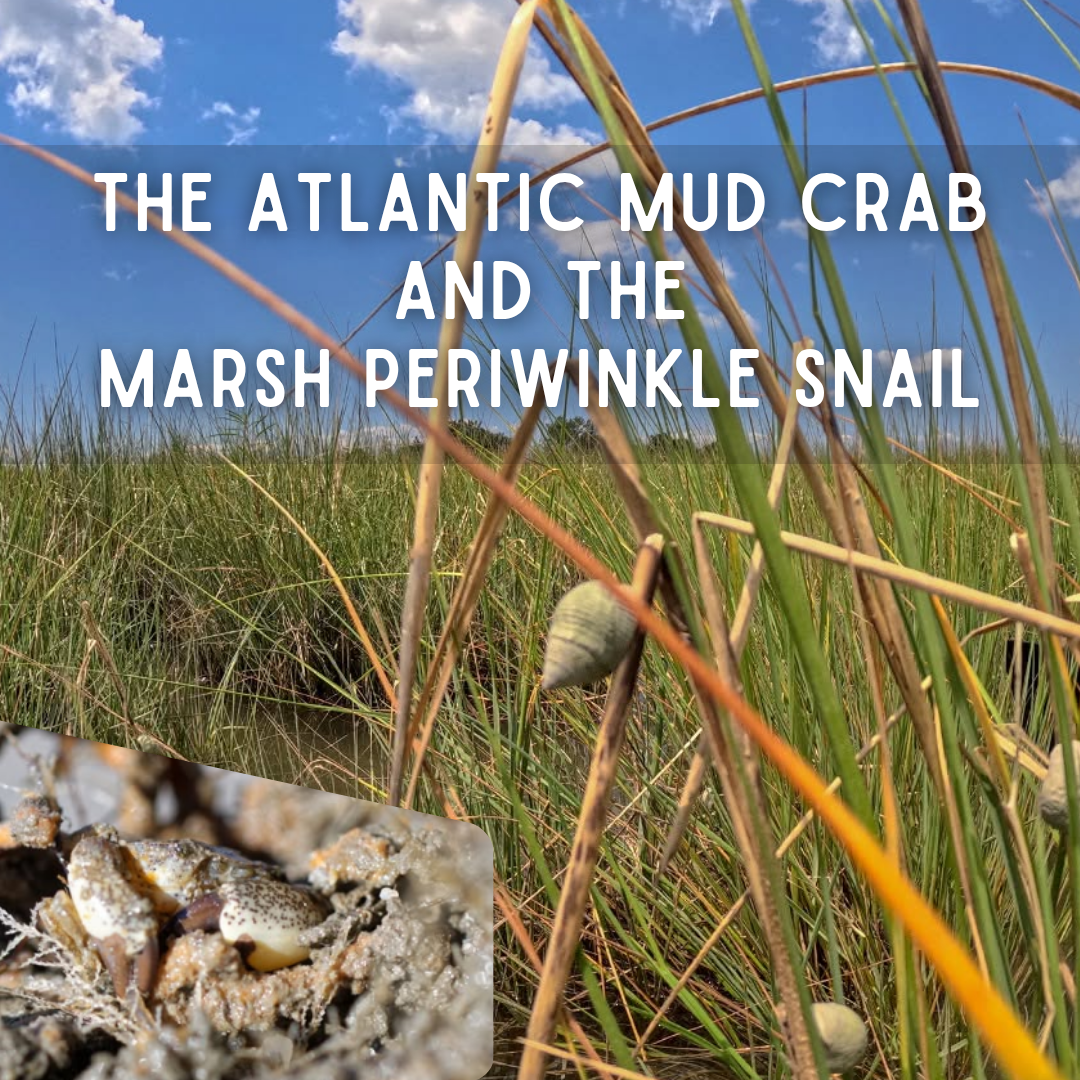
    Cordgrass growth here is tightly regulated by the marsh periwinkle snail (Littoraria irrorata). These snails climb grass stems to avoid inundation and graze directly on living tissue, often intensifying damage by facilitating fungal infection. At high densities, periwinkle grazing can dramatically reduce cordgrass height and biomass, effectively mowing the marsh edge (Silliman & Zieman, 2001).

    Marsh periwinkle snails (Littoraria irrorata) are a common sight on cordgrass (Spartina alterniflora) in North Carolina - part of the Hidden city in the grass | Photo credit: North Carolina Aquarium at Roanoke Island, 2018
    Marsh periwinkle snails (Littoraria irrorata) are a common sight on cordgrass (Spartina alterniflora) in North Carolina | Photo credit: North Carolina Aquarium at Roanoke Island, 2018.

    Unchecked grazing can destabilize the marsh platform—but periwinkles themselves are regulated by crabs, including blue crabs (Callinectes sapidus), fiddler crabs (Genus Uca), purple marsh crabs (Sesarma reticulatum), hermit crabs and other burrowing species. Crabs prey on snails, limiting grazing pressure and indirectly protecting cordgrass (Silliman et al., 2005).

    Crabs also function as ecosystem engineers. Their burrows aerate sediments, relieve sulfide stress around plant roots, and improve tidal water movement through compacted soils (Bertness, 1985; Thomas & Blum, 2010). Where crabs are abundant, cordgrass grows taller and denser; where they are lost, marsh die-off can occur rapidly.

    This zone persists through a trophic cascade: grass builds land, snails limit grass, and crabs keep the system in balance.

    Mid-marsh: mussels and detritus processors reinforce the platform

    Just upslope, where flooding becomes less frequent, plant communities shift toward mixtures that often include saltmeadow cordgrass (Spartina patens). Here, the ribbed mussel (Geukensia demissa) emerges as a key stabilizing force.

    Saltmeadow cordgrass (Spartina patens) is an important marsh stabilizer that has higher productivity when it grows near ribbed mussel aggregations | Photo credit: Kristie Gianopulos
    Saltmeadow cordgrass (Spartina patens) is an important marsh stabilizer that has higher productivity when it grows near ribbed mussel aggregations | Photo credit: Kristie Gianopulos

    Ribbed mussels form dense clusters at the base of marsh vegetation, binding sediments with byssal threads and physically reinforcing marsh soils against erosion (Bertness, 1984). As filter-feeders, they concentrate nutrients by removing organic matter from tidal waters and depositing nitrogen-rich biodeposits directly into marsh sediments (Jordan & Valiela, 1982).

    Ribbed mussels (Geukensia demissa) at the base of marsh vegetation | Photo credit: R. Bachand
    Ribbed mussels (Geukensia demissa) at the base of marsh vegetation | Photo credit: R. Bachand

    Grasses growing near mussel aggregations exhibit higher productivity than those without mussels, demonstrating a strong facilitative relationship between animals and plants (Bertness, 1984). As vegetation senesces, detritivorous worms, insects, and microbial decomposers break down dead plant material, converting standing biomass into detritus that fuels food webs throughout the estuary (Mann, 1988).

    The mid-marsh functions as a processing zone, reinforcing marsh structure while converting plant matter into usable energy.

    High marsh: microbes that manage chemical stress

    In the high marsh, dominated by black needlerush (Juncus roemerianus) and saltmeadow cordgrass (Spartina patens), flooding is limited to spring tides and storms. Prolonged exposure to air creates harsh soil conditions, including elevated salinity and sulfide accumulation.

    Black needlerush grass (Juncus roemerianus) dominates the high marsh | Photo credit: ©Andy Newman
    Black needlerush grass (Juncus roemerianus) dominates the high marsh | Photo credit: ©Andy Newman

    Here, microbial communities play a central role. Sulfate-reducing and sulfur-oxidizing bacteria regulate sulfide concentrations that would otherwise become toxic to plant roots, while microbial decomposition controls nutrient availability under fluctuating oxygen conditions (Howarth & Giblin, 1983).

    Beneath the marsh surface, soil microbes regulate decomposition, carbon exchange, and chemical stress. Changes in salinity and flooding reshape microbial communities, influencing how marsh soils process organic matter and support vegetation across tidal elevations. | Image credit: Zhang et al., 2023
    Beneath the marsh surface, soil microbes regulate decomposition, carbon exchange, and chemical stress. Changes in salinity and flooding reshape microbial communities, influencing how marsh soils process organic matter and support vegetation across tidal elevations. | Image credit: Zhang et al., 2023.

    Small soil invertebrates maintain pore spaces that allow brief pulses of oxygenated water to penetrate during flooding. Unlike the visibly engineered low marsh, the high marsh is stabilized largely through biogeochemical regulation rather than grazing or predation.

    This zone endures because microbes quietly buffer plants against chemical extremes.

    From microbes in the soil to grasses at the surface, biological interactions drive marsh formation. Microbial processes govern decomposition and organic matter buildup, helping determine whether marsh platforms gain elevation, remain stable, or collapse | Image credit: Abbot, Quirk & Fultz, 2022.
    From microbes in the soil to grasses at the surface, biological interactions drive marsh formation. Microbial processes govern decomposition and organic matter buildup, helping determine whether marsh platforms gain elevation, remain stable, or collapse | Image credit: Abbot, Quirk & Fultz, 2022.

    The marsh–upland transition: keeping the boundary intact

    At the uppermost margin of the marsh, tidal influence becomes intermittent and environmental stress shifts from salinity to erosion and freshwater input. Burrowing invertebrates increase soil permeability, allowing stormwater and tidal surges to infiltrate rather than scour the surface (Thomas & Blum, 2010).

    A profile illustration . depicting the recommended transition of plant types from the edge of the salt marsh to the upland buffer. | Image credit: Massachusetts Office of Coastal Zone Management
    A profile illustration . depicting the recommended transition of plant types from the edge of the salt marsh to the upland buffer. | Image credit: Massachusetts Office of Coastal Zone Management

    Vegetation root networks stabilize soils exposed to drying and wave action, while animal burrows act as pressure-release pathways during extreme events. When these biological processes are disrupted—by shoreline hardening or vegetation removal—the marsh edge often collapses abruptly rather than adjusting gradually.

    This boundary holds only as long as water can move through it.

    Black, organic-rich peat exposed after storms marks the remains of an ancient salt marsh once buried beneath barrier sands. Its reappearance along North Topsail Beach records long-term shoreline change and marsh migration. Photo credit: Bill Tresnan, 2024
    Black, organic-rich peat exposed after storms marks the remains of an ancient salt marsh once buried beneath barrier sands. Its reappearance along North Topsail Beach records long-term shoreline change and marsh migration. Photo credit: Bill Tresnan, 2024.

    A marsh built by interactions

    Across all elevations in Onslow County marshes, the pattern is consistent:

    Plants define the zones—but animals and microbes determine whether those zones endure.

    Conceptual diagram of revised juvenile blue crab ontogenetic habitat shifts. Arrows depict transitions between habitats with increases in size. Arrow widths denote abundance contributions of individuals between habitats. | Image credit: Hyman et al., 2023

    From grazers that keep seagrass blades clean, to crabs that hold the marsh edge together, to microbes that manage invisible chemical stress, the marsh is sustained by small organisms with outsized influence. Together, these interactions determine not just what lives in the marsh, but whether the marsh itself endures.

    Purple marsh crabs (Sesarma reticulatum) moving together along the marsh edge on South Topsail Island, North Carolina. Their collective movement and feeding activity illustrate how small organisms play outsized roles in maintaining marsh structure. Photo credit: A. Mitchell, 2025.
    Purple marsh crabs (Sesarma reticulatum) moving together along the marsh edge on South Topsail Island, North Carolina. Their collective movement and feeding activity illustrate how small organisms play outsized roles in maintaining marsh structure. Photo credit: A. Mitchell, 2025.

    References

    Abbott, K. M., Quirk, T., & Fultz, L. M. (2022). Soil microbial community development across a 32-year coastal wetland restoration time series and the relative importance of environmental factors. Science of The Total Environment, 821, 153359. https://doi.org/10.1016/j.scitotenv.2022.153359

    Bertness, M. D. (1984). Ribbed mussels and Spartina Alterniflora production in a New England salt marsh. Ecology, 65(6), 1794-1807. https://doi.org/10.2307/1937776

    Bertness, M. D. (1985). Fiddler crab regulation of Spartina alterniflora production on a New England salt marsh. Ecology, 66(3), 1042-1055. https://doi.org/10.2307/1940564

    Duffy, J. E., Reynolds, P. L., Boström, C., Coyer, J. A., Cusson, M., Donadi, S., Douglass, J. G., Eklöf, J. S., Engelen, A. H., Eriksson, B. K., Fredriksen, S., Gamfeldt, L., Gustafsson, C., Hoarau, G., Hori, M., Hovel, K., Iken, K., Lefcheck, J. S., Moksnes, P., … Stachowicz, J. J. (2015). Biodiversity mediates top–down control in eelgrass ecosystems: A global comparative‐experimental approach. Ecology Letters, 18(7), 696-705. https://doi.org/10.1111/ele.12448

    Howarth, R. W., & Giblin, A. (1983). Sulfate reduction in the salt marshes at Sapelo island, Georgia. Limnology and Oceanography, 28(1), 70-82. https://doi.org/10.4319/lo.1983.28.1.0070

    Hyman, A. C., Chiu, G. S., Seebo, M. S., Smith, A., Saluta, G. G., Knick, K. E., & Lipcius, R. N. (2023). Model-based evaluation of critical nursery habitats for juvenile blue crabs through ontogeny: Abundance and survival in seagrass, salt marsh, and unstructured bottom. https://doi.org/10.1101/2023.07.20.549877

    Jordan, T. E., & Valiela, I. (1982). A nitrogen budget of the ribbed mussel, Geukensia demissa, and its significance in nitrogen flow in a New England salt marsh. Limnology and Oceanography, 27(1), 75-90. https://doi.org/10.4319/lo.1982.27.1.0075
    Mallin, M. A., Burkholder, J. M., Cahoon, L. B., & Posey, M. H. (2000). North and South Carolina coasts. Marine Pollution Bulletin, 41(1-6), 56-75. https://doi.org/10.1016/s0025-326x(00)00102-8

    Mann, K. H. (1988). Production and use of detritus in various freshwater, estuarine, and coastal marine ecosystems. Limnology and Oceanography, 33(4part2), 910-930. https://doi.org/10.4319/lo.1988.33.4part2.0910

    Orth, R. J., Heck, K. L., & Van Montfrans, J. (1984). Faunal communities in seagrass beds: A review of the influence of plant structure and prey characteristics on predator: Prey relationships. Estuaries, 7(4), 339. https://doi.org/10.2307/1351618

    Orth, R. J., & Van Montfrans, J. (1984). Epiphyte-seagrass relationships with an emphasis on the role of micrograzing: A review. Aquatic Botany, 18(1-2), 43-69. https://doi.org/10.1016/0304-3770(84)90080-9

    Silliman, B. R., Van de Koppel, J., Bertness, M. D., Stanton, L. E., & Mendelssohn, I. A. (2005). Drought, snails, and large-scale die-off of southern U.S. salt marshes. Science, 310(5755), 1803-1806. https://doi.org/10.1126/science.1118229

    Silliman, B. R., & Zieman, J. C. (2001). Top-down control of Spartina alterniflora production by periwinkle grazing in a Virginia salt marsh. Ecology, 82(10), 2830. https://doi.org/10.2307/2679964

    Thomas, C., & Blum, L. (2010). Importance of the fiddler crab Uca pugnax to salt marsh soil organic matter accumulation. Marine Ecology Progress Series, 414, 167-177. https://doi.org/10.3354/meps08708

    Valentine, J. F., & Duffy, J. E. (n.d.). The central role of grazing in seagrass ecology. Seagrasses: Biology, Ecology and Conservation, 463-501. https://doi.org/10.1007/1-4020-2983-7_20

    Zhang, G., Bai, J., Jia, J., Wang, W., Wang, D., Zhao, Q., Wang, C., & Chen, G. (2023). Soil microbial communities regulate the threshold effect of salinity stress on SOM decomposition in coastal salt marshes. Fundamental Research, 3(6), 868-879. https://doi.org/10.1016/j.fmre.2023.02.024

  • The 12 Days of Estuary Christmas | New River Estuary

    The 12 Days of Estuary Christmas | New River Estuary

    In the season of chilly tides and twinkling pier lights, the New River estuary doesn’t quiet down — it parties in its own salty way. So grab your cocoa, bundle up, and join us for a winter countdown of festive fins, feathers, and the ecological magic beneath the misty surface.

    (Sing along if you dare — apologies in advance.)

    Day 12: Twelve Dolphins Dancing

    12 dolphins dancing

    Bottlenose dolphins along the mid-Atlantic coast shift into cooperative foraging teams in the cooler months — synchronized movements that feel almost choreographed (Torres & Read, 2009). Their leaping, circling, and flipper-flicking tactics help herd fish just like dancers driving the story across a winter stage.

    Cue underwater Nutcracker ballet.

    Day 11: Eleven Stripers Schooling

    11 stripers schooling

    Atlantic striped bass move into estuarine channels when the water cools, fueling popular winter fisheries (Boyd, 2011).

    Cold water? Hot bite.

    Day 10: Ten Blue Crabs Burrowing

    Ten Blue Crabs Burrowing

    Blue crabs overwinter right here — burrowed into sediment, metabolism slowed, waiting for spring, or when water temperatures rise above 9℃ (Glandon, Kilborn & Miller, 2019).

    The ultimate cozy blanket fort.

    Day 9: Nine Oysters Filtering

    Nine Oysters Filtering

    Oysters continue filtering water through the winter, though more slowly — still improving water quality and boosting biodiversity (Grabowski & Peterson, 2007).

    Nature’s tiny elves never clock out.

    Day 8: Eight Croakers Drumming

    Eight Croakers Drumming

    Atlantic croaker remain common in NC coastal waters during cooler months, shifting to deeper estuarine areas (Miller et al., 2003).

    Rumble, rumble — underwater holiday percussion.

    Day 7: Seven Specks Still Striking

    Seven Specks Still Striking

    Speckled seatrout stay active in winter, especially in deeper holes and marsh channels where prey concentrates and water temperatures remain above 7℃ (Ellis, Buckle & Hightower, 2017).

    Even cold-blooded fish love a good holiday snack.

    Day 6: Six Sharks Snow-Birding

    Six Sharks Snow-Birding

    Juvenile coastal sharks like sandbars and sharpnose depart estuaries in late fall, migrating offshore and southward (Bangley et al., 2018).

    “See you after the thaw!”

    Day 5: FIVE… OYS-TER REEFS!

    Five oyster reefs

    Oyster reefs provide the essential winter housing market — structured refuge for juvenile fish, crustaceans, and invertebrates (Coen et al., 2007).

    Deck the reefs with beds and breakfasts..

    Day 4: Four Buffleheads Diving

    Four Buffleheads Diving

    These small sea ducks, buffleheads, arrive from the Arctic and forage in our coastal waters all winter long (Gauthier, 2014).

    Feathered travelers escaping the Arctic freeze.

    Day 3: Three Terrapins Burrowed

    Three Terrapins Burrowed

    Diamondback terrapins overwinter in marsh sediments, lowering heart rate and waiting out the cold (Harden, Midway & Willard, 2015).

    A brumation vacation.

    Day 2: Two Menhaden Shoals

    Two Menhaden Shoals

    Atlantic menhaden form huge winter schools offshore and near inlet mouths, fueling predator energy budgets (Orth, 2023).

    The estuary’s holiday punch bowl.

    Day 1: And a Red Drum in the Mar-sh-Tree

    And a Red Drum in the Mar-sh-Tree

    Red drum remain year-round, feeding in creeks and marsh edges even in winter low-temp slow-motion (Bacheler et al., 2009).

    Our coastal Christmas (and state) mascot.

    The Estuary Never Sleeps

    Even as we wrap gifts and check lists twice, life beneath the cold surface hustles on — feeding, moving, filtering, and keeping the New River ecosystem healthy through the darkest season.

    So here’s to the citizens of our winter waters —
    May your tides be merry and bright!

    References

    Bacheler, N., Paramore, L., Buckel, J., & Hightower, J. (2009). Abiotic and biotic factors influence the habitat use of an estuarine fish. Marine Ecology Progress Series, 377, 263-277. https://doi.org/10.3354/meps07805

    Bangley, C. W., Paramore, L., Dedman, S., & Rulifson, R. A. (2018). Delineation and mapping of coastal shark habitat within a shallow lagoonal Estuary. PLOS ONE, 13(4), e0195221. https://doi.org/10.1371/journal.pone.0195221

    Boyd, J. B. (2011). Maturation, fecundity, and spawning frequency of the Albemarle/Roanoke striped bass stock (2011. 1510474) [Doctoral dissertation]. ProQuest Dissertations and Theses Global.

    Coen, L., Brumbaugh, R., Bushek, D., Grizzle, R., Luckenbach, M., Posey, M., Powers, S., & Tolley, S. (2007). Ecosystem services related to oyster restoration. Marine Ecology Progress Series, 341, 303-307. https://doi.org/10.3354/meps341303

    Ellis, T., Buckel, J., & Hightower, J. (2017). Winter severity influences spotted seatrout mortality in a southeast US estuarine system. Marine Ecology Progress Series, 564, 145-161. https://doi.org/10.3354/meps11985

    Gauthier, G. (2014, July 14). Bufflehead – Bucephala albeola. Birds of the World – Cornell Lab of Ornithology. Retrieved November 29, 2025, from https://birdsoftheworld.org/bow/historic/bna/buffle/2.0/introduction

    Glandon, H. L., Kilbourne, K. H., & Miller, T. J. (2019). Winter is (not) coming: Warming temperatures will affect the overwinter behavior and survival of blue crab. PLOS ONE, 14(7), e0219555. https://doi.org/10.1371/journal.pone.0219555

    Grabowski, J. H., & Peterson, C. H. (2007). Restoring oyster reefs to recover ecosystem services. Theoretical Ecology Series, 281-298. https://doi.org/10.1016/s1875-306x(07)80017-7

    Harden, L. A., Midway, S. R., & Williard, A. S. (2015). The blood biochemistry of overwintering diamondback terrapins (Malaclemys terrapin). Journal of Experimental Marine Biology and Ecology, 466, 34-41. https://doi.org/10.1016/j.jembe.2015.01.017

    Mead, J. G., & Potter, C. W. (1995). Recognizing two populations off the bottlenose dolphin (Tursiops Truncatus) of the Atlantic coast of North America-Morphologic and Ecologic Considerations. https://repository.si.edu/server/api/core/bitstreams/9c563919-2b27-4ac4-bba1-92e7d090fd72/content

    Orth, D. J. (2023). Fish, fishing and conservation. Blacksburg: Virginia Tech Department of Fish and Wildlife Conservation.Torres, L. G., & Read, A. J. (2009). Where to catch a fish? The influence of foraging tactics on the ecology of bottlenose dolphins (Tursiops truncatus) in Florida Bay, Florida. Marine Mammal Science, 25(4), 797-815. https://doi.org/10.1111/j.1748-7692.2009.00297.x

  • The Moonlit Assassin: The Stealth of the Atlantic Moon Snail

    The Moonlit Assassin: The Stealth of the Atlantic Moon Snail

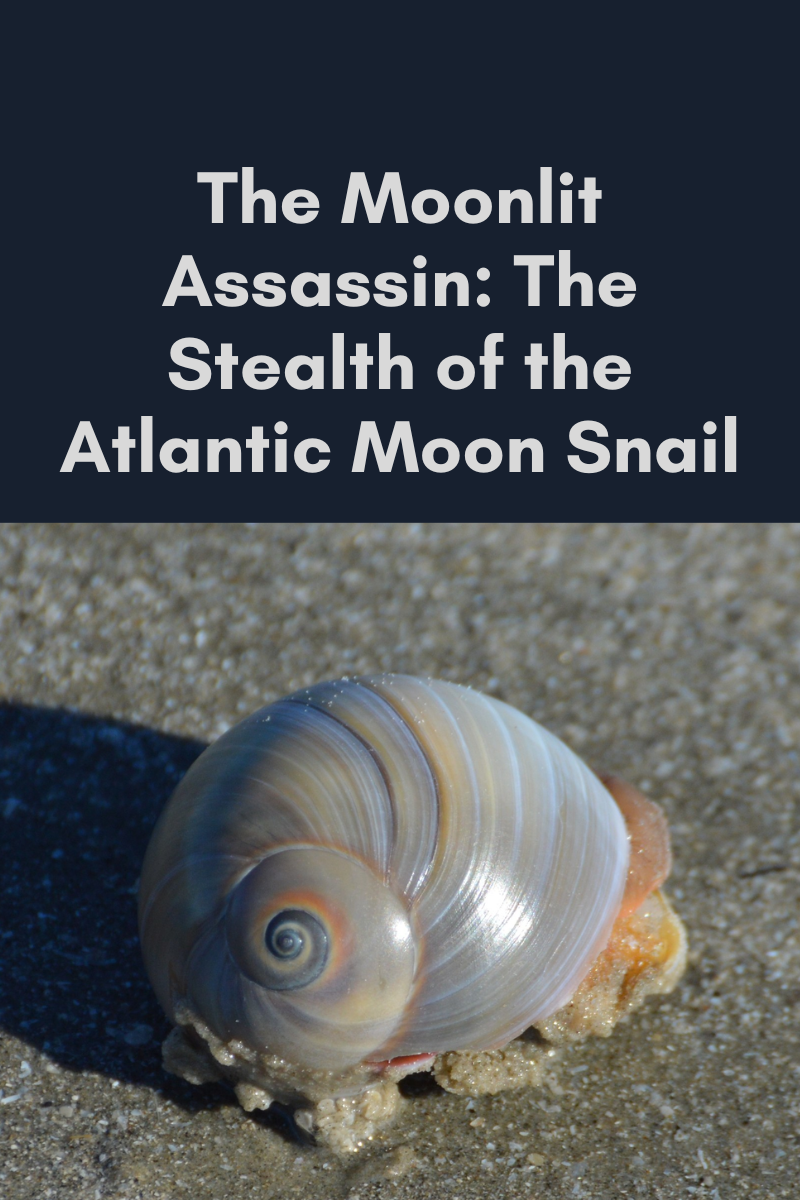
    On a stroll along the damp sand of the tide line, just after dusk under the soft glow of the moon over Topsail or North Topsail Beach, you might spot a round, glossy shell that looks more like a polished marble than a living creature. This little orb belongs to the Atlantic moon snail or  Shark Eye (Neverita duplicata) — smooth and innocent-looking by day, but by night the script flips. It becomes a stealthy predator disguised in plain sight, turning the quiet sand into a midnight hunting ground.

    A Shell with a Secret

    To the casual beachcomber, the moon snail’s shell looks harmless — a perfect spiral polished smooth by the tide. But that rounded shape is built for stealth and movement beneath the sand. Moon snails bury themselves under the flats and inlets of sandy shores, waiting to pounce. Their favorite prey? Soft-bodied bivalves — clams, coquinas, and other shelled animals that live partly buried in sand.

    The moon snail doesn’t wait for prey to drift by; it actively hunts. Using its broad, muscular foot, it glides unseen beneath the surface, sensing vibrations of hidden clams. Once it finds a meal, it envelops the prey in its foot like a slow-moving trap — then the drilling begins.

    A rough tongue called a radula rasps the surface while secreted acid softens the calcium shell. Hours later, a single round hole opens a doorway to dinner. Every drilled shell that washes up tells the same story. These beveled, countersunk holes are so distinctive that scientists can identify the species of moon snail just by the shape of the bore (Grey & Bounding, 2005; Dietl & Kelley, 2006).

    That neat, circular hole — the hallmark of moon snail predation — is what beachcombers often discover without realizing the drama that unfolded beneath their feet.

    Have you seen shells with a perfect hole in them? This is evidence of predation by moon snail
    Have you seen shells with a perfect hole in them? This is evidence of predation by moon snail.

    Hunting Under the Sand

    Unlike many beach creatures you spot on the surface, the moon snail is mostly hidden. During low tide, it may creep near the edge of the exposed flats; at other times, it lies just beneath the surface. When it finds a buried bivalve, it uses a combination of mechanical drilling (via the radula) and acidic secretions to bore through the shell until it can reach the soft tissues inside (Visaggi, Dietl, & Kelley, 2013).

    In experimental trials, moon snails were observed to prefer drilling over suffocating their prey, even when the prey was buried at different sediment depths (Visaggi et al., 2013). That means whether the sand is shallow or deeper, the snail still goes for the drill rather than waiting for the prey to weaken.

    But that’s not all — stable-isotope studies, which measure chemical fingerprints of diet, show that the moon snail’s feeding habits may be more flexible than once thought. It appears to feed not only on animal prey but occasionally on other resources, hinting at omnivory (Casey, Fall, & Dietl, 2016). In other words: it’s a predator, yes — but one with a backup plan when food runs low.

    Why It Matters (and Why It’s Cool)

    1. Predator and Prey in One
    The moon snail helps regulate bivalve populations, preventing a single species from dominating the sand flats. In doing so, it maintains habitat diversity. At the same time, it transfers energy upward in the food chain by becoming prey for larger predators — fitting neatly into the middle of the coastal food web.

    2. Ecosystem Engineer
    Burrowing, hunting, and leaving behind drilled shells change the physical landscape of the beach. Each empty shell, each “crime scene” hole, becomes part of the microhabitat for small invertebrates, microbes, and future shell-seekers. In this way, the moon snail contributes to sediment health and biodiversity.

    3. The Hidden Drama Beneath Your Feet
    From a beachcomber’s perspective, the moon snail is a perfect spooky-season protagonist. Picture it: a “moon” shell glinting under moonlight, a buried assassin beneath your feet, and a perfect little hole in a clam shell — the evidence of a tiny midnight crime.

    The Perfect Crime

    When a clam is finished, only the perfect circular hole remains — a tiny signature in the sand. Moon snails rarely suffocate their prey; they almost always drill, no matter how deep the clam is buried (Visaggi, Dietl, & Kelley, 2013). This ancient behavior has marked shells for millions of years — the same holes appear in fossils that predate the Carolina coastline.

    And when food runs low, the story turns darker. In crowded flats where competition is fierce, moon snails have been observed turning their drills on each other. Cannibalism, rare in most mollusks, becomes a desperate survival strategy in the world beneath the sand (Gould, 2010).

    Drilled Atlantic moon snail shell shows cannibalism | Photo credit: iNaturalist, plawrynpx
    Drilled Atlantic moon snail shell shows cannibalism | Photo credit: iNaturalist, plawrynpx

    The Ripple Beneath the Sand

    The moon snail’s creeping movements do more than tell tales of horror. Its trails of mucus — left behind as it slides through the sand — subtly transform the beach. That film of slime “primes” the sediment, helping microbes break down organic matter faster and releasing nutrients back into the ecosystem (Hannides & Aller, 2016).

    Atlantic moon snail in the sand | Photo Credit: D. Bray
    Atlantic moon snail in the sand | Photo Credit: D. Bray

    So while it’s a killer to clams, it’s also a quiet caretaker. Its hunting churns the sand, its slime fuels the microbes, and its discarded shells shelter the next wave of tiny life.

    The Balance of the Hunt

    Every act of predation keeps the beach in balance. Moon snails are secondary consumers, feeding on clams that filter plankton from the water. In doing so, they prevent any single species from overrunning the flats. And they, in turn, become prey for blue crabs, rays, and drum fish that patrol the shallows.

    Each neat hole in a shell is a record of that balance — energy passed from clam to snail to crab to ocean. Nothing wasted. Everything connected.

    For Beachwalkers in Onslow County

    If you’re exploring the sands of Onslow County — Topsail Island, North Topsail, Surf City, or the New River Inlet — here’s what to watch for:

    • Round, glossy shells washed up on the tide flat — the moon snail’s shell is distinct, almost like a little orb.
    • Sand collars: doughnut-shaped, jelly-like structures found after storms or low tide. These are the moon snail’s egg masses, eerie “rings” that crumble when dry.
    • Drilled bivalve shells: clams or coquinas with a neat circular hole — the aftermath of a moon snail meal.
    • Time and place: Visit during low tide, especially after a storm that exposes more of the flat. The sand will tell its stories. Wear shoes, tread lightly, and remember — much of the life here remains hidden.
    Atlantic moon snail sand collar photo credit 2019 Cesar Andres Castillo
    Atlantic moon snail sand collar | César Andrés Castillo (c) 2019

    Final Thought

    It’s easy to write off a pretty shell as just another beach find. But every shell, hole, and collar tells a story of life beneath the waves. The moon snail wears the moon’s name well — luminous, secretive, and always working in the dark. Its beauty hides its appetite; its predation hides its purpose.

    In its own way, it keeps the beach breathing — a tiny engineer of life and death that turns sand, shell, and shadow into an endless cycle. The next time you find that round shell glinting in the surf, you’re not just finding a souvenir — you’re finding the ghost of a hunter in the sand.

    References

    Casey, M. M., Fall, L. M., & Dietl, G. P. (2016). You are what you eat: Stable isotopic evidence indicates that the naticid gastropod Neverita duplicata is an omnivore. Frontiers in Ecology and Evolution, 4, 125. https://doi.org/10.3389/fevo.2016.00125

    Dietl, G. O., & Kelley, P. H. (2006). Can naticid gastropod predators be identified by the holes they drill? Ichnos, 13(2), 103–113. https://doi.org/10.1080/10420940600842979

    Gould, E. S. (2010). Unexpected rates of cannibalism under competitive conditions by the naticid gastropod Neverita duplicata. Marine Biology, 157(10), 2341–2349. https://doi.org/10.1007/s00227-010-1505-8

    Grey, M., & Bounding, E. G. (2005). Shape differences among bore holes drilled by three species of naticid gastropods. Palaeogeography, Palaeoclimatology, Palaeoecology, 221(3–4), 245–260. https://doi.org/10.1016/j.palaeo.2005.02.003

    Hannides, A. K., & Aller, R. C. (2016). Priming effect of benthic gastropod mucus on sedimentary organic matter remineralization. Marine Ecology Progress Series, 545, 77–88. https://doi.org/10.3354/meps11587

    Visaggi, C. C., Dietl, G. P., & Kelley, P. H. (2013). Testing the influence of sediment depth on drilling behaviour of Neverita duplicata (Gastropoda: Naticidae), with a review of alternative modes of predation by naticids. Journal of Molluscan Studies, 79(4), 310–322. https://doi.org/10.1093/mollus/eyt023