Category: Clearnose skate

  • Threshold Species at the Year’s Turn

    Threshold Species at the Year’s Turn

    Winter birds and hidden skates in a changing coastal system

    Late December along the coast does not announce itself loudly. The holidays have passed, the shoreline empties, and the light—almost imperceptibly—begins to return. The winter solstice marks the shortest day of the year, but its ecological counterpart is quieter. The water does not reset. It settles.

    This is the moment when the coastal ecosystem stops negotiating with the season and begins to accept it. That acceptance is visible, if you know where to look—above the waterline in the form of a small diving duck, and below the surface in the stillness of a benthic predator that does not announce its presence at all.

    In our region, ecologists recognize certain animals as threshold species: species whose presence, or subtle change in behavior, signals that the system has crossed a seasonal threshold in energy, behavior, and stability — moving from late year into what comes next.

    Above the Water: When Winter Is No Longer a Question

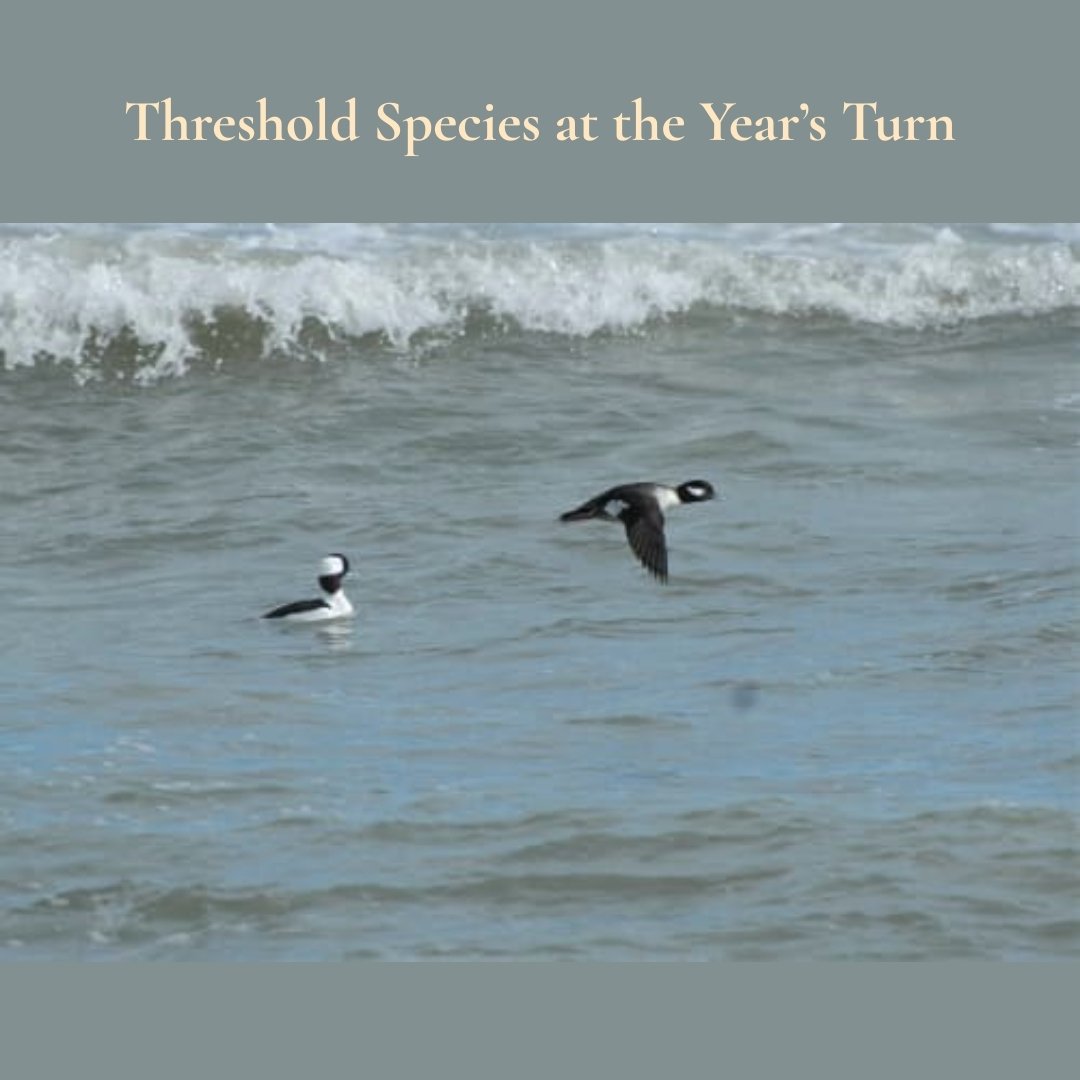
    Male (left) and female (right) Bufflehead ducks enjoying a winter swim | Photo credit: Judy Gallagher, iNaturalist

    By late December, one species begins to appear with quiet regularity across protected sounds and estuaries: the Bufflehead (Bucephala albeola).

    Buffleheads are not early winter arrivals. They do not surge in during the first cold fronts of autumn, nor do they linger indecisively during seasonal transition. Instead, their presence reflects commitment. By the time buffleheads settle into coastal waters, water temperatures have stabilized at winter lows, turbulence has eased in protected areas, and benthic prey communities—particularly small crustaceans and mollusks—have shifted into predictable winter distributions (Eadie et al., 2000; Goudie et al., 1994).

    Ecologically, buffleheads are specialists. They forage by diving, relying on clear water and reliable prey patches. Their winter distribution is shaped not by calendar dates but by energy economics: cold water increases metabolic demands, and winter habitats must reliably repay that cost (Eadie & Kehoe, 2022). Where buffleheads remain, the system has crossed a threshold from fluctuation to stability.

    In this way, they function less as migrants and more as indicators. Their presence signals that the coastal year has finished rearranging itself. Winter has arrived—not dramatically, but decisively.

    Below the Water: When Stillness Makes Life Visible

    Clearnose skate in winter waters | Photo credit: NOAA Fisheries

    Below the surface, the signal is subtler.

    Skates do not arrive in winter with the clarity of birds overhead. Species such as the Clearnose skate (Rostroraja eglanteria) are present along the southeastern U.S. coast throughout much of the year. What changes in late December is not their location, but their visibility.

    As water temperatures drop, skates reduce activity, conserving energy through decreased movement and prolonged periods of resting on the seafloor (Di Santo & Bennett, 2011). This metabolic slowdown coincides with seasonal increases in water clarity driven by reduced biological productivity, lower sediment resuspension, and diminished boat traffic (Cloern et al., 2014). The result is a paradox: winter reveals what summer conceals.

    In these conditions, skates become easier to observe—not because they have increased in number, but because the system itself has slowed enough to make persistence visible. Their flattened bodies blend seamlessly into sandy or muddy substrates, a strategy optimized for ambush predation and energy conservation rather than movement (Carrier et al., 2012).

    If buffleheads announce that winter has settled, skates confirm it. They represent endurance over motion, patience over migration.

    The Ecological Hinge Between Years

    Neither of these species marks a beginning. Neither signals renewal or arrival in the way spring migrants do. Instead, they occupy the hinge between years—the moment when the ecosystem accepts the constraints of winter and reorganizes around them.

    Late December is not biologically empty. It is a period of recalibration. Energy budgets tighten. Movements become deliberate. Survival depends less on abundance than on efficiency.

    Above the water, buffleheads gather where the math works. Below it, skates persist by minimizing expenditure altogether. One is easily seen, the other almost never. Together, they reveal the same truth: the system has crossed a line.

    After the Turn

    January will bring its own changes. Cold will deepen, or ease. Migratory patterns will sharpen. New signals will emerge. But the moment just after the solstice—just after the holidays—is different. It is when the coast pauses, holds, and commits.

    The year does not turn loudly here.
    It settles, and then it holds.

    References

    Carrier, J. C., Musick, J. A., & Heithaus, M. R. (2012). Biology of sharks and their relatives (2nd ed.). CRC Press. https://doi.org/10.1201/b11867 

    Cloern, J. E., Foster, S. Q., & Kleckner, A. E. (2014). Phytoplankton primary production in the world’s estuarine–coastal ecosystems. Biogeosciences, 11(9), 2477–2501. https://doi.org/10.5194/bg-11-2477-2014 

    Di Santo, V., & Bennett, W. A. (2011). Is post-feeding thermotaxis advantageous in elasmobranch fishes? Journal of Fish Biology, 78(7), 1950–1965. https://doi.org/10.1111/j.1095-8649.2011.02976.x 

    Eadie, J. M., & Kehoe, F. P. (2022). Energetics and foraging ecology of diving ducks. In P. G. Rodewald (Ed.), The birds of North America. Cornell Lab of Ornithology.
    https://doi.org/10.2173/bna 

    Eadie, J. M., Savard, J. P. L., & Mallory, M. L. (2000). Barrow’s Goldeneye (Bucephala islandica) and Bufflehead (Bucephala albeola). In A. Poole & F. Gill (Eds.), The birds of North America. Cornell Lab of Ornithology. https://doi.org/10.2173/bna.548 

    Goudie, R. I., Brault, S., Conant, B., Kondratyev, A. V., Petersen, M. R., & Vermeer, K. (1994). The status of sea ducks in the North Pacific Rim: Toward their conservation. Transactions of the North American Wildlife and Natural Resources Conference, 59, 27–49. https://pubs.usgs.gov/publication/70187692
  • Flat-Finned Neighbors: Rays and Skates Along Topsail & New River

    Flat-Finned Neighbors: Rays and Skates Along Topsail & New River

    If you love watching for fins in Onslow County, remember: not every fin belongs to a shark. Sharks, rays, skates, and sawfishes are all elasmobranchs—cartilaginous fishes with skeletons of flexible cartilage instead of bone. Along our beaches and in the New River estuary, you’ll most often meet rays and skates, the sharks’ closest cousins. Below are the species you’re most likely to spot, when they show up, what they eat, who eats them, their environmental preferences, and their conservation status.

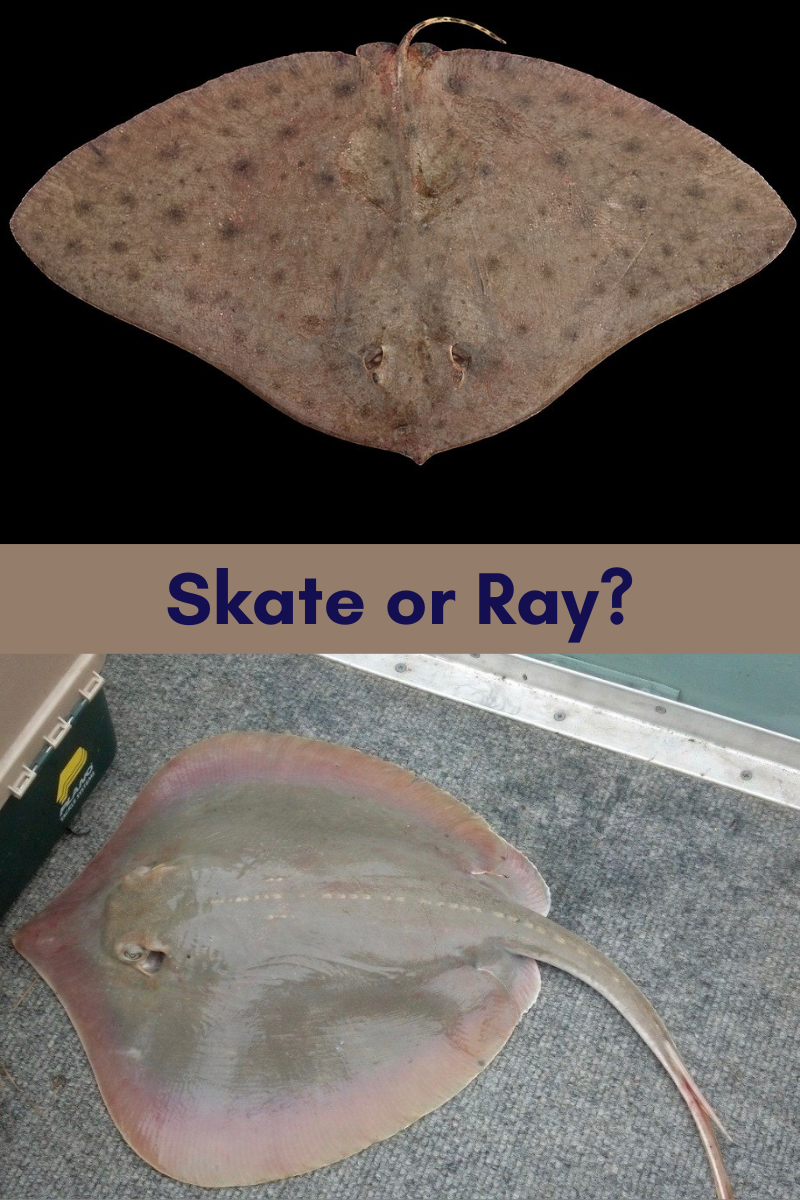
    Quick ID: Ray vs. Skate

    • Rays generally have a whip-like tail; many (not all) have a venomous spine.
    • Skates lack a stinging spine and often have small dorsal fins near the tail tip.
    • Both glide over sand flats, sounds, and estuary mouths where they vacuum up clams, crabs, and small fishes.
    skates and ray anatomical differences
    Credit: Florida Museum

    Atlantic Stingray (Hypanus sabinus) — Our year-round neighbor in the estuary

    Small, spade-shaped, and sand-colored, the Atlantic stingray frequents shallow, warm, and often brackish waters, including the lower New River and surf zones off Topsail. It’s one of the most euryhaline elasmobranchs (tolerant of a wide salinity range), which is why folks see them from tidal creeks to nearshore surf (Johnson & Snelson, 1996).

    When to look: Late spring through fall in very shallow water on warm days (watch for “flying” jumps as they evade predators or parasites).

    Give them space: Shuffle your feet in the shallows to avoid accidental tail-spine contact.

    Diet (Prey): Worms, amphipods, small crustaceans, and mollusks, dug up from the sandy bottom.
    Predators: Large sharks (bull, hammerhead), some large fish (groupers, snappers), and wading birds preying on juveniles.

    Conservation status:

    • IUCN: Least Concern.
    • U.S. Status: Not protected under ESA or CITES; not managed in fisheries.
      Note: Stable populations, though freshwater groups sometimes show reproductive decline tied to water quality.
    hypanus sabinus

    Cownose Ray (Rhinoptera bonasus) — The bronze “wings” of summer

    Bronze-backed and wing-tipped, cownose rays cruise past Topsail in late spring and summer, sometimes in tight schools. Large multi-year telemetry studies show cownose rays migrate seasonally along the Atlantic coast, using mid-Atlantic estuaries for pupping and mating, then overwintering off central Florida (Ogburn et al., 2018).

    Local note: Schools moving along Onslow County beaches are most common mid- to late summer, especially on calm, clear mornings.

    Diet (Prey): Hard-shelled bivalves (clams, oysters, scallops) and crabs, crushed with strong dental plates.
    Predators: Large sharks such as sandbar, bull, and tiger sharks.

    Conservation status:

    • IUCN: Vulnerable.
    • U.S. Status: Not federally protected; some states (e.g., Maryland) have moratoria on killing contests.

    Note: At risk due to low reproductive rates, heavy schooling, and targeted culling in parts of its range.

    Rhinoptera bonasus

    Butterfly Ray (Genus Gymnura) — Rare, paper-thin glider

    Two butterfly rays—smooth butterfly ray and spiny butterfly ray—occur only sporadically here, near the northern edge of their ranges. Long-term sampling in Onslow Bay recorded both species mostly April–November, usually as young individuals (Schwartz, 2011).

    Where to look: Quiet sandy flats adjacent to inlets during warm months—rare sightings, treat them as a bonus.

    Diet (Prey): Small benthic fishes, shrimp, and crabs.
    Predators: Large sharks, particularly sandbar and hammerhead.

    Conservation status:

    • IUCN: Endangered (spiny butterfly ray).
    • U.S. Status: Not listed under ESA or CITES.

    Note: Populations declining globally; extremely rare in NC, where records are incidental.

    Gymnura species

    Clearnose Skate (Raja eglanteria) — The subtle, spotted skate

    Clearnose skates favor our nearshore sandy bottom habitats and show up all year, with peak catches outside the hottest months. In a recent year-round analysis of the North Carolina nearshore elasmobranch community, clearnose skates were among the most abundant species and were often juveniles, highlighting how our inner shelf provides important habitat (Roskar et al., 2024).

    Local tip: Anglers bottom-fishing near the bar or just off the beach encounter skates more often in the cooler seasons.

    Diet (Prey): Worms, amphipods, squid, and small fishes suctioned from the sand.
    Predators: Large sharks (sandbar, sand tiger, smooth dogfish) and occasionally other large rays or skates.

    Conservation status:

    • IUCN: Least Concern.
    • U.S. Status: Not protected individually, but included in the Northeast Skate Complex Fishery Management Plan, from Maine to Cape Hatteras, NC.

    Note: Common, often caught as bycatch; no special protections beyond fishery quotas.

    Raja eglanteria

    Mermaid’s Purses & Season Guide

    Elasmobranch egg cases—often called “mermaid’s purses”—sometimes wash up on our beaches in Onslow County. They are protective capsules laid by skates (relatives of sharks and rays). Each capsule once held a developing embryo. If you find one, it will most likely be an egg casing of a clearnose skate.

    Rays and stingrays (Atlantic stingray, cownose ray, butterfly rays) give birth to live pups—so their egg cases will never be found.
    Skates (like clearnose skate) are oviparous and the main source of egg cases on our shores.

    Clearnose skate egg casing or mermaid's purse

    Seasonal Timing in Onslow County

    SpeciesEgg Case SeasonWhat to Expect on Beaches
    Clearnose SkateSpring–Summer (Apr–Jul)Freshly laid egg cases in spring; more likely to wash ashore in late spring/early summer.
    Little Skate (rare in Onslow)Spring (Apr–May) & Fall (Oct–Dec)Occasionally reported; smaller cases than clearnose.
    Atlantic Stingray, Cownose Ray, Butterfly RaysNoneLive-bearers (no egg cases).

    Environmental Preferences: Temperature & Salinity

    The presence of rays and skates in Onslow County shifts with water temperature and salinity. These factors determine when species move inshore, offshore, or migrate seasonally.

    SpeciesTemperature PreferenceSalinity ToleranceSeasonal Pattern in Onslow Co.
    Atlantic Stingray15–30 °C (59–86 °F); prefers warm shallowsFreshwater → marine (highly euryhaline)Common spring–fall in estuary & surf
    Cownose Ray20–30 °C (68–86 °F)Marine & brackish; avoids freshwaterPeaks summer (Jun–Sep) in schools
    Butterfly Rays20–30 °C (68–86 °F)Marine & estuarineRare, Apr–Nov in warm surf/inlets
    Clearnose Skate10–25 °C (50–77 °F); cooler monthsMostly marine; avoids low salinityMost common fall–spring nearshore
    Smalltooth Sawfish>20 °C (68 °F); cold-sensitiveMarine & brackish estuariesHistorically summer visitor; now extirpated locally

    A seasonal cast: What rotates through Onslow waters and when?

    Multiple studies show our coast hosts a seasonally shifting elasmobranch assemblage—from warm-season rays nearshore to cool-season species on the inner shelf—driven largely by temperature. While many surveys historically emphasized sharks, batoids (rays & skates) make up a large fraction of biomass on our continental shelf, and Onslow’s inner shelf and estuary mouths act as corridors and nurseries through the year (Roskar et al., 2024).

    What about sawfish?

    Smalltooth sawfish (Pristis pectinata)—a ray with a chainsaw-like rostrum—is the most likely sawfish historically near NC, with a U.S. range that once extended to North Carolina. Today, it’s critically endangered and largely restricted to Florida, with only rare Northern reports (Brame et al., 2019).

    Diet (Prey): Small schooling fishes (mullets, herrings) and crustaceans, stunned or stirred up with its saw-like snout.
    Predators: Juveniles preyed on by large sharks; adults have few natural predators.If you ever encounter one, do not handle—it is federally protected.

    Pristis pectinata

    Conservation & Ecology Summary Table

    SpeciesIUCN StatusU.S. StatusPrey (Diet)Predators
    Atlantic Stingray (H. sabinus)Least ConcernNot protectedWorms, crustaceans, mollusksSharks, large fish, birds (juveniles)
    Cownose Ray (R. bonasus)VulnerableNot federally listedClams, oysters, scallops, crabsSharks (bull, tiger, sandbar)
    Clearnose Skate (R. eglanteria)Least ConcernManaged in Northeast Skate FMPWorms, amphipods, squid, small fishSharks, rays, humans (bycatch)
    Spiny Butterfly Ray (G. altavela)EndangeredNo U.S. federal listingSmall fish, shrimp, crabsSharks
    Smalltooth Sawfish (P. pectinata)Critically EndangeredESA Endangered; CITES Appendix ISmall fishes, crustaceansSharks (juveniles); few as adults

    How our community can help

    • Observe & report: Photograph rays, skates, or egg cases (from a safe distance) and note date, location, water conditions.
    • Respect nursery areas: Summer shallows often host juveniles; avoid disturbing resting rays.
    • Support clean water projects: Healthy estuary bottoms = healthy benthic prey = healthier ray & skate populations.

    References

    Brame, A. B., Wiley, T., Carlson, J., Fordham, S., Musick, J., & Grubbs, R. D. (2019). Biology, ecology, and status of the smalltooth sawfish Pristis pectinata in the USA. Endangered Species Research, 39, 9–23. https://doi.org/10.3354/esr00947

    Johnson, M. R., & Snelson, F. F., Jr. (1996). Reproductive life history of the Atlantic stingray, Dasyatis sabina (Pisces, Dasyatidae), in the freshwater St. Johns River, Florida. Bulletin of Marine Science, 59(1), 74–88.

    Ogburn, M. B., Bangley, C. W., Aguilar, R., Fisher, R. A., Curran, M. C., Webb, S. F., & Hines, A. H. (2018). Migratory connectivity and philopatry of cownose rays Rhinoptera bonasus along the Atlantic coast, USA. Marine Ecology Progress Series, 602, 197–211. https://doi.org/10.3354/meps12686

    Roskar, G., Morley, J. W., & Buckel, J. A. (2024). Seasonality and relative abundance within an elasmobranch assemblage near a major biogeographic divide. PLOS ONE, 19(6), e0300697. https://doi.org/10.1371/journal.pone.0300697

    Schwartz, F. J. (2011). Butterfly rays (Gymnuridae) of North Carolina. Journal of the North Carolina Academy of Science, 127(4), 275–284.

    Sulikowski, J. A., Williams, L. J., Kneebone, J., & Tsang, P. C. W. (2022). Rangewide population structure of the clearnose skate Raja eglanteria. Transactions of the American Fisheries Society, 151(2), 143–155. https://doi.org/10.1002/tafs.10351

    NOAA Fisheries. (n.d.). Smalltooth Sawfish (Pristis pectinata). Retrieved 2025, from https://www.fisheries.noaa.gov/species/smalltooth-sawfish