Tag: north caorlina sharks

  • Serrated or Smooth? How to Tell What Sharks Eat by its Design in Onslow County, NC

    Serrated or Smooth? How to Tell What Sharks Eat by its Design in Onslow County, NC

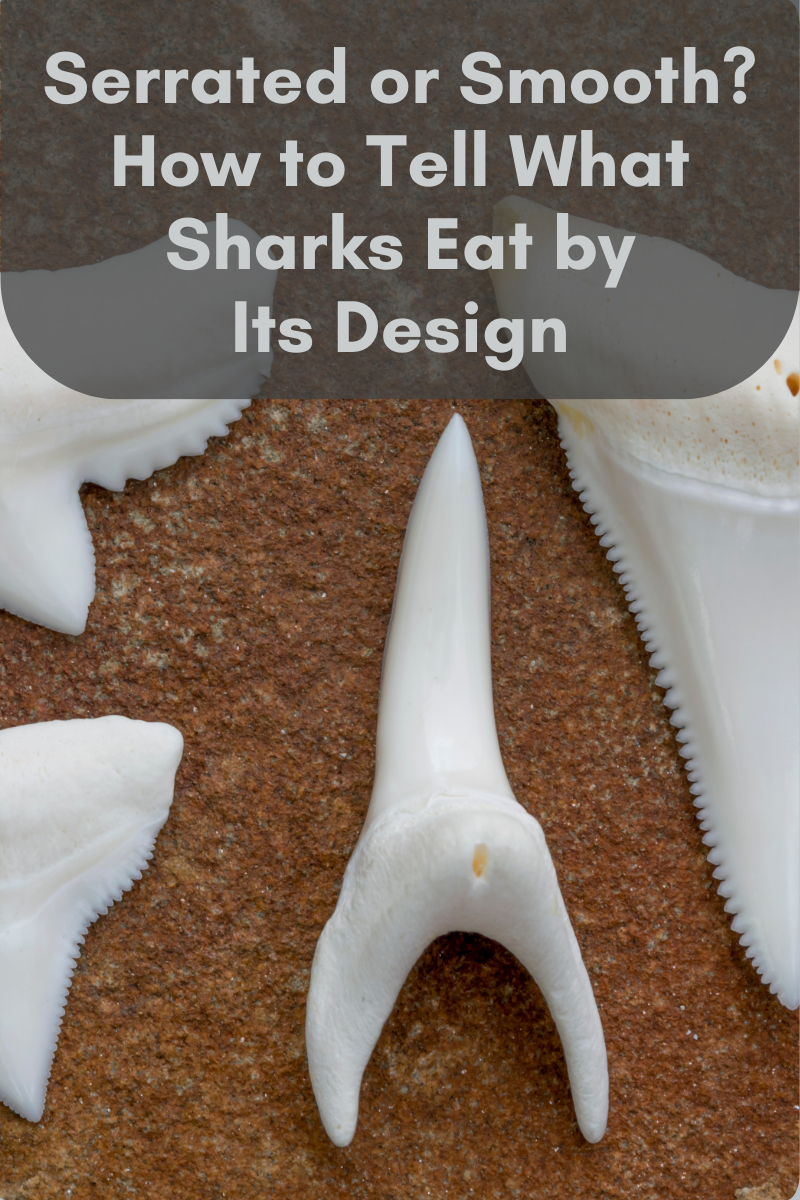
    Shark teeth aren’t just pointy souvenirs—they’re precision tools evolved over millions of years to match each shark’s preferred prey. In Onslow County, North Carolina, our coastal waters are home to a variety of shark species, each with teeth designed for specific feeding strategies and a story to tell. By looking closely at tooth shape, size, and serration, you can often identify which shark it came from and what it was built to eat.

    Anatomy (Morphology) of a Shark Tooth & the Hidden Threat of Ocean Acidification

    Each shark tooth is made up of several specialized parts:

    • Crown: The visible portion, covered by hard enameloid.
    • Apex: The pointed tip for puncturing or slicing.
    • Cutting edges & serrations: Sharp features for gripping and sawing through prey.
    • Crown-root boundary: Transition area between crown and root.
    • Root: Anchors the tooth in the jaw, often showing a nutritive groove and basal margins.
    Shark tooth anatomy

    Traditionally, these structures have been celebrated as one of nature’s most effective feeding tools (Whitenack & Motta, 2010). However, new studies show they are increasingly vulnerable to environmental change.

    Recent experiments simulating rising pH from increasing CO₂ emissions or ocean acidification— has revealed that it directly corrodes shark teeth. In laboratory tests, blacktip reef shark (Carcharhinus melanopterus) teeth placed in simulated future ocean conditions (pH 7.3) showed severe corrosion after just eight weeks. Damage included cracks, holes, loss of serrations, and weakened crowns (Baum et al., 2025). Media reports confirmed that acidified conditions caused up to 50% more deterioration compared to present-day seawater (Carrington, 2025; Sample, 2025).

    Although sharks can continually replace their teeth, researchers warn that weaker, more brittle teeth increase energetic costs for replacement and may lower hunting efficiency (Baum et al., 2025). Even apex predators may face feeding challenges if climate-driven acidification continues to progress.

    Shark Tooth Acidification
    Changes in shark teeth from acidification | Baum et al.,2025

    Tooth Shapes and What They Mean

    1. Triangular & Serrated – Meat Slicers

    • Example species: Bull shark, sandbar shark, great hammerhead
    • Purpose: Wide, flat, saw-like surfaces slice chunks from fish, sea turtles, and marine mammals.
    • Evidence: Goodman et al. (2022) showed that bull shark teeth change shape as they grow, sharpening slicing ability in adulthood.

    2. Needle-Like – Fish Grabbers

    • Example species: Blacktip shark, spinner shark, sand tiger shark
    • Purpose: Narrow, pointed teeth pierce slippery baitfish.
    • Evidence: Dynamic testing by Corn et al. (2016) confirmed needle-like teeth are ideal for gripping fast prey.

    3. Flat & Molar-Like – Shell Crushers

    • Example species: Bonnethead (rear teeth), ray-eating sharks
    • Purpose: Flat, rounded surfaces crush crabs and clams.
    • Evidence: Paleobiology reviews show repeated evolution of molar-like teeth in benthic-feeding sharks (Höltke, 2024).

    4. Combination Dentition – Versatile Feeders

    • Example species: Tiger shark
    • Purpose: Distinctively serrated and curved teeth capable of slicing through shell, bone, and skin.
    • Evidence: Structural mechanics research highlights tiger shark teeth as one of the most versatile cutting designs (Whitenack & Motta, 2010).
    shark teeth identification by feeding type

    Matching Tooth to Shark in Onslow County

    Tooth TypeLikely Shark SpeciesPrey Preference
    Broad, serrated triangleBull shark, sandbar sharkFish, turtles, rays
    Slender, pointedBlacktip, spinnerBaitfish
    Flat, roundedBonnethead (rear teeth)Crustaceans, mollusks
    Notched, curvedTiger sharkVariety – fish, shellfish, carrion

    Onslow Bay is also famous for fossil shark teeth, including Otodus megalodon and Otodus chubutensis. Many fossil teeth recovered offshore show borings from invertebrates, evidence of how these giant teeth became part of seafloor lag deposits (Maisch et al., 2019).

    Why Tooth Shape Matters for Identification

    Tooth form reflects diet: needle-like teeth for baitfish, serrated triangles for larger prey, and molariform crushers for shelled invertebrates. This functional diversity is critical to shark ecology, and new threats like acidification highlight how even small changes to tooth integrity could alter feeding success (Baum et al., 2025; Corn et al., 2016).

    Watch: Shark Tooth Anatomy 101

    This video will walk you through shark anatomy, crown vs. root, serrations, and how tooth shape maps to diet. You can apply those cues to common Onslow County species.

    Direct link: Watch on YouTube: https://www.youtube.com/watch?v=TV6g8BMiImM 

    Freshly Shed vs. Fossil Shark Teeth

    Not every tooth you find along the shore tells the same story. Some were shed by a living shark just days or weeks ago, while others are relics from ancient seas.

    • Freshly shed shark teeth are typically light-colored—white, ivory, or pale gray—and sharp-edged. They feel lightweight because they haven’t undergone mineralization. These often wash ashore in inlets and estuaries where sharks actively feed.
    • Fossil shark teeth, in contrast, are much heavier and darker. Over time, sediments bury the tooth. Water carrying dissolved minerals like iron, manganese, and phosphorus percolates in, gradually replacing the tooth’s organic materials through permineralization. These minerals imbue the tooth with color—commonly deep hues like black, brown, or blue—reflecting the surrounding geology rather than the tooth’s age or species (FossilGuy.com, n.d.; Maisch et al., 2019).

    Why Fossil Shark Teeth Vary in Color

    Though the sediment’s mineral content is a major driver, color patterns can get complex:

    • Enamel vs. root: The enamel and root differ chemically, so each may take up minerals differently—sometimes resulting in bi-colored teeth (FossilGuy.com, n.d.).
    • Mineral source matters: A black or dark-colored tooth might indicate fossilization in phosphate-rich sediments, whereas iron-rich layers can yield reddish or orange tones (FossilGuy.com, n.d.).
    • Post-fossilization changes: Groundwater exposure or burrowing organisms can leach or deposit minerals unevenly, leading to partial bleaching, streaks, speckles, or even multicolored patterns (FossilGuy.com, n.d.).
    fossil shark teeth are colored by sediment type

    Fossil Teeth of Onslow County

    On the beaches of Topsail, Emerald Isle, and Bear Island (Hammocks Beach State Park), collectors may find fossilized teeth spanning extinct and modern lineages:

    • Otodus megalodon – Massive triangular teeth (3–5 inches) from the giant prehistoric predator.
    • Otodus chubutensis – Similar but slightly more curved than megalodon teeth.
    • Carcharhinid teeth – Smaller triangular fossils from relatives of today’s bull, sandbar, and blacktip sharks.
    • Occasional hammerhead and tiger shark fossils, generally identifiable by their distinctive shapes.

    Onslow Bay’s Miocene–Pliocene sedimentary deposits make it a rich source of permineralized shark teeth—and the colors seen reflect the local sediment chemistry (e.g., phosphate vs. iron-rich layers) rather than the teeth’s exact age (FossilGuy.com, n.d.; Maisch et al., 2019). Many fossil hunters prize these finds not only for their form and rarity but also for the geological story encapsulated in their hues.

    Fossil shark teeth species in Onslow County NC

    Can You Spot the Shark Teeth?

    Shark teeth can be found along the beach and come in all sizes and colors. Some are so tiny that they can only be seen by close examination of the sand or even under the microscope!

    Tiny fossil shark tooth
    can spot the shark teeth

    Final Thought

    Every shark tooth found in Onslow County tells a story—of predator and prey, adaptation, and even global climate change. By learning how form meets function, we not only identify species but also glimpse the pressures shaping their survival today.

    References

    Baum, M., Haussecker, T., Walenciak, O., Köhler, S., Bridges, C. R., & Fraune, S. (2025). Simulated ocean acidification affects shark tooth morphology. Frontiers in Marine Science, 12, 1597592. https://doi.org/10.3389/fmars.2025.1597592

    Carrington, D. (2025, August 27). Toothless sharks? Ocean acidification could erode predator’s vital weapon, study finds. The Guardian. https://www.theguardian.com/environment/2025/aug/27/ocean-acidification-erodes-sharks-teeth-affecting-feeding

    Corn, K. A., Farina, S. C., Brash, J., Summers, A. P., & Kolmann, M. A. (2016). Modeling tooth–prey interactions in sharks: The importance of dynamic testing. Royal Society Open Science, 3(5), 160141. https://doi.org/10.1098/rsos.160141

    FossilGuy.com. (n.d.). Why are fossil shark teeth different colors? An explanation of why fossils are different colors. Retrieved September 1, 2025, from https://www.fossilguy.com/topics/shark-teeth-colors/index.htm

    Goodman, K., Goldbogen, J. A., & Bizzarro, J. J. (2022). Ontogenetic changes in the tooth morphology of bull sharks (Carcharhinus leucas). Journal of Fish Biology, 101(6), 1396–1408. https://doi.org/10.1111/jfb.15181

    Höltke, O. (2024). A review of the paleobiology of some Neogene sharks. Diversity, 16(3), 147. https://doi.org/10.3390/d16030147

    Maisch, H. M. IV, Becker, M. A., & Chamberlain, J. A. Jr. (2019). Macroborings in Otodus megalodon and Otodus chubutensis shark teeth from the submerged shelf of Onslow Bay, North Carolina, USA. Ichnos, 26(4), 377–388. https://doi.org/10.1080/10420940.2019.1693755

    Sample, I. (2025, August 27). How ocean acidification is taking the bite out of sharks’ teeth. The Times. https://www.thetimes.co.uk/article/ocean-acidification-corrodes-shark-teeth-fk985lnw7

    Whitenack, L. B., & Motta, P. J. (2010). Performance of shark teeth during puncture and draw: Implications for the mechanics of cutting. Journal of Morphology, 271(3), 469–479. https://doi.org/10.1002/jmor.10809
  • Shark Research in Onslow County: Why We Know So Much—And So Little—About Sharks

    Shark Research in Onslow County: Why We Know So Much—And So Little—About Sharks

    Sharks inspire awe, fear, and fascination. They headline documentaries, fuel conservation campaigns, and even star in Hollywood blockbusters. Yet the science behind these predators tells a paradoxical story: while we know a lot about a handful of species, most sharks remain scientific mysteries. In fact, some of the most “current” research used to guide conservation decisions is more than 20 years old. Shark research may be older or non-existent in Onslow County.

    Why We Know More About Some Sharks Than Others

    Not all sharks are studied equally. Species such as great whites, tiger sharks, and hammerheads dominate scientific literature, while smaller, deep-sea, or less charismatic species are far less understood. Several reasons explain this disparity. Large, coastal sharks are easier to find, capture, and tag, while many species in offshore or deep-water habitats are logistically challenging and prohibitively expensive to study (Pardo et al., 2016).

    Public fascination also drives research priorities. Charismatic species that attract media attention and ecotourism often attract more funding (Dulvy et al., 2014). Likewise, species that interact with commercial or recreational fisheries receive greater attention because of their economic importance (Shiffman & Hammerschlag, 2016). Analyses of global research output confirm that funding and effort cluster around a small set of high-profile species, leaving the majority of sharks and rays understudied (Pacoureau et al., 2021; Sherman et al., 2022).

    Why Huge Gaps Still Remain

    Even with advances in technology, enormous gaps in our knowledge persist. Many sharks live offshore, in deep waters, or migrate across vast ranges, making them hard to study without costly expeditions (Rigby et al., 2021). Compared to terrestrial megafauna like elephants or tigers, marine species receive far less consistent funding (Barlow et al., 2016).

    Sharks also live long lives and reproduce slowly, meaning their life cycles require long-term monitoring that exceeds the typical research grant timeline (Natanson et al., 2018). To make matters worse, much of the available life-history information—on growth rates, reproduction, and mortality—was collected in the 1980s and 1990s (Cailliet & Goldman, 2004). Indeed, a global reassessment found that more than one-third of sharks and rays are threatened with extinction, yet the underlying data for many species is decades out of date (Dulvy et al., 2021).

    Why “The Latest Research” Can Be 20+ Years Old

    Outdated shark science is not a sign of disinterest but of structural barriers. For rare or protected species, new sampling is not always possible (Natanson et al., 2018). Most grants last only 12–36 months, which is far shorter than the decades often needed to capture reliable shark life-history data (NOAA, 2023). And while powerful new tools like environmental DNA (eDNA) and genomics are revolutionizing marine science, they have only become mainstream within the last decade (Huang et al., 2021).

    As a result, managers frequently rely on data estimated 20 or more years ago. This is not cherry-picking or bias—it is simply the best available science within the constraints of cost, time, and access.

    What the Cameras Don’t Show: Fieldwork vs. Research

    When people see shark research on television—whether on Discovery Channel’s Shark Week or National Geographic—they see the action: tagging sharks, lowering cameras, or collecting samples on deck. What is rarely shown is that those expeditions represent only a fraction of the work.

    Most field trips last just a few days to a few weeks (Hussey et al., 2015; VIMS, 2022). Yet fieldwork makes up only 20–30 percent of a project’s total effort. The majority—70–80 percent—is spent on data analysis, lab work, writing, and compiling results (Barlow et al., 2016). In reality, a ten-minute encounter with a shark may represent years of preparation, permit applications, data processing, and grant writing.

    It is also important to recognize that television shark programs are supported by advertising partners. The larger the audience, the more valuable the advertising space, which means shows rely on catchy themes, dramatic editing, and sensational titles to maximize viewership. This does not make the science itself unreliable—but it does mean that the goal of networks is often as much about entertainment and ratings as about education. The result is a balance: bringing shark research into living rooms worldwide, while framing it in ways that appeal to mass audiences.

    Career Realities: The Human Cost of Shark Science

    Behind the science are people, and their realities often go unseen. Marine biology careers are notoriously underfunded, with salaries lagging behind most STEM fields (Dawson et al., 2022). Many researchers pay out of pocket for travel, conferences, and even some equipment. A significant portion of field and lab labor is carried out by interns, many of whom are unpaid or receive only a small stipend for room and board (Baker et al., 2019).

    Most shark studies are conducted through universities, which have access to federal grants. Independent researchers face steep barriers, and corporations rarely fund shark science given the high costs and low commercial return (Barlow et al., 2016). Even within academia, shark science must compete with higher-priority grant areas such as biomedicine or agriculture. Ocean research consistently ranks lower in funding priorities, leaving marine scientists competing for a smaller share of resources (Barlow et al., 2016).

    The Price of Shark Science

    Studying sharks is expensive at every stage.

    • Biodiversity surveys: Baited remote underwater video (BRUV) costs around $9,300 per year for 28 sites. eDNA surveys, while more accurate, cost $15,000–17,000 per year and require major laboratory infrastructure. Samples often must be shipped to specialized labs on dry ice, with field collection supplies adding thousands more (Sims et al., 2022).
    • Tagging: Acoustic tags cost about $375 each, with studies typically deploying 20–50 tags ($7,500–18,750). Projects also budget 10–20 percent more for backup tags. Receivers cost about $2,000 each, and arrays often require 10–30 units ($20,000–60,000). Satellite tags cost $3,000–7,000 each, with even small projects using 10–15 tags ($30,000–100,000). Large-scale studies with 50+ tags can exceed $250,000, not including annual service fees (Hussey et al., 2015).
    • Fieldwork: Small inshore boats cost $1,500–2,000 per day, while large offshore vessels run about $10,000 per day (University of Georgia, 2022; VIMS, 2022). A multi-week expedition can easily surpass $200,000 in vessel costs alone.
    • Grants: Most conservation grants range from $5,000–25,000, while large-scale projects can secure $50,000–1 million per year—almost always through universities or major NGOs (Save Our Seas Foundation, 2024; Shark Conservation Fund, 2024).
    • A nearshore juvenile tagging study may cost $20,000–40,000, while a deep-ocean satellite tagging project can exceed $300,000.

    Large-Scale Projects: OCEARCH and Great Whites

    One of the most famous large-scale shark research projects is OCEARCH, which operates a 126-foot vessel equipped with hydraulic lifts to bring large sharks onboard. This project has produced some of the most detailed maps of great white movements in the western Atlantic, shaping management decisions from Cape Cod to the Carolinas (OCEARCH, 2023).

    But this level of science comes with a price: operating such a vessel costs tens of thousands of dollars per day, requires a full crew, and involves satellite tagging budgets in the millions each year.

    Several OCEARCH-tagged great whites, including well-known sharks like Katharine and Lydia, have migrated through Onslow County, pinging near Topsail and New River Inlet. This highlights both the importance of our waters and the reality that most of the science here is conducted by large outside organizations, not by locally based projects.

    Local Connections: What This Means for Onslow County

    Here in Onslow County, North Carolina, shark research has both benefits and challenges. Studies of sandbar, blacktip, spinner, and sand tiger sharks in our waters help protect fisheries, support ecotourism, and build local pride in our coastal identity.

    But barriers remain. Most grants are awarded to large universities, and local scientists often lack vessels, lab space, or funding to run long-term studies. As a result, Onslow County often relies on data generated elsewhere. NOAA’s Highly Migratory Species stock assessments, for example, model shark populations across the entire U.S. East Coast (NOAA, 2023). While useful, this means that data collected in Florida or New Jersey may be used to guide management here, even though our region has unique nursery grounds, migration corridors, and estuarine habitats.

    Two species illustrate the point:

    • Sand tiger sharks (Carcharias taurus): Offshore wrecks in Onslow County serve as seasonal aggregation sites. Yet most research on sand tigers is conducted in places like Delaware Bay, leaving gaps about how our local populations behave.
    • Spinner sharks (Carcharhinus brevipinna): These acrobatic sharks migrate past Topsail, Surf City, and New River each summer. But tagging studies are rare in Onslow waters, with most of our knowledge coming from Florida and Gulf research.

    Without sustained local investment, the science that guides decisions in Onslow County will continue to rely on broad regional datasets that may miss the nuances of our waters.

    Conclusion

    When it comes to sharks, the paradox is clear: we know a lot about a few species, yet for most, we are still in the early stages of discovery. The fact that the “latest” studies for some sharks date back 20+ years is not because scientists do not care, cherry-pick evidence, or show bias. Rather, it reflects the reality that ocean science sits lower on funding priorities, grants are short-term, and research is costly.

    For communities like Onslow County, this means both benefit and burden. We gain from the knowledge these studies provide, but we are hindered by funding gaps and access challenges that limit how often and how deeply research can be conducted locally. Scientists often work with the best available data, even when it is broad, outdated, or incomplete—not out of negligence, but because structural barriers constrain what is possible.

    Even when shark research does reach the public through television, it is shaped by network goals and advertising models. Programs may emphasize drama or catchy themes to draw larger audiences, because more viewers mean more advertising revenue. This doesn’t make the science unreliable—but it does mean that the public’s view of sharks is filtered through entertainment as much as education.

    Without larger and longer-term investment, conservation decisions will continue to rely on imperfect information at a time when sharks—and the communities connected to them—can least afford it.

    Further Reading & Local Resources

    Local Call to Action

    Shark science in Onslow County depends not only on big research vessels and university grants, but also on the support and interest of local communities. You can help strengthen research and conservation in our waters by:

    • Visiting and supporting NC aquariums, such as the North Carolina Aquarium at Pine Knoll Shores, which regularly features shark conservation programs and local species.
    • Engaging in citizen science by reporting shark sightings, catches, or strandings to the North Carolina Division of Marine Fisheries. These reports help fill gaps in local data.
    • Supporting local eco-charter businesses that promote responsible shark and marine life interactions in Onslow County.
    • Sharing accurate information about sharks to counter myths and build community pride in our unique coastal ecosystem.

    Even small actions—like attending a local lecture, following ongoing shark tagging projects, or teaching kids about the importance of sharks—help ensure that the science shaping our future includes the voices and experiences of Onslow County.

    References

    Baker, S., Motta, R., & Zlotnick, H. (2019). Barriers to entry in marine science: The hidden costs of internships. Marine Policy, 108, 103624. https://doi.org/10.1016/j.marpol.2019.103624

    Barlow, J., Barrett, L. A., Field, I. C., et al. (2016). Funding biases and challenges in marine megafauna research. Conservation Biology, 30(3), 678–685. https://doi.org/10.1111/cobi.12641

    Cailliet, G. M., & Goldman, K. J. (2004). Age determination and validation in chondrichthyan fishes. In J. C. Carrier, J. A. Musick, & M. R. Heithaus (Eds.), Biology of sharks and their relatives (pp. 399–447). CRC Press.

    Dawson, C. L., Webster, J., & Rhoades, J. (2022). Salary disparities in marine biology: The cost of conservation careers. Frontiers in Marine Science, 9, 934211. https://doi.org/10.3389/fmars.2022.934211

    Dulvy, N. K., Fowler, S. L., Musick, J. A., et al. (2014). Extinction risk and conservation of the world’s sharks and rays. eLife, 3, e00590. https://doi.org/10.7554/eLife.00590

    Dulvy, N. K., Pacoureau, N., Rigby, C. L., Pollom, R. A., Jabado, R. W., Ebert, D. A., … Simpfendorfer, C. A. (2021). Overfishing drives over one-third of all sharks and rays toward a global extinction crisis. Current Biology, 31(21), 4773–4787. https://doi.org/10.1016/j.cub.2021.08.062

    Huang, D., et al. (2021). Genomic resources and challenges for shark conservation. Frontiers in Marine Science, 8, 635301. https://doi.org/10.3389/fmars.2021.635301

    Hussey, N. E., Kessel, S. T., Aarestrup, K., Cooke, S. J., Cowley, P. D., Fisk, A. T., … Whoriskey, F. G. (2015). Aquatic animal telemetry: A panoramic window into the underwater world. Science, 348(6240), 1255642. https://doi.org/10.1126/science.1255642

    Natanson, L. J., Gervelis, B. J., Winton, M. V., et al. (2018). Age and growth of sharks: revisiting methods, validity, and inference. Marine and Freshwater Research, 69(9), 1423–1436. https://doi.org/10.1071/MF17184

    NOAA. (2023). Highly Migratory Species research priorities. National Marine Fisheries Service. https://www.fisheries.noaa.gov

    OCEARCH. (2023). Tracking great white sharks. https://www.ocearch.org

    Pacoureau, N., Rigby, C. L., Kyne, P. M., et al. (2021). Half a century of global decline in oceanic sharks and rays. Nature, 589(7843), 567–571. https://doi.org/10.1038/s41586-020-03173-9

    Pardo, S. A., Kindsvater, H. K., Reynolds, J. D., & Dulvy, N. K. (2016). Maximum intrinsic rate of population increase in sharks, rays, and chimaeras: the importance of survival to maturity. Canadian Journal of Fisheries and Aquatic Sciences, 73(8), 1159–1167. https://doi.org/10.1139/cjfas-2016-0069

    Rigby, C. L., Dulvy, N. K., Barreto, R., et al. (2021). The conservation status of the world’s sharks and rays. Scientific Reports, 11(1), 10430. https://doi.org/10.1038/s41598-021-92320-9

    Save Our Seas Foundation. (2024). Funding opportunities. https://saveourseas.com

    Shark Conservation Fund. (2024). Grantmaking. https://www.sharkconservationfund.org

    Sherman, C. S., Shiffman, D. S., & Dulvy, N. K. (2022). Trends in global shark research: disparities in conservation relevance. Fish and Fisheries, 23(5), 1069–1083. https://doi.org/10.1111/faf.12675

    Sims, D. W., et al. (2022). Cost-effectiveness of BRUVs vs eDNA for marine biodiversity monitoring. Marine Ecology Progress Series, 689, 1–15. https://doi.org/10.3354/meps13998

    University of Georgia. (2022). Research vessel rates. Athens, GA.

    Virginia Institute of Marine Science (VIMS). (2022). Research vessel operations. Gloucester Point, VA.