Tag: sharks of onslow county

  • Beyond the Horizon: The Pelagic Sharks Off Onslow County

    Beyond the Horizon: The Pelagic Sharks Off Onslow County

    Most people standing on the beach watch the Atlantic as though the ocean ends where detail disappears.

    Nearshore water is easy to read. Pelicans diving offshore reveal where baitfish have gathered near the surface. The first sea turtle crawls of the season begin appearing along the upper beach. Sandbars reveal themselves through shifting wave patterns and changes in water color.  Even when the water is murky, the coastline still feels structured because the movement happening near shore leaves visible clues.

    Farther offshore, those visible clues become harder to read.

    Beyond the breakers, past the shrimp boats and distant military vessels that sometimes mark the horizon, the Atlantic off Onslow County drops across the continental shelf into deeper pelagic water. From shore, that open water can appear empty simply because most of its structure is hidden beneath distance, depth, and moving currents. But the offshore ocean is highly organized. Temperature layers separate water masses. Squid and fish rise toward the surface at night and descend again before daylight. Currents gather plankton and compress bait schools into dense patches of life that may stretch for miles before dissolving again.

    And moving through those shifting layers are sharks most beachgoers never see.

    Species like the bigeye thresher shark, scalloped hammerhead, Carolina hammerhead, smooth hammerhead, great hammerhead, and tiger shark all occupy different parts of the same Atlantic system connected to North Carolina’s coast. They are not interchangeable predators simply sharing the same water. Each species is specialized for a different way of hunting, sensing, and moving through the pelagic environment.

    Even though most people never see these sharks directly, their influence does not remain offshore.

    They work their way back toward the coast through changes in prey behavior, bait distribution, migration timing, and the balance of the food web itself.

    The Shark Built for Dim Water

    The bigeye thresher shark (Alopias superciliosus) does not resemble most sharks people imagine from coastal documentaries or fishing piers. Its eyes are unusually large, and nearly half of its body length is tail.

    A bigeye thresher shark (Alopias superciliosus) moves through dim offshore Atlantic water beyond the Carolina coast. Its enlarged eyes help it hunt in low light, while its elongated tail can be used to stun schooling prey before feeding. | Image credit: NC Sea Grant
    A bigeye thresher shark (Alopias superciliosus) moves through dim offshore Atlantic water beyond the Carolina coast. Its enlarged eyes help it hunt in low light, while its elongated tail can be used to stun schooling prey before feeding. | Image credit: NC Sea Grant

    Both features are tied directly to life in deeper offshore water.

    Bigeye threshers spend much of their time moving vertically through the water column, often descending into dim water during daylight hours and returning closer to the surface at night as squid and mesopelagic fish migrate upward under darkness (Weng & Block, 2004). Offshore pelagic systems are layered environments. Light fades rapidly with depth, and many prey species spend daylight hours far below the surface where visibility is limited.

    The shark’s large eyes help gather more available light in those darker layers.

    For someone standing on the beach at sunset, the horizon still appears bright. Offshore, hundreds of feet below the surface, the bigeye thresher is already hunting in water where daylight barely penetrates.

    Its tail is equally specialized. Schooling fish survive by moving together in synchronized motion, creating confusion for predators trying to isolate individual prey. The elongated upper lobe of the thresher’s tail evolved as a way to disrupt that coordination. Researchers have documented threshers using powerful overhead tail strikes to stun schooling fish before circling back to feed (Oliver et al., 2013).

    That hunting strategy matters ecologically because the species targeted by threshers are often highly connected to broader Atlantic food webs. Squid, mackerel, and schooling pelagic fish move energy between offshore and coastal systems. Large predators help regulate those populations and alter how tightly schools gather, where they move, and how heavily they feed on smaller forage species beneath them in the food web (Heithaus et al., 2008).

    Without predators thinning and disrupting those mid-level prey schools, feeding pressure shifts downward. Larger populations of squid and predatory fish consume more small forage species, including baitfish that later support seabirds, larger fish, and predators closer to shore. The result is not an empty ocean, but a gradual reorganization of how energy moves through the coastal ecosystem.

    What beachgoers may eventually notice are changes in feeding activity: fewer concentrated bird flocks offshore, shifting bait movements, or less predictable surface eruptions beyond the breakers.

    The Sharks That Hunt Electricity

    Hammerheads occupy a different sensory world than most coastal predators.

    The broad hammer-shaped head shared by species like the scalloped hammerhead, great hammerhead, smooth hammerhead, and Carolina hammerhead is called a cephalofoil. Spread across that wide structure are sensory pores known as ampullae of Lorenzini, specialized organs capable of detecting weak electrical fields produced by other animals (Kajiura, 2001).

    Every muscle contraction and heartbeat generated by prey produces tiny electrical signals in the water.

    A stingray buried beneath sand may be invisible to a human observer, but to a hammerhead it is still broadcasting electrical information.

    The widened head helps the shark compare those signals across a broader sensory field, improving directional accuracy while hunting. Scientists have compared shark electroreception to detecting the output of a small household battery from extraordinary distances under ideal conditions, though in the ocean the system functions at close range to help sharks pinpoint hidden prey.

    While beachgoers scan the water looking for dorsal fins, hammerheads are effectively scanning the seafloor for living electrical currents.

    That sensory adaptation helps explain why multiple hammerhead species can occupy overlapping Atlantic waters without performing identical ecological roles.

    The Offshore Traveler

    The scalloped hammerhead (Sphyrna lewini) is one of the more oceanic hammerhead species associated with continental shelf edges, offshore structures, and migratory routes through deeper Atlantic water (Klimley, 1993).

    A scalloped hammerhead shark (Sphyrna lewini) moves through offshore Atlantic water beyond the Carolina coast. The broad cephalofoil spreading from its head contains electroreceptors capable of detecting faint electrical signals produced by prey hidden beneath sand and low-visibility water. | Image credit: A. Murch
    A scalloped hammerhead shark (Sphyrna lewini) moves through offshore Atlantic water beyond the Carolina coast. The broad cephalofoil spreading from its head contains electroreceptors capable of detecting faint electrical signals produced by prey hidden beneath sand and low-visibility water. | Image credit: A. Murch

    Scalloped hammerheads often move in schools, particularly when younger, and feed heavily on fish, squid, and smaller sharks. Their body shape and behavior are well suited for highly mobile pelagic hunting where prey concentrations shift constantly with temperature and current boundaries.

    They are not simply “using deeper water.” They are adapted to a system where the structure itself is always moving.

    Warm and cool water masses sliding against one another can compress bait into narrow feeding corridors. Squid rise toward the surface after dark. Pelagic fish move vertically and horizontally depending on light levels and prey availability. The scalloped hammerhead’s movement patterns mirror that instability.

    Because they occupy such mobile offshore environments, scalloped hammerheads help regulate prey populations across broad sections of the continental shelf rather than within a single localized habitat.

    The Hidden Hammerhead

    For decades, scientists believed many hammerheads moving through the western Atlantic belonged to the same species.

    But the Carolina hammerhead (Sphyrna gilberti) had likely been there the entire time unnoticed.

    Researchers eventually discovered that some sharks identified as scalloped hammerheads were genetically distinct and consistently possessed fewer vertebrae, revealing that two separate species had been moving through the same waters unnoticed (Quattro et al., 2013).

    Radiographs of the Carolina hammerhead (Sphyrna gilberti) helped reveal that a second hammerhead species had been moving through western Atlantic waters largely unnoticed. Although visually similar to the scalloped hammerhead, skeletal differences and genetic analysis confirmed the Carolina hammerhead as a distinct species in 2013. | Image credit: J. Quattro et al., 2013 (left); S. Raredon, Smithsonian Institution, National Museum of Natural History (right)Radiographs of the Carolina hammerhead (Sphyrna gilberti) helped reveal that a second hammerhead species had been moving through western Atlantic waters largely unnoticed. Although visually similar to the scalloped hammerhead, skeletal differences and genetic analysis confirmed the Carolina hammerhead as a distinct species in 2013. | Image credit: J. Quattro et al., 2013 (left); S. Raredon, Smithsonian Institution, National Museum of Natural History (right)
    Radiographs of the Carolina hammerhead (Sphyrna gilberti) (left) helped reveal that a second hammerhead species had been moving through western Atlantic waters largely unnoticed. Although visually similar to the scalloped hammerhead (right), skeletal differences and genetic analysis confirmed the Carolina hammerhead as a distinct species in 2013. | Image credit: J. Quattro et al., 2013 (left); S. Raredon, Smithsonian Institution, National Museum of Natural History (right)

    The discovery revealed that even sharks moving through the same Atlantic waters were more specialized than they first appeared.

    From the beach, the offshore Atlantic often appears open and uniform because distance hides most of its detail. But even scientists were still uncovering hidden structures within those waters. Sharks that looked nearly identical from the surface were occupying the same coastline as separate species with potentially different ecological roles.

    The Carolina hammerhead still overlaps geographically with other hammerheads along the southeastern United States, and researchers are continuing to study how those species divide habitat, prey, and movement through the Atlantic.

    For beachgoers, the discovery is a reminder that the Atlantic beyond the breakers is more ecologically layered than it first appears, with multiple shark species occupying waters that can look uniform from shore. 

    The Ray Hunter

    The great hammerhead (Sphyrna mokarran) occupies a different ecological role than its smaller relatives.

    A great hammerhead shark (Sphyrna mokarran) moves through offshore water. The species is highly specialized for hunting rays, using its broad cephalofoil to improve maneuverability and detect prey hidden along the seafloor. | Image credit: Oregon State University
    A great hammerhead shark (Sphyrna mokarran) moves through offshore water. The species is highly specialized for hunting rays, using its broad cephalofoil to improve maneuverability and detect prey hidden along the seafloor. | Image credit: Oregon State University

    Great hammerheads are more solitary and strongly associated with rays, including stingrays and cownose rays. Their cephalofoil is not simply a sensory structure. It also improves maneuverability and may help pin rays against the seafloor during feeding attempts (Strong et al., 1990).

    That specialization matters because rays themselves strongly influence coastal ecosystems.

    Rays such as cownose rays and Atlantic stingrays disturb sediment, expose buried organisms, and alter benthic communities while feeding across shallow coastal bottoms. Great hammerheads help regulate those ray populations and influence where rays spend time feeding.

    Great hammerheads influence more than the number of rays moving through coastal habitats.  The presence of large predators changes prey behavior as well. Rays may avoid lingering in exposed feeding areas when hammerheads are nearby, redistributing feeding pressure across habitats.

    For beachgoers, those ecological effects may eventually appear through changes in ray abundance, feeding activity, or shifting patterns of disturbed sediment along shallow coastal waters.

    The Cooler-Water Hunter

    The smooth hammerhead (Sphyrna zygaena) can look, at first glance, like another variation of the same hammerhead design.

    But its head gives away part of its story.

    Unlike the scalloped hammerhead, the smooth hammerhead lacks the central notch along the front edge of the cephalofoil. That difference may seem small to a casual observer, but it reflects a separate species adapted to a somewhat different part of the Atlantic system. Smooth hammerheads are often associated with cooler temperate waters and feed heavily on schooling fish and cephalopods moving through offshore shelf waters (Compagno, 2001).

    A smooth hammerhead shark (Sphyrna zygaena) moves through open offshore water. Unlike the scalloped hammerhead, the smooth hammerhead lacks the central notch along the front edge of the cephalofoil and is more commonly associated with cooler temperate waters and schooling prey along the continental shelf. | Image credit: S. Judd
    A smooth hammerhead shark (Sphyrna zygaena) moves through open offshore water. Unlike the scalloped hammerhead, the smooth hammerhead lacks the central notch along the front edge of the cephalofoil and is more commonly associated with cooler temperate waters and schooling prey along the continental shelf. | Image credit: S. Judd

    That specialization matters because schooling fish and squid help move energy through the open Atlantic.

    These prey species do not stay fixed in one place. They shift with temperature, currents, light, and season, gathering in patches that may appear briefly before dispersing again. Smooth hammerheads are part of the predator community that follows and regulates that movement through cooler portions of the continental shelf.

    The relationship is not simply a shark chasing fish through open water. By feeding within those moving schools, smooth hammerheads help shape how prey gathers, how long those schools remain concentrated, and how much pressure they place on smaller forage species below them in the food web.

    For beachgoers, those ecological effects may eventually appear through seasonal changes in bait movement, bird activity, or the mix of predators feeding along the shelf as offshore waters warm and cool through the year.

    The Shark That Connects Habitats

    Few sharks move between offshore and coastal systems as fluidly as the tiger shark.

    Tiger sharks (Galeocerdo cuvier) are often reduced in public imagination to sensational headlines or descriptions as “garbage eaters,” largely because of their opportunistic feeding behavior and willingness to consume a wide range of prey.

    But ecological flexibility is precisely what makes them important.

    A tiger shark (Galeocerdo cuvier) moves through tropical offshore water. Tiger sharks travel between offshore habitats, shoals, and coastal systems following seasonal prey movements, linking distant parts of the Atlantic food web through their wide-ranging movements and opportunistic feeding behavior. | Image credit: Fishes of Sarasota County, FL
    A tiger shark (Galeocerdo cuvier) moves through tropical offshore water. Tiger sharks travel between offshore habitats, shoals, and coastal systems following seasonal prey movements, linking distant parts of the Atlantic food web through their wide-ranging movements and opportunistic feeding behavior. | Image credit: Fishes of Sarasota County, FL

    Tiger sharks move between offshore waters, shoals, nearshore habitats, and sometimes estuarine environments following seasonal prey movements and temperature shifts (Heithaus, 2001). Sea turtles, rays, fish, carrion, and other prey species all become part of that broader movement pattern.

    Their presence changes how other animals use the same habitats.

    Sea turtles may avoid grazing too heavily in exposed areas when tiger sharks are nearby. Rays redistribute feeding activity. Schools of fish alter where they gather. The presence of a large predator changes how long prey species remain in one place and how intensely they feed before moving on. Areas that might otherwise experience constant grazing or disturbance begin receiving periods of recovery as animals move more cautiously through the habitat (Heithaus et al., 2008). 

    That movement connects habitats that people often think of as separate parts of the ocean.

    A tiger shark feeding offshore may later move closer to shoals, estuaries, or coastal waters as prey shifts with season and temperature. The same predator influencing sea turtle grazing patterns offshore may eventually pass along the edges of bait schools closer to shore weeks later.

    For beachgoers, those connections may appear through changing patterns of sea turtle activity, shifting schools of fish near the breakers, or the seasonal movement of predators along the Carolina coast.

    The Sharks People Talk About Most

    Not all sharks connected to Onslow County remain far offshore.

    Species like the great white shark and bull shark tend to dominate public attention because they are more familiar through media coverage and coastal sightings. Tagged great whites moving along the Atlantic coast frequently make headlines, while sharks seen near inlets or murky water are often assumed to be bull sharks whether identification is confirmed or not.

    But those assumptions can flatten the complexity of the coastal ecosystem.

    Bull sharks (Carcharhinus leucas) are well known for their ability to tolerate freshwater, but they are not the only sharks capable of handling changing salinity. Along the Carolina coast, species such as bonnetheads and juvenile hammerheads also use estuarine environments where tides, rainfall, and river flow constantly shift the balance between salt and fresh water. Coastal systems are not divided into simple categories of “ocean” and “freshwater.” They are gradients, and many sharks are adapted to move through those changing conditions. 

    A bull shark (Carcharhinus leucas) moves through offshore water accompanied by remoras. Although bull sharks are known for their ability to tolerate lower salinity and move into estuaries and rivers, they are also highly mobile coastal and offshore predators that regularly travel through marine waters along the Atlantic coast. | Image credit: B. Skinstad
    A bull shark (Carcharhinus leucas) moves through offshore water accompanied by remoras. Although bull sharks are known for their ability to tolerate lower salinity and move into estuaries and rivers, they are also highly mobile coastal and offshore predators that regularly travel through marine waters along the Atlantic coast. | Image credit: B. Skinstad

    Great whites (Carcharodon carcharias), meanwhile, are often discussed as solitary coastal hunters, but along the western Atlantic they are also highly migratory predators tied to seasonal prey movements, temperature ranges, and offshore habitats (Block et al., 2011).

    A great white shark (Carcharodon carcharias) moves through open offshore water. Great whites are highly migratory predators capable of traveling vast distances between offshore habitats and productive coastal feeding grounds, linking distant regions of the Atlantic and Pacific through seasonal movement. | Image credit: E. Levy
    A great white shark (Carcharodon carcharias) moves through open offshore water. Great whites are highly migratory predators capable of traveling vast distances between offshore habitats and productive coastal feeding grounds, linking distant regions of the Atlantic and Pacific through seasonal movement. | Image credit: E. Levy

    Both species are part of the broader Atlantic system connected to North Carolina’s coast, but the sharks occupying pelagic waters beyond the visible horizon often receive far less attention despite shaping offshore food webs just as strongly.

    Why Recovery Takes So Long

    Many fish species along the Carolina coast mature quickly and reproduce in enormous numbers. Menhaden, mullet, and other forage fish may begin reproducing within only a few years while releasing hundreds of thousands—or even millions—of eggs.

    Large sharks follow a very different strategy.

    Species like great hammerheads, tiger sharks, and threshers often require more than a decade to reach reproductive maturity, and they produce far fewer offspring than most bony fish (Cortés, 2000). Some large female sharks may spend well over a decade surviving storms, fishing pressure, predators, disease, and changing ocean conditions before producing pups for the first time.

    That slower reproductive strategy evolved partly because large sharks occupy upper levels of the food web where adults face relatively few natural predators. Evolution favored longer lifespans, slower growth, and fewer offspring with higher survival chances.

    But the same strategy creates vulnerability.

    A fish population capable of reproducing within two or three years can rebound relatively quickly after declines. A shark population that requires fifteen years or more to produce breeding adults cannot.

    The offshore Atlantic built these predators slowly.

    And when populations decline, recovery happens slowly as well.

    Why More Sightings Do Not Always Mean More Sharks

    For many people along the Carolina coast, sharks can feel more visible now than they did decades ago.

    Drone footage from the North Carolina coast reveals how modern technology now captures shark movement near beaches that would have gone largely unseen from shore only a few decades ago. Increased visibility does not necessarily mean sharks are suddenly overwhelming coastal waters, but it does change how people perceive the Atlantic around them. | Image credit: L. Abed
    Drone footage from the North Carolina coast reveals how modern technology now captures shark movement near beaches that would have gone largely unseen from shore only a few decades ago. Increased visibility does not necessarily mean sharks are suddenly overwhelming coastal waters, but it does change how people perceive the Atlantic around them. | Image credit: L. Abed

    Anglers report more sharks taking hooked fish before they can be reeled in, a behavior known as depredation. Drone footage captures feeding activity that would have gone unseen from shore years ago. Social media spreads sightings quickly, sometimes creating the impression that sharks are suddenly overwhelming coastal waters.

    Some shark populations have shown signs of recovery following decades of decline and changing fishing regulations. Long-time fishers noticing more shark encounters in certain areas may not be imagining it. In some cases, there likely are more sharks present than there were during periods of heavier population decline in the late twentieth century.

    But recovery is not the same as overabundance.

    Forty years ago, far fewer people were fishing offshore, kayaking through estuaries, filming the surf with drones, or posting shark encounters online in real time. Coastal waters are now observed more continuously than at any point in history, while recreational fishing activity itself creates more opportunities for sharks and people to interact.

    Even with signs of recovery, many large shark species along the Atlantic coast still exist at a fraction of the population levels seen before major declines in the late twentieth century (Baum et al., 2003; Worm et al., 2013). 

    A true overabundance of large predators would likely look very different along the Carolina coast. Bait schools would become harder to find, feeding activity along the surface would begin thinning out, and predators would increasingly compete over limited prey. Instead, much of what people are witnessing today is the overlap between recovering shark populations, concentrated recreational fishing activity, and a coastline watched more closely than ever before (Heithaus et al., 2008). 

    For beachgoers, that change can make sharks feel suddenly more common, even as many offshore ecosystems are still rebuilding from declines that unfolded over generations.

    What Changes Along the Coast When They Decline

    By the time most people arrive at the beach in summer, the offshore system is already in motion.

    Pelicans are not simply following random schools of fish. The bait moving through the breakers may have spent weeks feeding along temperature boundaries farther offshore. Rays passing through the shallows are connected to predators that hunt them beyond the visible edge of the continental shelf. Squid rising toward the surface at night become part of a food web that stretches from deep Atlantic water back toward the surf zone.

    Most of those connections remain invisible from shore.

    A person standing on the beach cannot see a bigeye thresher moving through dim offshore water hundreds of feet below the surface, or a hammerhead sweeping across the bottom searching for the electrical signals of buried prey. They cannot see tiger sharks shifting between offshore and coastal habitats as water temperatures change through the season.

    But those predators still influence what eventually reaches the coastline.

    The schools of fish birds gather over, the movement of rays through shallow water, the distribution of predators and prey along the continental shelf, and even the timing of seasonal feeding activity are tied to an offshore ecosystem organized partly by sharks most people never encounter directly.

    From the beach, the Atlantic often appears flat and open beyond the horizon.

    In reality, it is layered with movement, specialization, and predators adapted to parts of the ocean most people never realize are there.

    What the Horizon Conceals

    From the beach, the Atlantic often appears flat and empty beyond the breakers. Most people will never see a bigeye thresher rising from dim offshore water or a hammerhead sweeping across the continental shelf searching for prey hidden beneath the sand. The larger structure of the pelagic Atlantic remains mostly invisible from shore.

    But the absence of visibility is not the same as absence of life.

    Far beyond the swimming beaches and nearshore bars, sharks continue moving through layered offshore habitats shaped by depth, temperature, migration, and prey. Some travel between offshore waters and shoals. Others patrol deeper pelagic systems where sunlight fades and the surface reveals little of what exists below.

    Those movements eventually connect back to the coast itself.

    The same Atlantic that carries sea turtle hatchlings past the breakers, pushes baitfish toward the shoreline, and gathers pelicans over feeding fish also extends outward into a far larger offshore ecosystem organized by predators most people never see directly.

    The horizon does not separate the beach from another ocean.

    It only marks the point where the visible Atlantic gives way to the hidden one.

    Even from the shoreline, the Atlantic extends into a far larger offshore ecosystem shaped by predators, migration, depth, and movement beyond what can easily be seen from shore. The horizon does not mark the end of the ocean’s structure, only the limit of what we can observe from the beach. | Image credit: A. Mitchell
    Even from the shoreline, the Atlantic extends into a far larger offshore ecosystem shaped by predators, migration, depth, and movement beyond what can easily be seen from shore. The horizon does not mark the end of the ocean’s structure, only the limit of what we can observe from the beach. | Image credit: A. Mitchell

    References

    Baum, J. K., Myers, R. A., Kehler, D. G., Worm, B., Harley, S. J., & Doherty, P. A. (2003). Collapse and conservation of shark populations in the Northwest Atlantic. Science, 299(5605), 389-392. https://doi.org/10.1126/science.1079777

    Block, B. A., Jonsen, I. D., Jorgensen, S. J., Winship, A. J., Shaffer, S. A., Bograd, S. J., Hazen, E. L., Foley, D. G., Breed, G. A., Harrison, A., Ganong, J. E., Swithenbank, A., Castleton, M., Dewar, H., Mate, B. R., Shillinger, G. L., Schaefer, K. M., Benson, S. R., Weise, M. J., … Costa, D. P. (2011). Tracking APEX marine predator movements in a dynamic ocean. Nature, 475(7354), 86-90. https://doi.org/10.1038/nature10082

    Compagno, L. J. (2001). Sharks of the world: An annotated and illustrated catalogue of shark species known to date (2nd ed.). Food and Agriculture Organization of the United Nations.

    Cortés, E. (2000). Life history patterns and correlations in Sharks. Reviews in Fisheries Science, 8(4), 299-344. https://doi.org/10.1080/10408340308951115

    Heithaus, M. R. (2001). The biology of tiger sharks, Galeocerdo Cuvier, in Shark Bay, Western Australia: Sex ratio, size distribution, diet, and seasonal changes in catch rates. Environmental Biology of Fishes, 61(1), 25-36. https://doi.org/10.1023/a:1011021210685

    Heithaus, M. R., Frid, A., Wirsing, A. J., & Worm, B. (2008). Predicting ecological consequences of marine top predator declines. Trends in Ecology & Evolution, 23(4), 202-210. https://doi.org/10.1016/j.tree.2008.01.003

    Kajiura, S. M. (2001). Head morphology and Electrosensory pore distribution of Carcharhinid and Sphyrnid sharks. Environmental Biology of Fishes, 61(2), 125-133. https://doi.org/10.1023/a:1011028312787

    Klimley, A. P. (1993). The Behavior and Ecology of the Scalloped Hammerhead Shark. Stanford University Press.

    Musick, J. A., Burgess, G., Cailliet, G., Camhi, M., & Fordham, S. (2000). Management of sharks and their relatives (Elasmobranchii). Fisheries, 25(3), 9-13. https://doi.org/10.1577/1548-8446(2000)025<0009:mosatr>2.0.co;2

    Oliver, S. P., Turner, J. R., Gann, K., Silvosa, M., & D’Urban Jackson, T. (2013). Thresher sharks use tail-slaps as a hunting strategy. PLoS ONE, 8(7), e67380. https://doi.org/10.1371/journal.pone.0067380

    Quattro, J. M., Driggers, W. B., Grady, J. M., Ulrich, G. F., & Roberts, M. A. (2013). Sphyrna gilberti, a new hammerhead shark (Carcharhiniformes, Sphyrnidae) from the western Atlantic Ocean. Zootaxa, 3702(2), 159. https://doi.org/10.11646/zootaxa.3702.2.5

    Sims, D. W. (2006). Differences in habitat selection and reproductive strategies of male and female sharks. Sexual Segregation in Vertebrates, 127-147. https://doi.org/10.1017/cbo9780511525629.009

    Strong, W. R., Snelson, F. F., & Gruber, S. H. (1990). Hammerhead shark predation on Stingrays: An observation of prey handling by Sphyrna mokarran. Copeia, 1990(3), 836. https://doi.org/10.2307/1446449

    Weng, K. C., & Block, B. A. (2004). Diel vertical migration of the bigeye thresher shark (Alopias superciliosus), a species possessing orbital retia mirabilia (102:221–229). NMFS Scientific Publications Offic. https://spo.nmfs.noaa.gov/sites/default/files/pdf-content/2004/1021/weng.pdf

    Worm, B., Davis, B., Kettemer, L., Ward-Paige, C. A., Chapman, D., Heithaus, M. R., Kessel, S. T., & Gruber, S. H. (2013). Global catches, exploitation rates, and rebuilding options for sharks.

  • Shark Sleigh Bells: How Sharks Track Vibrations in the Winter Sea

    Shark Sleigh Bells: How Sharks Track Vibrations in the Winter Sea

    Winter’s Quiet Chorus

    December hushes the coastline of Onslow County. The marshgrass stiffens in the cold, the surf stills between storms, and the New River Inlet carries the metallic stillness of early winter. Yet beneath that calm, the water hums with motion — tiny pulses, ripples, and vibrations that weave a hidden holiday soundtrack, a kind of underwater sleigh bells rung in pressure waves.

    Sharks, lingering along the nearshore troughs or cruising the outer edge of the estuary, sense these disturbances with remarkable clarity. Every mullet tail-beat, crab scuttle, and sediment shift radiates through the water as a low-frequency pressure wave. In the quiet of December, these signals travel farther and cleaner, strengthened by winter’s denser water, slower prey, and reduced turbidity (Mickle & Higgs, 2021; Mogdans, 2019).

    To sharks, these vibrations form a map, a three-dimensional winter soundscape that reveals direction, distance, and urgency (Montgomery, Baker & Carton, 2000; Montgomery et al., 2000). And layered beneath these hydrodynamic cues, the faint electric fields produced by the heartbeat and muscle activity of nearby prey glow through the water, detectable at nanovolt precision (Anderson et al., 2017; England et al., 2021).

    This “music” is not metaphor — it is the sensory world sharks inhabit, sharpened by the very conditions winter imposes.

    The Winter Sea as a Soundscape

    Illustration showing how different animals create underwater vibrations detectable by sharks. A school of fish at the top produces wide, rolling displacement waves. A crab on the sandy seafloor generates small, intermittent pulse rings. Two individual fish create subtle fin-flick ripple patterns. Concentric circles radiate from each animal to visually represent hydrodynamic cues in the water.
    Sharks detect a wide range of underwater vibrations—from the rolling displacement waves of schooling fish to the intermittent pulses of crabs and the subtle fin flicks of solitary prey—using their highly sensitive mechanosensory systems.

    Cold water shifts the physics of survival. As temperatures fall, prey metabolism slows, creating weaker and more irregular movement patterns — the exact low-frequency signatures sharks detect most easily (Sisneros & Rogers, 2016). Reduced plankton and sediment yield a clearer path for particle motion, allowing hydrodynamic cues to propagate farther through the winter water column (Mogdans, 2019).

    This turns the estuary into a rich field of vibrations. Fish schooling tightly create rolling displacement waves. Crabs shifting beneath the sand produce intermittent pulses. Even subtle fin flicks produce particle motion detectable by sharks’ sensory systems (Maruska, 2001).

    Winter looks barren to us.
    To sharks, it resonates.

    Hydrodynamic “Bells”: The Lateral Line

    A scientific-style illustration explaining how a shark’s lateral line detects underwater vibrations. A sandbar shark is shown with a highlighted lateral line running along its body and head. Concentric rings radiate from a struggling fish, a crustacean on the seafloor, and a distant object to demonstrate low-frequency hydrodynamic signals. Icons represent cold water, low light, prey movement, and inlet geometry as factors that enhance vibration transmission in winter. Text describes neuromasts encoding direction and amplitude to create a spatial map of nearby activity.
    Sharks use their lateral line to “feel” tiny vibrations in the water. Winter makes these signals even easier to detect, helping sharks follow the movement of fish, crabs, and other prey in low-light conditions.

    The shark’s lateral line is a mechanosensory canal system tuned to detect water displacement in the exact frequency range produced by struggling fish and crustaceans (Montgomery, Baker & Carton, 2000). Neuromasts within the canal encode both direction and amplitude, transforming low-frequency motion into a spatial map of nearby activity (Mogdans, 2019).

    In December, this system excels:

    • cold water enhances transmission of pressure waves,
    • prey move more predictably and more weakly,
    • low-light conditions reduce visual noise,
    • and inlet geometry funnels vibrations along natural corridors.

    Even acoustic cues — particle motion at frequencies under ~300 Hz — become part of this integration. Sharks are most sensitive to these low-frequency bands, enabling discrimination of movement types in murky or dark winter water (Poppelier et al., 2022).

    To a shark, each pulse is information.
    Each ripple is direction.
    Each vibration is a bell rung underwater.

    Watch how sharks use their lateral line system to sense ripples and vibrations long before they see their prey. | Video courtesy of National Aquarium – “Sharks Lateral Line”

    Closer Than Sight: The Ampullae of Lorenzini

    When a shark closes the final distance, tracking transitions from vibration to electricity. The Ampullae of Lorenzini detect microvolt-scale electric fields emitted by the body of every living animal. Sensitivity thresholds fall into the tens of nanovolts per centimeter — among the most refined biological detection limits known (Anderson et al., 2017; Newton, Gill & Kajiura, 2019; England et al., 2021).

    Electroreception enables sharks to:

    • locate prey buried beneath sand,
    • perceive fish hidden in silt clouds,
    • detect immobile or slow-moving animals,
    • and navigate complex, low-light environments.

    Classic electroreception work demonstrated these capacities decades ago, and modern experimental studies in hammerheads confirm high-resolution electro-sensitivity during close-range hunting (Kajiura & Holland, 2002; Kalmijn, 2000).

    In winter, when storms churn the sediment and twilight comes early, this sense becomes even more essential.

    Sharks do not need light — they follow electricity.

    Video courtesy of PBS Deep Look, illustrating how sharks use electroreception to locate prey invisible to sight or sound.

    A December Hunt at the New River Mouth

    Illustration of a juvenile Atlantic sharpnose shark approaching a partially buried mullet in shallow winter water. Orange concentric lines show the mullet’s electric field and the shark’s detection of hydrodynamic and electrical cues through its lateral line and Ampullae of Lorenzini.
    A juvenile Atlantic sharpnose shark follows the faint hydrodynamic pulse of a cold-slowed mullet, then locks onto its electric field—an underwater hunt guided by vibration and microvolts.

    Picture a December evening at the New River Inlet. The ebb tide pulls cold water from the sound toward the ocean. A juvenile Atlantic sharpnose shark glides along a shallow bar, guided not by sight, but by the underwater vibrations pulsing through its lateral line.

    A faint, uneven pressure wave reaches the shark — the hydrodynamic signature of a mullet slowed by the cold (Montgomery et al., 2000). The shark turns. Another pulse follows, the rhythm revealing both direction and weakness.

    Within a few body lengths, electric cues rise above the hydrodynamic noise. The Ampullae of Lorenzini detect microvolt-scale oscillations from the mullet’s buried body (Newton, Gill & Kajiura, 2019; England et al., 2021). One quick strike completes the hunt.

    This is winter’s choreography:
    vibrations at a distance,
    electricity up close,
    all woven seamlessly through still December water.

    The Importance of Winter Hunting

    four-panel educational graphic titled “Winter Survival: How Sharks Thrive When Other Animals Slow Down.” The top panels show a shark pursuing a slow-moving fish labeled “Winter Energy Reserves” and a shark navigating an inlet with arrows labeled “Predictable Movement Corridors.” The bottom panels show a shark approaching a weakened fish with vibration rings labeled “Removing Weakened Individuals” and a shark outlined by sensory icons—spiral wave, lightning bolt, and low-light symbol—labeled “Low Visibility Navigation.” The artwork illustrates how sharks use sensory advantages to hunt effectively during winter.
    Even as the season quiets the coast, sharks thrive—reading vibrations, following winter corridors, finding weakened prey, and navigating the dim water with senses far beyond our own.

    Although prey slow in winter, sharks must continue to feed. Their dual sensory systems allow efficient predation in the season that challenges most marine animals. These abilities help sharks:

    • build winter energy reserves,
    • exploit predictable movement corridors,
    • maintain population stability by removing weakened individuals (Tricas & McCosker, 1984),
    • and navigate cold, low-visibility environments effectively (Mickle & Higgs, 2021).

    Even as water temperatures drop, species like Atlantic sharpnose sharks, bonnetheads, and offshore Atlantic spiny dogfish remain active, relying heavily on the interplay of hydrodynamic and electroreceptive cues (Maruska, 2001).

    Winter is not lifeless.
    It is a sensory masterclass.

    Bells That Never Stop Ringing

    While we celebrate the holidays with sleigh bells, carols, and glowing lights, the Atlantic hums with its own winter rhythms. Sharks navigate December through vibrations, particle motion, and faint electrical fields — signals older than any tradition and tuned to the pulse of life beneath the cold.

    Their bells are not made of metal.
    They are made of motion.
    Of electricity.
    Of the quiet echoes of survival beneath the tide. These are the Shark Sleigh Bells, ringing softly beneath Onslow County’s winter waters.

    References

    Anderson, J. M., Clegg, T. M., Véras, L. V., & Holland, K. N. (2017). Insight into shark magnetic field perception from empirical observations. Scientific Reports, 7(1). https://doi.org/10.1038/s41598-017-11459-8

    England, S. J., & Robert, D. (2021). The ecology of electricity and electroreception. Biological Reviews, 97(1), 383-413. https://doi.org/10.1111/brv.12804

    Kajiura, S. M., & Holland, K. N. (2002). Electroreception in juvenile scalloped hammerhead and sandbar sharks. Journal of Experimental Biology, 205(23), 3609-3621. https://doi.org/10.1242/jeb.205.23.3609

    Kalmijn, A. J. (2000). Detection and processing of electromagnetic and near–field acoustic signals in elasmobranch fishes. Philosophical Transactions of the Royal Society of London. Series B: Biological Sciences, 355(1401), 1135-1141. https://doi.org/10.1098/rstb.2000.0654

    Maruska, K. P. (2001). Morphology of the Mechanosensory lateral line system in elasmobranch fishes: Ecological and behavioral considerations. Environmental Biology of Fishes, 60(1-3), 47-75. https://doi.org/10.1023/a:1007647924559

    Mickle, M. F., & Higgs, D. M. (2021). Towards a new understanding of elasmobranch hearing. Marine Biology, 169(1). https://doi.org/10.1007/s00227-021-03996-8

    Mogdans, J. (2019). Sensory ecology of The Fish lateral‐line system: Morphological and physiological adaptations for the perception of hydrodynamic stimuli. Journal of Fish Biology, 95(1), 53-72. https://doi.org/10.1111/jfb.13966

    Montgomery, J., Carton, G., Voigt, R., Baker, C., & Diebel, C. (2000). Sensory processing of water currents by fishes. Philosophical Transactions of the Royal Society of London. Series B: Biological Sciences, 355(1401), 1325-1327. https://doi.org/10.1098/rstb.2000.0693

    Montgomery, J. C., Baker, C. F., & Carton, A. G. (1997). The lateral line can mediate rheotaxis in fish. Nature, 389(6654), 960-963. https://doi.org/10.1038/40135

    Newton, K. C., Gill, A. B., & Kajiura, S. M. (2019). Electroreception in marine fishes: Chondrichthyans. Journal of Fish Biology, 95(1), 135-154. https://doi.org/10.1111/jfb.14068

    Poppelier, T., Bonsberger, J., Berkhout, B. W., Pollmanns, R., & Schluessel, V. (2022). Acoustic discrimination in the grey bamboo shark Chiloscyllium griseum. Scientific Reports, 12(1). https://doi.org/10.1038/s41598-022-10257-1

    Tricas, T. C., & McCosker, J. E. (1984). Predatory behavior of the white shark (Carcharodon carcharias) and other large sharks. Proceedings of the California Academy of Sciences, 43(14), 221-238. https://ia801302.us.archive.org/16/items/biostor-78396/biostor-78396.pdf 

  • More than Armor: How Shark Skin Shapes Survival

    More than Armor: How Shark Skin Shapes Survival

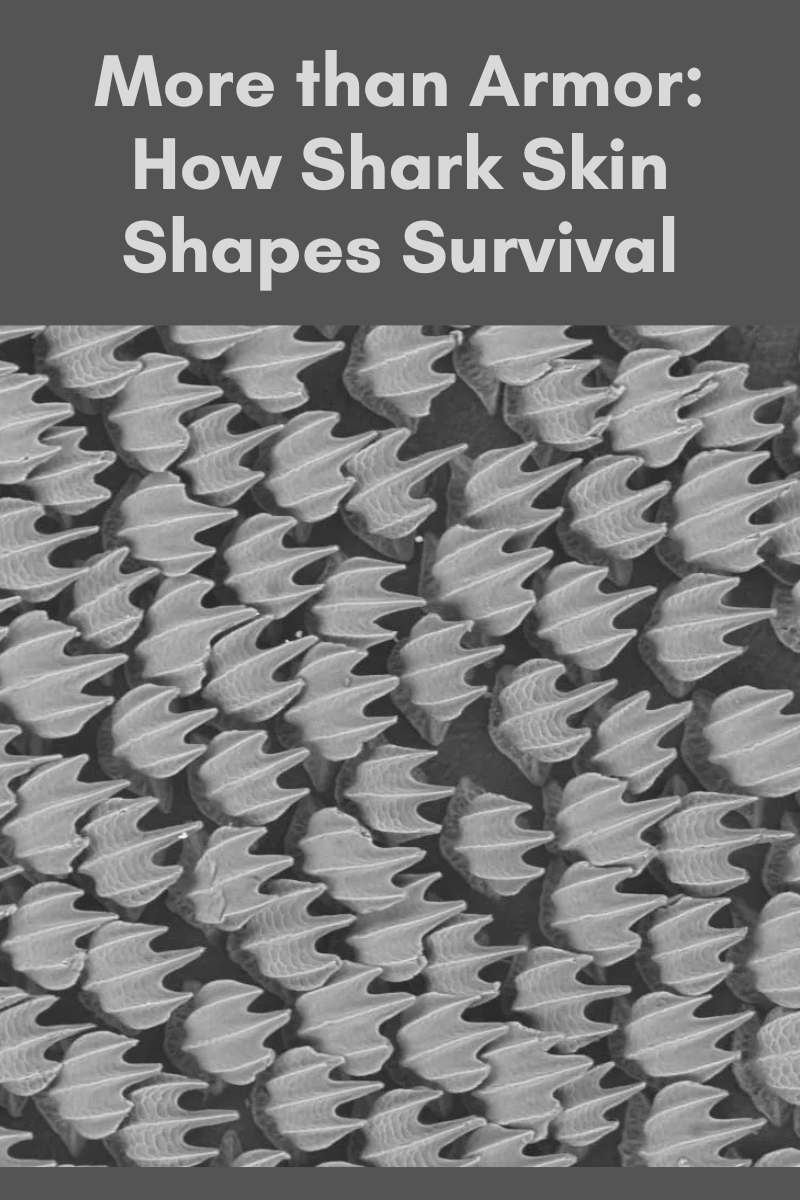
    Have you ever wondered why, if you touch a shark from head to fin, it feels smooth—but from fin to head, it’s skin is rough like sandpaper? Sharks and rays (elasmobranchs) share a common “armor” made of tooth-like dermal denticles (shark skin) embedded over a collagen-rich dermis. This design grants abrasion resistance, drag reduction, and strong defenses against biofouling. And they heal fast!

    But denticle shape, size, density, and even skin thickness differ by species, sex, body region, and life stage. Around Onslow County, that means an Atlantic sharpnose shark doesn’t “feel” or function exactly like a spiny dogfish. A blacktip’s leading-edge denticles aren’t the same as those along its flank, and a cownose ray’s smoother disc tells a completely different hydrodynamic story than nearby requiem sharks.

    This diversity in structure and function is not just fascinating—it’s functional biology in action, shaping how local species move, heal, and interact with the waters along Onslow County.

    What all elasmobranch skin has in common

    Dermal denticles (placoid scales)

    Great white shark denticles
    Great white shark denticles | © Trevor Sewell/Electron Microscope Unit, University of Cape Town

    Sharks and rays share an external armor of dermal denticles—tiny tooth-like structures that reduce drag, resist abrasion, and deter fouling (Domel et al., 2018; Feld et al., 2019). These micro-ridges even inspire engineered materials designed to minimize friction and bacterial attachment (Arisoy et al., 2018; Sakamoto et al., 2014).

    A collagen-rich dermis

    Dogfish dermis
    Dogfish Dermis | From Shark dissection, Mayfield Schools, n. d. https://www.mayfieldschools.org/Downloads/sharkdissection%20%281%29.pdf

    Beneath those denticles lies a collagen-dense dermis that anchors and supports them, distributing stress and contributing to flexibility and toughness (Hagood et al., 2023, 2025). 

    Rapid wound healing

    Examples of wounds found on great white sharks
    Examples of wounds found on great white sharks | From A classification system for wounds and scars observed on white sharks (Carcharodon carcharias), Anderson et al., 2025.

    Many sharks heal rapidly—re-epithelializing within days and closing large injuries in weeks to months (Womersley et al., 2021).

    Where shark skin differs: species, sex, body region & ontogeny

    Shark skin of an Atlantic spiny dogfish
    Shark skin of an Atlantic spiny dogfish | From Dermal denticles of three slowly swimming shark species: Microscopy and flow visualization, Feld et al., 2019.

    Species differences.
    Denticle shape, ridge count, and spacing vary by ecology. Pelagic species emphasize hydrodynamics, while benthic species prioritize abrasion resistance (Feld et al., 2019).

    Body-region mosaics.
    Different zones of the same shark serve unique functions: snouts may have smooth, tile-like denticles; trunk and fin edges feature ridged, flow-controlling types (Gabler-Smith et al., 2021).

    Sexual dimorphism and mechanical variation.
    Hagood et al. (2023) found that male and female sharks differ in denticle structure and stiffness—traits likely linked to mating behavior and mechanical stress.

    Ontogenetic and ecomorphological changes.
    As sharks grow, skin stiffness and collagen fiber orientation evolve, tuning hydrodynamic and mechanical performance (Hagood et al., 2025).

    Sharks vs. rays (and skates): same toolkit, different emphasis

    Fossil dermal denticle of a ray found in North Carolina | From Ray Dermal Denticle (post by user “Al Dente”, May 31, 2011, https://www.thefossilforum.com/topic/21344-ray-dermal-denticle/

    Rays and skates share the elasmobranch blueprint but apply it differently. Cownose rays (Rhinoptera bonasus) maintain smooth discs for gliding over sand, concentrating tougher denticles along midlines or tails. Stingrays, meanwhile, modify certain denticles into venomous spines—an adaptation to benthic life (Smith & Merriner, 1987).

    Mucus: the invisible modifier

    Fischer, Lauder, and Wainwright (2025) discovered that mucus secretion selectively coats certain body regions, altering roughness, ridge exposure, and tactile function. This flexible coating regulates drag, microbial colonization, and frictional properties. Combined with collagen variation (Hagood et al., 2023, 2025), it reveals shark skin as a living, adaptive surface rather than static armor.

    Mucus being collected from blacktip reef sharks | By Mauvis Gore

    Local lens: Onslow County species & mucus implications

    • Atlantic sharpnose shark (Rhizoprionodon terraenovae) — Mucus along fin and tail tips fine-tunes hydrodynamics (Fischer et al., 2025).
    • Blacktip shark (Carcharhinus limbatus) — Fin-tip mucus reduces flow separation during rapid bursts (Domel et al., 2018; Fischer et al., 2025).
    • Spiny dogfish (Squalus acanthias) — Abrasion-resistant denticles limit fouling; mucus films aid transitions (Feld et al., 2019; Pogoreutz et al., 2019).
    • Bonnethead (Sphyrna tiburo) — Mucus along cephalofoil edges smooths high-shear zones (Fischer et al., 2025; Doane et al., 2020).
    • Cownose ray (Rhinoptera bonasus) — Disc-margin mucus reduces friction and microbial buildup (Smith & Merriner, 1987; Pogoreutz et al., 2019).

    Microflow around denticles: visualizing eddies and recirculation

    Feld et al. (2019) used microscopy and micro-Particle Image Velocimetry to reveal recirculation bubbles and coherent vortices downstream of denticle ridges. Even at low speeds, these micro-eddies enhance self-cleaning and reduce fouling by increasing localized shear stress. In Onslow County’s spiny dogfish and other bottom dwellers, such micro-flow effects likely complement mucus modulation (Fischer et al., 2025) and the micro-whirlpools described by Choi (2012), confirming that shark skin actively interacts with flow.

    Microstructure and biomimetic insights

    Gabler-Smith et al. (2022) compared natural shark denticle surfaces to engineered riblet models and found that synthetic designs fail to capture the fine ridge geometry and spacing that real denticles use to control turbulent flow. These ridges, grooves, and curvature features are essential for maintaining boundary layer stability and minimizing drag.

    Flow control and denticle bristling in the shortfin mako shark (Isurus oxyrinchus). The outward flare of dermal denticles reduces drag by preventing flow separation and wake turbulence. |
    From “The speedy secret of shark skin,” by A. W. Lang, 2020, Physics Today, 73(4), 62–63. (2020).

    Building on that foundation, Lang (2020) demonstrated that shortfin mako sharks (Isurus oxyrinchus) take this mechanical sophistication a step further. Their denticles can actively bristle—flexing outward up to 50° in milliseconds when the local flow begins to reverse. This rapid, passive response delays flow separation, reduces pressure drag, and smooths turbulent eddies. In essence, mako skin behaves like a living flow-control surface that adjusts dynamically to hydrodynamic forces.

    Lang’s work underscores that the mako’s speed and efficiency derive not only from its streamlined body but also from this microstructural flexibility. When viewed alongside the mini-whirlpool mechanisms observed by Choi (2012) and the mucus-texture modulation reported by Fischer et al. (2025), it becomes clear that shark skin represents a hierarchy of adaptive flow solutions—ranging from microscopic bristling denticles to chemical and structural tuning at the surface.

    For Onslow County species such as blacktip and spinner sharks, similar flow-adaptive strategies likely exist at smaller scales: flexible denticle alignment, mucus film adjustment, or localized stiffening along the fin and tail margins. Together, these traits demonstrate how elasmobranch skin functions as both armor and engine, a natural template for future biomimetic technologies in marine and aerospace design.

    Mini whirlpools and flexible flow control

    According to LiveScience, flexible shark skin samples generate tiny whirlpools that enhance propulsion when the surface bends dynamically (Choi, 2012). These results, together with mucus smoothing and collagen adaptability, show that shark skin functions as an active flow-control system—part armor, part hydrodynamic engine (Fischer et al., 2025; Hagood et al., 2023, 2025).

    Interfacing skin, gills, and chemical exposure

    Fish gills actively metabolize dissolved substances. Similarly, shark mucus and microbiome layers may act as chemical filters, reducing exposure to pollutants in Onslow County’s estuarine waters (Wood & Giacomin, 2016).

    Conservation and historical context: denticles as time capsules

    Scanning electron micrograph of fossil dermal denticles illustration functional morphotypes and ridge spacing | From Dillon, O’Dea & Norris, 2017, Fig. 2.

    Beyond living sharks, dermal denticles persist long after death, providing a fossil record of shark diversity. Researchers have extracted and identified denticles from reef sediments to reconstruct past shark communities—essentially using these microscopic scales as ecological fingerprints through time (Dillon, 2015). Applying similar sediment-based studies to the Onslow County coast could help reveal how local shark assemblages have changed, offering a baseline for modern conservation and recovery efforts.

    Functional synergy in Onslow County sharks

    FunctionBiological BasisExample in Onslow County Species
    Drag reduction & flow controlDenticle ridges, mucus overlays, and flexible flow (Domel et al., 2018; Fischer et al., 2025; Choi, 2012)Blacktip & sharpnose sharks
    Mechanical resilienceCollagen and denticle variation (Hagood et al., 2023, 2025)Juvenile vs. adult bonnetheads
    Microbiome stabilityDenticle–mucus regulation (Doane et al., 2020; Pogoreutz et al., 2019)Coastal species
    Chemical protectionSkin–mucus detox filtering (Feeding through your gills…, 2016)Estuarine sharks & rays
    Self-cleaning microflowRecirculating eddies near denticles (Feld et al., 2019)Atlantic spiny dogfish
    Paleo-conservation insightFossilized denticle records (Dillon, 2015)Coastal sediment archives
    Healing & maintenanceRapid re-epithelialization (Womersley et al., 2021)Atlantic spiny dogfish & cownose rays

    References

    Anderson, S. D., Kanive, P. E., Chapple, T. K., Andrzejaczek, S., Block, B. A., & Jorgensen, S. J. (2025). A classification system for wounds and scars observed on white sharks (Carcharodon carcharias). Frontiers in Marine Science, 12, Article 1520348. https://doi.org/10.3389/fmars.2025.1520348

    Arisoy, F. D., Gurkan, U. A., Yagci, B. B., Calamak, S., Dokmeci, M. R., & Demirci, U. (2018). Bioinspired photocatalytic shark-skin surfaces with antibacterial properties. Scientific Reports, 8, 16363. https://doi.org/10.1038/s41598-018-34334-1 

    Choi, C. Q. (2012, February 21). Sharks’ scales create tiny whirlpools for speedy swimming. LiveScience. https://www.livescience.com/18385-shark-skin-mini-whirlpools.html

    Dillon, E. (2015, October 9). Shark skin sleuthing. Save Our Seas Foundation. https://saveourseas.com/update/shark-skinsleuthing/

    Dillon, E. M., O’Dea, A., & Norris, R. D. (2017). Dermal denticles as a tool to reconstruct shark communities. Marine Ecology Progress Series, 566, 117–134. https://doi.org/10.3354/meps12018

    Doane, M. P., Haggerty, J. M., Kacev, D., Papudeshi, B., & Dinsdale, E. A. (2020). The skin microbiome of elasmobranchs follows phylosymbiosis, but in teleost fishes, the microbiomes converge. Microbiome, 8(1), 123. https://doi.org/10.1186/s40168-020-00840-x 

    Domel, A. G., Weaver, J. C., Haj-Hossein, I., Wang, Z., Bertoldi, K., Lauder, G. V., & Vaziri, A. (2018). Shark skin-inspired designs that improve aerodynamic performance. Journal of the Royal Society Interface, 15(140), 20170828. https://doi.org/10.1098/rsif.2017.0828 

    Wood, C., Giacomin, M. (2016) Feeding through your gills and turning a toxicant into a solution. Journal of Experimental Biology, 219(20), 3218–3228. https://doi.org/10.1242/jeb.145625 

    Feld, K., Kolborg, A. N., Nyborg, C. M., Salewski, M., Steffensen, J. F., & Berg-Sørensen, K. (2019). Dermal denticles of three slowly swimming shark species: Microscopy and flow visualization. Biomimetics, 4(2), 38. https://doi.org/10.3390/biomimetics4020038 

    Fischer, M. J., Lauder, G. V., & Wainwright, D. K. (2025). Slippery and smooth shark skin: How mucus transforms surface texture. Journal of Morphology, 286(4), e70046. https://doi.org/10.1002/jmor.70046 

    Gabler-Smith, M. K., Lauder, G. V., et al. (2022). Ridges and riblets: Shark skin surfaces versus biomimetic models. Frontiers in Marine Science, 9, 975062. https://doi.org/10.3389/fmars.2022.975062 

    Gabler-Smith, M. K., Staab, K. L., & Motta, P. J. (2021). Dermal denticle diversity in sharks: Novel patterns on the interbranchial skin. Biology Letters, 17(12), 20210349. https://doi.org/10.1098/rsbl.2021.0349 

    Hagood, M. E., Motta, P. J., Staab, K. L., & Porter, M. E. (2023). Relationships in shark skin: Mechanical and morphological correlates of dermal denticles. Integrative and Comparative Biology, 63(6), 1154–1166. https://doi.org/10.1093/icb/icad085 

    Hagood, M. E., Wainwright, D. K., Motta, P. J., & Vaziri, A. (2025). Ecomorphology and ontogeny modulate the mechanical properties of shark skin. Journal of Experimental Zoology Part B: Molecular and Developmental Evolution. Advance online publication. https://doi.org/10.1016/j.jcz.2025.xxxxxx 

    Lang, A. W. (2020, April). The speedy secret of shark skin. Physics Today, 73(4), 62–63. https://digital.physicstoday.org/physicstoday/april_2020/MobilePagedArticle.action?articleId=1575067

    Pogoreutz, C., Yakob, L., Zhang, Y., Al-Saoudi, N. H., Olsson, A., El-Sherbiny, M., … Hajdu, E. (2019). Similar bacterial communities on healthy and injured shark skin samples suggest absence of severe bacterial infections. Animal Microbiome, 1, 11. https://doi.org/10.1186/s42523-019-0011-5 

    Sakamoto, A., Oikawa, K., & Yamaguchi, M. (2014). Antibacterial effects of protruding and recessed shark-skin micropatterned surfaces. Biofouling, 30(5), 593–602. https://doi.org/10.1080/08927014.2014.930720 

    Smith, J. W., & Merriner, J. V. (1987). Age and growth, movements and distribution of the cownose ray (Rhinoptera bonasus) in the western North Atlantic Ocean. Environmental Biology of Fishes, 20, 233–242. https://doi.org/10.1007/BF00004913 

    Womersley, F., Rohner, C. A., Gibbons, M. J., Richardson, A. J., & Jaine, F. R. A. (2021). Wound-healing capabilities of whale sharks (Rhincodon typus). Conservation Physiology, 9(1), coaa137. https://doi.org/10.1093/conphys/coaa137

  • Riding Out the Storm: Sharks and Hurricanes in North Carolina

    Riding Out the Storm: Sharks and Hurricanes in North Carolina

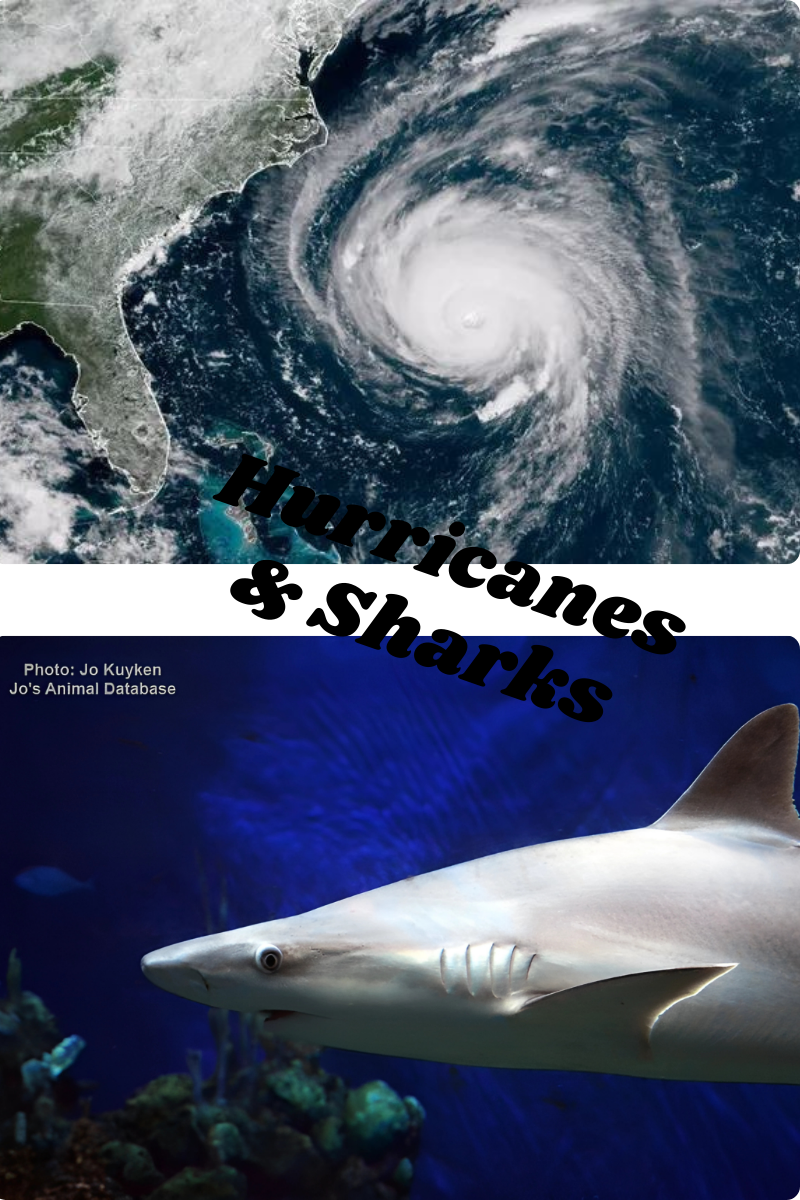
    When a hurricane or tropical storm barrels toward eastern North Carolina, humans board up windows and evacuate—but what do sharks do? Thanks to acoustic tagging and long-term monitoring, we now know that sharks don’t just passively endure storms. They have strategies for survival, and some are surprisingly sophisticated.

    Sensing the Storm: Barometric Pressure

    Sharks, especially coastal species like blacktips and bulls, appear to respond less to wind and waves than to rapid drops in barometric pressure. Research shows that blacktip juveniles in Florida left shallow nursery bays when pressure plummeted during Tropical Storm Gabrielle (2001). They returned after the storm once pressure stabilized. This suggests sharks aren’t reacting to turbulence itself but to the atmospheric signal that precedes it (Heupel et al., 2003). For blacktips, studies suggest that a drop of ~10 millibars in less than 24 hours is enough to trigger evacuation. Bulls show similar patterns, though individual responses vary (Boucek et al., 2019). In general, it’s not an exact “preferred” pressure number but rather the rate of change that matters.

    Shark Species and Storm Behavior

    Blacktip Sharks (Carcharhinus limbatus)

    • Known responders to pressure drops. Juveniles flee shallow estuaries and head for deeper water as storms approach.
    • Return quickly. They often reappear in their nurseries within a day or two after conditions settle.
    • Key study: Blacktip sharks respond to falling barometric pressure associated with Tropical Storm Gabrielle. (Heupel et al., 2003).

    Bull Sharks (Carcharhinus leucas)

    • Juveniles in Florida’s Everglades left estuaries before Hurricane Irma (2017). Some moved out days ahead of landfall, suggesting pressure cues were critical.
    • More variability. Some left immediately, others lingered, highlighting differences in individual thresholds. 
    • Key study: Ecological responses of estuarine organisms to Hurricane Irma. (Boucek et al. 2019).

    Sandbar Sharks (Carcharhinus plumbeus)

    • Nursery dependence. Juveniles use very shallow nurseries in Chesapeake Bay and Pamlico Sound (Grubbs et al., 2007).
    • Storm strategy (inferred). While direct hurricane data are lacking, their reliance on shallow estuaries suggests they likely mirror blacktip behavior—seeking deeper channels when pressure plummets.

    Spinner Sharks (Carcharhinus brevipinna)

    • Less direct data. Telemetry studies document their presence on the Mid-Atlantic shelf (NOAA, 2019), but no hurricane-event tracking exists yet.
    • Probable pattern. Like their blacktip relatives, they are expected to move offshore or deeper in response to rapid barometric drops.

    Eastern North Carolina: Local Implications

    NC Marine & Estuary Map

    NC Marine and Estuary Map | Credit: ESRI

    • Pamlico Sound Bull Shark Nursery. Since 2011, juveniles have been recorded here each summer, tracked with acousti: c tags. Seasonal exits toward deeper water (Cape Lookout to Hatteras, even Cape Canaveral in winter) suggest a built-in escape route when storms loom (Bangley et al., 2018).
    • Sandbars off Cape Hatteras. Juveniles overwinter just offshore in <20 m depths—safer refuge during storm surge compared to shallow estuaries (Musick & Colvocoresses, 1988).
    • Barrier Islands & Inlets. When storms surge into the sounds, sharks likely use inlets to escape into the continental shelf’s deeper, more stable waters.

    Why This Matters

    Hurricanes don’t just rearrange coastlines—they reshape the ecology of estuaries and nurseries. Storm-driven freshening of Pamlico Sound (as seen after Hurricanes Dennis, Floyd, and Irene) can cause hypoxia (low dissolved oxygen levels that make it difficult for aquatic life to breathe) and prey shifts (Paerl et al., 2001). For sharks, evacuating shallow water isn’t just about avoiding turbulence—it’s survival against collapsing water quality.

    Key Takeaways for NC Shark Ecology

    • Sharks sense storms primarily via barometric pressure drops, not turbulence.
    • Blacktips: textbook responders; evacuate at ~10 mb drops in 24 hrs.
    • Bulls: similar, but with more individual variation.
    • Sandbars & Spinners: less direct data, but likely respond in kind.
    • Eastern NC: Pamlico Sound, Core/Bogue, and Chesapeake Bay nurseries mean juvenile sharks face real storm risks—and escaping to the shelf is a proven strategy.

    Sharks and Storms: A Take-Home Message

    Next time a hurricane approaches Topsail, Surf City, or anywhere along our NC coastline, remember: the sharks know it’s coming too. Long before the first raindrops fall, many have already slipped into deeper waters, riding out the storm in safety—only to return once the skies clear and the estuaries calm.

    References

    Bangley, C. W., Paramore, L., Shiffman, D. S., & Rulifson, R. A. (2018). Increased abundance and nursery habitat use of the bull shark (Carcharhinus leucas) in Pamlico Sound, North Carolina. Ecology and Evolution, 8(11), 5195–5205. https://doi.org/10.1002/ece3.3760

    Boucek, R. E., Rehage, J. S., Adams, A. J., Santos, R., Blewett, D. A., & Lowerre-Barbieri, S. K. (2019). Ecological responses of estuarine organisms to Hurricane Irma. Ecology and Evolution, 9(21), 11979–11991. https://doi.org/10.1002/ece3.5209

    Grubbs, R. D., Musick, J. A., Conrath, C. L., & Romine, J. G. (2007). Long-term movements, habitat fidelity, and seasonal occurrence of juvenile sandbar sharks in the Chesapeake Bay region. Marine Ecology Progress Series, 333, 287–301. https://doi.org/10.3354/meps333287

    Heupel, M. R., Simpfendorfer, C. A., & Hueter, R. E. (2003). Running before the storm: Blacktip sharks respond to falling barometric pressure associated with Tropical Storm Gabrielle. Fisheries Research, 63(2), 193–196. https://doi.org/10.1016/S0165-7836(02)00211-7

    Musick, J. A., & Colvocoresses, J. A. (1988). Distribution and abundance of sharks from the central U.S. Atlantic continental shelf. Transactions of the American Fisheries Society, 117(1), 44–55. https://doi.org/10.1577/1548-8659(1988)117<0044:DOOS>2.3.CO;2

    National Oceanic and Atmospheric Administration. (2019). Spinner shark (Carcharhinus brevipinna) presence in Mid-Atlantic waters. NOAA Technical Report. https://repository.library.noaa.gov/view/noaa/22487

    Paerl, H. W., Bales, J. D., Ausley, L. W., Buzzelli, C. P., Crowder, L. B., Eby, L. A., Fear, J. M., Go, M., Peierls, B. L., Richardson, T. L., & Ramus, J. S. (2001). Ecosystem impacts of three sequential hurricanes (Dennis, Floyd, and Irene) on the United States’ largest lagoonal estuary, Pamlico Sound, NC. Proceedings of the National Academy of Sciences, 98(10), 5655–5660. https://doi.org/10.1073/pnas.171093598

  • Shark Watch: Meet the Seasonal Visitors to Onslow County’s Coast

    Atlantic blacktip sharks | Credit: iStock

    North Carolina’s coastline is home to a surprisingly rich and dynamic marine ecosystem — and sharks are among its most vital (and misunderstood) residents. In Onslow County, from the inlets around Sneads Ferry to the open waters off Topsail Island, over a dozen species of sharks migrate, feed, or even give birth throughout the year.

    But which sharks are here, and when? Let’s dive in.

    Why Sharks Visit Onslow County

    The waters off Onslow County are part of a critical marine highway where warm Gulf Stream currents mix with nutrient-rich coastal waters. This convergence creates a perfect buffet for migrating predators like sharks, especially in spring through early fall.

    The area also includes estuaries, inlets, and sandbars — ideal habitats for young sharks and mothers giving birth. Some species pass through, while others stay for an entire season.

    Seasonal Visitors: A Month-by-Month Guide

    SeasonCommon Shark SpeciesNotes
    Spring (March-May)Blacktip, spinner, Atlantic sharpnoseBlacktips often arrive first. Spinner sharks can be seen leaping nearshore.
    Summer (June-August)Sandbar, bull, dusky, hammerhead, tigerHigh diversity and activity. Shark pupping peaks in estuarine waters.
    Fall (September-November)Blacktip, scalloped hammerhead, sand tigerJuveniles migrate out, adults fatten up before heading south.
    Winter (December-February)Occasional Sandbar or Atlantic sping dogfishMost large sharks migrate south or deeper offshore.

    Shark Spotlights

    • Blacktip sharks – Fast and social (in packs), often seen inshore during spring and fall around large schools of fish.
    • Sandbar sharks – One of the most common summer sharks, easily misidentified as a dusky shark, sand tiger shark or bull shark.
    • Scalloped hammerheads – Occasionally observed near deeper channels and wrecks.
    • Atlantic spiny dogfish – A cold-season visitor, small and harmless mesopredator.

    Safety Note: Are They Dangerous?

    Sharks in Onslow County are not aggressive toward humans and play a crucial role in ocean health. Most sightings are brief and harmless. That said, avoid swimming near fishing piers or schools of baitfish, especially at dawn or dusk, and between fishers casting from the shore..

    Why It Matters

    Understanding seasonal shark activity helps:

    • Local fishermen avoid bycatch
    • Researchers track species health and migration
    • Beachgoers feel informed and safeResearchers track species health and migration
    • Conservationists protect nurseries and feeding grounds

    Want to Help?

    Have you seen a shark or need help with identification? You can report sightings or photos by posting or emailing me with your questions and to support my independent research. Follow our Instagram and Facebook pages to stay informed, ask questions, or learn how to participate in future citizen science efforts.