Category: Sharks

  • More than Armor: How Shark Skin Shapes Survival

    More than Armor: How Shark Skin Shapes Survival

    Have you ever wondered why, if you touch a shark from head to fin, it feels smooth—but from fin to head, it’s skin is rough like sandpaper? Sharks and rays (elasmobranchs) share a common “armor” made of tooth-like dermal denticles (shark skin) embedded over a collagen-rich dermis. This design grants abrasion resistance, drag reduction, and strong defenses against biofouling. And they heal fast!

    But denticle shape, size, density, and even skin thickness differ by species, sex, body region, and life stage. Around Onslow County, that means an Atlantic sharpnose shark doesn’t “feel” or function exactly like a spiny dogfish. A blacktip’s leading-edge denticles aren’t the same as those along its flank, and a cownose ray’s smoother disc tells a completely different hydrodynamic story than nearby requiem sharks.

    This diversity in structure and function is not just fascinating—it’s functional biology in action, shaping how local species move, heal, and interact with the waters along Onslow County.

    What all elasmobranch skin has in common

    Dermal denticles (placoid scales)

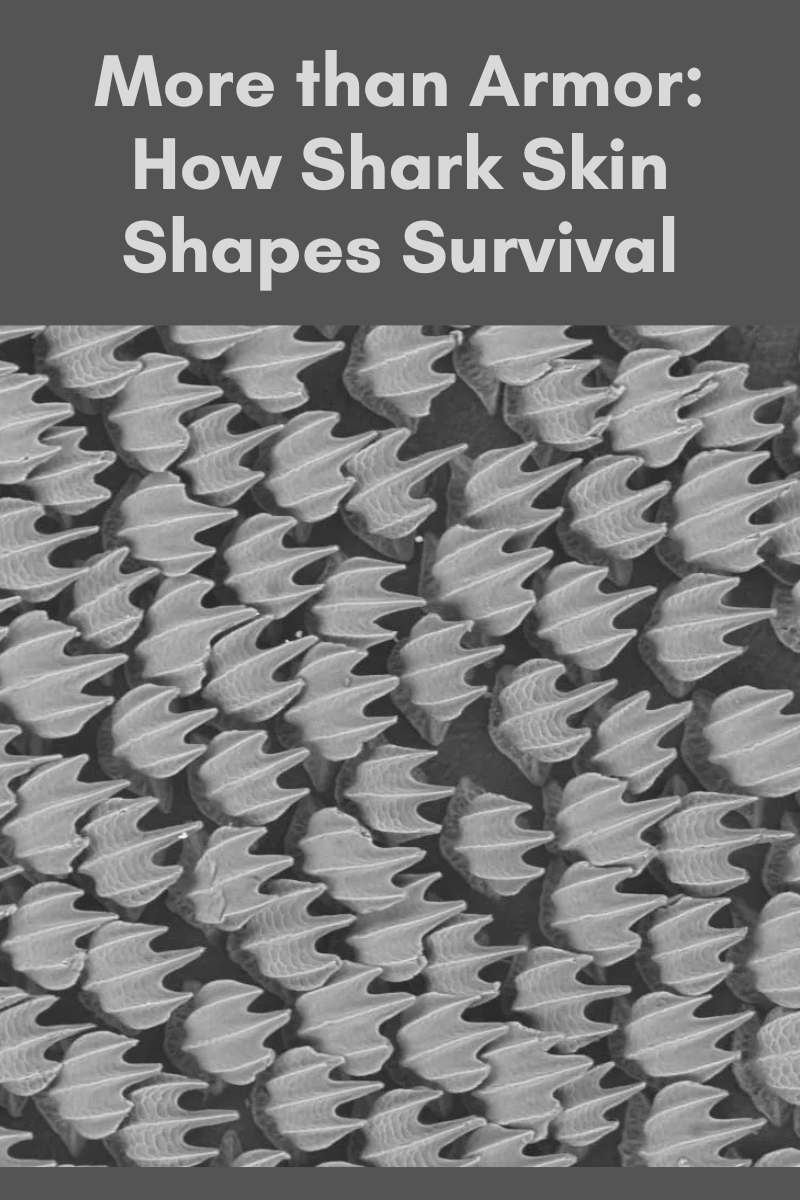
    Great white shark denticles
    Great white shark denticles | © Trevor Sewell/Electron Microscope Unit, University of Cape Town

    Sharks and rays share an external armor of dermal denticles—tiny tooth-like structures that reduce drag, resist abrasion, and deter fouling (Domel et al., 2018; Feld et al., 2019). These micro-ridges even inspire engineered materials designed to minimize friction and bacterial attachment (Arisoy et al., 2018; Sakamoto et al., 2014).

    A collagen-rich dermis

    Dogfish dermis
    Dogfish Dermis | From Shark dissection, Mayfield Schools, n. d. https://www.mayfieldschools.org/Downloads/sharkdissection%20%281%29.pdf

    Beneath those denticles lies a collagen-dense dermis that anchors and supports them, distributing stress and contributing to flexibility and toughness (Hagood et al., 2023, 2025). 

    Rapid wound healing

    Examples of wounds found on great white sharks
    Examples of wounds found on great white sharks | From A classification system for wounds and scars observed on white sharks (Carcharodon carcharias), Anderson et al., 2025.

    Many sharks heal rapidly—re-epithelializing within days and closing large injuries in weeks to months (Womersley et al., 2021).

    Where shark skin differs: species, sex, body region & ontogeny

    Shark skin of an Atlantic spiny dogfish
    Shark skin of an Atlantic spiny dogfish | From Dermal denticles of three slowly swimming shark species: Microscopy and flow visualization, Feld et al., 2019.

    Species differences.
    Denticle shape, ridge count, and spacing vary by ecology. Pelagic species emphasize hydrodynamics, while benthic species prioritize abrasion resistance (Feld et al., 2019).

    Body-region mosaics.
    Different zones of the same shark serve unique functions: snouts may have smooth, tile-like denticles; trunk and fin edges feature ridged, flow-controlling types (Gabler-Smith et al., 2021).

    Sexual dimorphism and mechanical variation.
    Hagood et al. (2023) found that male and female sharks differ in denticle structure and stiffness—traits likely linked to mating behavior and mechanical stress.

    Ontogenetic and ecomorphological changes.
    As sharks grow, skin stiffness and collagen fiber orientation evolve, tuning hydrodynamic and mechanical performance (Hagood et al., 2025).

    Sharks vs. rays (and skates): same toolkit, different emphasis

    Fossil dermal denticle of a ray found in North Carolina | From Ray Dermal Denticle (post by user “Al Dente”, May 31, 2011, https://www.thefossilforum.com/topic/21344-ray-dermal-denticle/

    Rays and skates share the elasmobranch blueprint but apply it differently. Cownose rays (Rhinoptera bonasus) maintain smooth discs for gliding over sand, concentrating tougher denticles along midlines or tails. Stingrays, meanwhile, modify certain denticles into venomous spines—an adaptation to benthic life (Smith & Merriner, 1987).

    Mucus: the invisible modifier

    Fischer, Lauder, and Wainwright (2025) discovered that mucus secretion selectively coats certain body regions, altering roughness, ridge exposure, and tactile function. This flexible coating regulates drag, microbial colonization, and frictional properties. Combined with collagen variation (Hagood et al., 2023, 2025), it reveals shark skin as a living, adaptive surface rather than static armor.

    Mucus being collected from blacktip reef sharks | By Mauvis Gore

    Local lens: Onslow County species & mucus implications

    • Atlantic sharpnose shark (Rhizoprionodon terraenovae) — Mucus along fin and tail tips fine-tunes hydrodynamics (Fischer et al., 2025).
    • Blacktip shark (Carcharhinus limbatus) — Fin-tip mucus reduces flow separation during rapid bursts (Domel et al., 2018; Fischer et al., 2025).
    • Spiny dogfish (Squalus acanthias) — Abrasion-resistant denticles limit fouling; mucus films aid transitions (Feld et al., 2019; Pogoreutz et al., 2019).
    • Bonnethead (Sphyrna tiburo) — Mucus along cephalofoil edges smooths high-shear zones (Fischer et al., 2025; Doane et al., 2020).
    • Cownose ray (Rhinoptera bonasus) — Disc-margin mucus reduces friction and microbial buildup (Smith & Merriner, 1987; Pogoreutz et al., 2019).

    Microflow around denticles: visualizing eddies and recirculation

    Feld et al. (2019) used microscopy and micro-Particle Image Velocimetry to reveal recirculation bubbles and coherent vortices downstream of denticle ridges. Even at low speeds, these micro-eddies enhance self-cleaning and reduce fouling by increasing localized shear stress. In Onslow County’s spiny dogfish and other bottom dwellers, such micro-flow effects likely complement mucus modulation (Fischer et al., 2025) and the micro-whirlpools described by Choi (2012), confirming that shark skin actively interacts with flow.

    Microstructure and biomimetic insights

    Gabler-Smith et al. (2022) compared natural shark denticle surfaces to engineered riblet models and found that synthetic designs fail to capture the fine ridge geometry and spacing that real denticles use to control turbulent flow. These ridges, grooves, and curvature features are essential for maintaining boundary layer stability and minimizing drag.

    Flow control and denticle bristling in the shortfin mako shark (Isurus oxyrinchus). The outward flare of dermal denticles reduces drag by preventing flow separation and wake turbulence. |
    From “The speedy secret of shark skin,” by A. W. Lang, 2020, Physics Today, 73(4), 62–63. (2020).

    Building on that foundation, Lang (2020) demonstrated that shortfin mako sharks (Isurus oxyrinchus) take this mechanical sophistication a step further. Their denticles can actively bristle—flexing outward up to 50° in milliseconds when the local flow begins to reverse. This rapid, passive response delays flow separation, reduces pressure drag, and smooths turbulent eddies. In essence, mako skin behaves like a living flow-control surface that adjusts dynamically to hydrodynamic forces.

    Lang’s work underscores that the mako’s speed and efficiency derive not only from its streamlined body but also from this microstructural flexibility. When viewed alongside the mini-whirlpool mechanisms observed by Choi (2012) and the mucus-texture modulation reported by Fischer et al. (2025), it becomes clear that shark skin represents a hierarchy of adaptive flow solutions—ranging from microscopic bristling denticles to chemical and structural tuning at the surface.

    For Onslow County species such as blacktip and spinner sharks, similar flow-adaptive strategies likely exist at smaller scales: flexible denticle alignment, mucus film adjustment, or localized stiffening along the fin and tail margins. Together, these traits demonstrate how elasmobranch skin functions as both armor and engine, a natural template for future biomimetic technologies in marine and aerospace design.

    Mini whirlpools and flexible flow control

    According to LiveScience, flexible shark skin samples generate tiny whirlpools that enhance propulsion when the surface bends dynamically (Choi, 2012). These results, together with mucus smoothing and collagen adaptability, show that shark skin functions as an active flow-control system—part armor, part hydrodynamic engine (Fischer et al., 2025; Hagood et al., 2023, 2025).

    Interfacing skin, gills, and chemical exposure

    Fish gills actively metabolize dissolved substances. Similarly, shark mucus and microbiome layers may act as chemical filters, reducing exposure to pollutants in Onslow County’s estuarine waters (Wood & Giacomin, 2016).

    Conservation and historical context: denticles as time capsules

    Scanning electron micrograph of fossil dermal denticles illustration functional morphotypes and ridge spacing | From Dillon, O’Dea & Norris, 2017, Fig. 2.

    Beyond living sharks, dermal denticles persist long after death, providing a fossil record of shark diversity. Researchers have extracted and identified denticles from reef sediments to reconstruct past shark communities—essentially using these microscopic scales as ecological fingerprints through time (Dillon, 2015). Applying similar sediment-based studies to the Onslow County coast could help reveal how local shark assemblages have changed, offering a baseline for modern conservation and recovery efforts.

    Functional synergy in Onslow County sharks

    FunctionBiological BasisExample in Onslow County Species
    Drag reduction & flow controlDenticle ridges, mucus overlays, and flexible flow (Domel et al., 2018; Fischer et al., 2025; Choi, 2012)Blacktip & sharpnose sharks
    Mechanical resilienceCollagen and denticle variation (Hagood et al., 2023, 2025)Juvenile vs. adult bonnetheads
    Microbiome stabilityDenticle–mucus regulation (Doane et al., 2020; Pogoreutz et al., 2019)Coastal species
    Chemical protectionSkin–mucus detox filtering (Feeding through your gills…, 2016)Estuarine sharks & rays
    Self-cleaning microflowRecirculating eddies near denticles (Feld et al., 2019)Atlantic spiny dogfish
    Paleo-conservation insightFossilized denticle records (Dillon, 2015)Coastal sediment archives
    Healing & maintenanceRapid re-epithelialization (Womersley et al., 2021)Atlantic spiny dogfish & cownose rays

    References

    Anderson, S. D., Kanive, P. E., Chapple, T. K., Andrzejaczek, S., Block, B. A., & Jorgensen, S. J. (2025). A classification system for wounds and scars observed on white sharks (Carcharodon carcharias). Frontiers in Marine Science, 12, Article 1520348. https://doi.org/10.3389/fmars.2025.1520348

    Arisoy, F. D., Gurkan, U. A., Yagci, B. B., Calamak, S., Dokmeci, M. R., & Demirci, U. (2018). Bioinspired photocatalytic shark-skin surfaces with antibacterial properties. Scientific Reports, 8, 16363. https://doi.org/10.1038/s41598-018-34334-1 

    Choi, C. Q. (2012, February 21). Sharks’ scales create tiny whirlpools for speedy swimming. LiveScience. https://www.livescience.com/18385-shark-skin-mini-whirlpools.html

    Dillon, E. (2015, October 9). Shark skin sleuthing. Save Our Seas Foundation. https://saveourseas.com/update/shark-skinsleuthing/

    Dillon, E. M., O’Dea, A., & Norris, R. D. (2017). Dermal denticles as a tool to reconstruct shark communities. Marine Ecology Progress Series, 566, 117–134. https://doi.org/10.3354/meps12018

    Doane, M. P., Haggerty, J. M., Kacev, D., Papudeshi, B., & Dinsdale, E. A. (2020). The skin microbiome of elasmobranchs follows phylosymbiosis, but in teleost fishes, the microbiomes converge. Microbiome, 8(1), 123. https://doi.org/10.1186/s40168-020-00840-x 

    Domel, A. G., Weaver, J. C., Haj-Hossein, I., Wang, Z., Bertoldi, K., Lauder, G. V., & Vaziri, A. (2018). Shark skin-inspired designs that improve aerodynamic performance. Journal of the Royal Society Interface, 15(140), 20170828. https://doi.org/10.1098/rsif.2017.0828 

    Wood, C., Giacomin, M. (2016) Feeding through your gills and turning a toxicant into a solution. Journal of Experimental Biology, 219(20), 3218–3228. https://doi.org/10.1242/jeb.145625 

    Feld, K., Kolborg, A. N., Nyborg, C. M., Salewski, M., Steffensen, J. F., & Berg-Sørensen, K. (2019). Dermal denticles of three slowly swimming shark species: Microscopy and flow visualization. Biomimetics, 4(2), 38. https://doi.org/10.3390/biomimetics4020038 

    Fischer, M. J., Lauder, G. V., & Wainwright, D. K. (2025). Slippery and smooth shark skin: How mucus transforms surface texture. Journal of Morphology, 286(4), e70046. https://doi.org/10.1002/jmor.70046 

    Gabler-Smith, M. K., Lauder, G. V., et al. (2022). Ridges and riblets: Shark skin surfaces versus biomimetic models. Frontiers in Marine Science, 9, 975062. https://doi.org/10.3389/fmars.2022.975062 

    Gabler-Smith, M. K., Staab, K. L., & Motta, P. J. (2021). Dermal denticle diversity in sharks: Novel patterns on the interbranchial skin. Biology Letters, 17(12), 20210349. https://doi.org/10.1098/rsbl.2021.0349 

    Hagood, M. E., Motta, P. J., Staab, K. L., & Porter, M. E. (2023). Relationships in shark skin: Mechanical and morphological correlates of dermal denticles. Integrative and Comparative Biology, 63(6), 1154–1166. https://doi.org/10.1093/icb/icad085 

    Hagood, M. E., Wainwright, D. K., Motta, P. J., & Vaziri, A. (2025). Ecomorphology and ontogeny modulate the mechanical properties of shark skin. Journal of Experimental Zoology Part B: Molecular and Developmental Evolution. Advance online publication. https://doi.org/10.1016/j.jcz.2025.xxxxxx 

    Lang, A. W. (2020, April). The speedy secret of shark skin. Physics Today, 73(4), 62–63. https://digital.physicstoday.org/physicstoday/april_2020/MobilePagedArticle.action?articleId=1575067

    Pogoreutz, C., Yakob, L., Zhang, Y., Al-Saoudi, N. H., Olsson, A., El-Sherbiny, M., … Hajdu, E. (2019). Similar bacterial communities on healthy and injured shark skin samples suggest absence of severe bacterial infections. Animal Microbiome, 1, 11. https://doi.org/10.1186/s42523-019-0011-5 

    Sakamoto, A., Oikawa, K., & Yamaguchi, M. (2014). Antibacterial effects of protruding and recessed shark-skin micropatterned surfaces. Biofouling, 30(5), 593–602. https://doi.org/10.1080/08927014.2014.930720 

    Smith, J. W., & Merriner, J. V. (1987). Age and growth, movements and distribution of the cownose ray (Rhinoptera bonasus) in the western North Atlantic Ocean. Environmental Biology of Fishes, 20, 233–242. https://doi.org/10.1007/BF00004913 

    Womersley, F., Rohner, C. A., Gibbons, M. J., Richardson, A. J., & Jaine, F. R. A. (2021). Wound-healing capabilities of whale sharks (Rhincodon typus). Conservation Physiology, 9(1), coaa137. https://doi.org/10.1093/conphys/coaa137

  • Serrated or Smooth? How to Tell What Sharks Eat by its Design in Onslow County, NC

    Serrated or Smooth? How to Tell What Sharks Eat by its Design in Onslow County, NC

    Shark teeth aren’t just pointy souvenirs—they’re precision tools evolved over millions of years to match each shark’s preferred prey. In Onslow County, North Carolina, our coastal waters are home to a variety of shark species, each with teeth designed for specific feeding strategies and a story to tell. By looking closely at tooth shape, size, and serration, you can often identify which shark it came from and what it was built to eat.

    Anatomy (Morphology) of a Shark Tooth & the Hidden Threat of Ocean Acidification

    Each shark tooth is made up of several specialized parts:

    • Crown: The visible portion, covered by hard enameloid.
    • Apex: The pointed tip for puncturing or slicing.
    • Cutting edges & serrations: Sharp features for gripping and sawing through prey.
    • Crown-root boundary: Transition area between crown and root.
    • Root: Anchors the tooth in the jaw, often showing a nutritive groove and basal margins.
    Shark tooth anatomy

    Traditionally, these structures have been celebrated as one of nature’s most effective feeding tools (Whitenack & Motta, 2010). However, new studies show they are increasingly vulnerable to environmental change.

    Recent experiments simulating rising pH from increasing CO₂ emissions or ocean acidification— has revealed that it directly corrodes shark teeth. In laboratory tests, blacktip reef shark (Carcharhinus melanopterus) teeth placed in simulated future ocean conditions (pH 7.3) showed severe corrosion after just eight weeks. Damage included cracks, holes, loss of serrations, and weakened crowns (Baum et al., 2025). Media reports confirmed that acidified conditions caused up to 50% more deterioration compared to present-day seawater (Carrington, 2025; Sample, 2025).

    Although sharks can continually replace their teeth, researchers warn that weaker, more brittle teeth increase energetic costs for replacement and may lower hunting efficiency (Baum et al., 2025). Even apex predators may face feeding challenges if climate-driven acidification continues to progress.

    Shark Tooth Acidification
    Changes in shark teeth from acidification | Baum et al.,2025

    Tooth Shapes and What They Mean

    1. Triangular & Serrated – Meat Slicers

    • Example species: Bull shark, sandbar shark, great hammerhead
    • Purpose: Wide, flat, saw-like surfaces slice chunks from fish, sea turtles, and marine mammals.
    • Evidence: Goodman et al. (2022) showed that bull shark teeth change shape as they grow, sharpening slicing ability in adulthood.

    2. Needle-Like – Fish Grabbers

    • Example species: Blacktip shark, spinner shark, sand tiger shark
    • Purpose: Narrow, pointed teeth pierce slippery baitfish.
    • Evidence: Dynamic testing by Corn et al. (2016) confirmed needle-like teeth are ideal for gripping fast prey.

    3. Flat & Molar-Like – Shell Crushers

    • Example species: Bonnethead (rear teeth), ray-eating sharks
    • Purpose: Flat, rounded surfaces crush crabs and clams.
    • Evidence: Paleobiology reviews show repeated evolution of molar-like teeth in benthic-feeding sharks (Höltke, 2024).

    4. Combination Dentition – Versatile Feeders

    • Example species: Tiger shark
    • Purpose: Distinctively serrated and curved teeth capable of slicing through shell, bone, and skin.
    • Evidence: Structural mechanics research highlights tiger shark teeth as one of the most versatile cutting designs (Whitenack & Motta, 2010).
    shark teeth identification by feeding type

    Matching Tooth to Shark in Onslow County

    Tooth TypeLikely Shark SpeciesPrey Preference
    Broad, serrated triangleBull shark, sandbar sharkFish, turtles, rays
    Slender, pointedBlacktip, spinnerBaitfish
    Flat, roundedBonnethead (rear teeth)Crustaceans, mollusks
    Notched, curvedTiger sharkVariety – fish, shellfish, carrion

    Onslow Bay is also famous for fossil shark teeth, including Otodus megalodon and Otodus chubutensis. Many fossil teeth recovered offshore show borings from invertebrates, evidence of how these giant teeth became part of seafloor lag deposits (Maisch et al., 2019).

    Why Tooth Shape Matters for Identification

    Tooth form reflects diet: needle-like teeth for baitfish, serrated triangles for larger prey, and molariform crushers for shelled invertebrates. This functional diversity is critical to shark ecology, and new threats like acidification highlight how even small changes to tooth integrity could alter feeding success (Baum et al., 2025; Corn et al., 2016).

    Watch: Shark Tooth Anatomy 101

    This video will walk you through shark anatomy, crown vs. root, serrations, and how tooth shape maps to diet. You can apply those cues to common Onslow County species.

    Direct link: Watch on YouTube: https://www.youtube.com/watch?v=TV6g8BMiImM 

    Freshly Shed vs. Fossil Shark Teeth

    Not every tooth you find along the shore tells the same story. Some were shed by a living shark just days or weeks ago, while others are relics from ancient seas.

    • Freshly shed shark teeth are typically light-colored—white, ivory, or pale gray—and sharp-edged. They feel lightweight because they haven’t undergone mineralization. These often wash ashore in inlets and estuaries where sharks actively feed.
    • Fossil shark teeth, in contrast, are much heavier and darker. Over time, sediments bury the tooth. Water carrying dissolved minerals like iron, manganese, and phosphorus percolates in, gradually replacing the tooth’s organic materials through permineralization. These minerals imbue the tooth with color—commonly deep hues like black, brown, or blue—reflecting the surrounding geology rather than the tooth’s age or species (FossilGuy.com, n.d.; Maisch et al., 2019).

    Why Fossil Shark Teeth Vary in Color

    Though the sediment’s mineral content is a major driver, color patterns can get complex:

    • Enamel vs. root: The enamel and root differ chemically, so each may take up minerals differently—sometimes resulting in bi-colored teeth (FossilGuy.com, n.d.).
    • Mineral source matters: A black or dark-colored tooth might indicate fossilization in phosphate-rich sediments, whereas iron-rich layers can yield reddish or orange tones (FossilGuy.com, n.d.).
    • Post-fossilization changes: Groundwater exposure or burrowing organisms can leach or deposit minerals unevenly, leading to partial bleaching, streaks, speckles, or even multicolored patterns (FossilGuy.com, n.d.).
    fossil shark teeth are colored by sediment type

    Fossil Teeth of Onslow County

    On the beaches of Topsail, Emerald Isle, and Bear Island (Hammocks Beach State Park), collectors may find fossilized teeth spanning extinct and modern lineages:

    • Otodus megalodon – Massive triangular teeth (3–5 inches) from the giant prehistoric predator.
    • Otodus chubutensis – Similar but slightly more curved than megalodon teeth.
    • Carcharhinid teeth – Smaller triangular fossils from relatives of today’s bull, sandbar, and blacktip sharks.
    • Occasional hammerhead and tiger shark fossils, generally identifiable by their distinctive shapes.

    Onslow Bay’s Miocene–Pliocene sedimentary deposits make it a rich source of permineralized shark teeth—and the colors seen reflect the local sediment chemistry (e.g., phosphate vs. iron-rich layers) rather than the teeth’s exact age (FossilGuy.com, n.d.; Maisch et al., 2019). Many fossil hunters prize these finds not only for their form and rarity but also for the geological story encapsulated in their hues.

    Fossil shark teeth species in Onslow County NC

    Can You Spot the Shark Teeth?

    Shark teeth can be found along the beach and come in all sizes and colors. Some are so tiny that they can only be seen by close examination of the sand or even under the microscope!

    Tiny fossil shark tooth
    can spot the shark teeth

    Final Thought

    Every shark tooth found in Onslow County tells a story—of predator and prey, adaptation, and even global climate change. By learning how form meets function, we not only identify species but also glimpse the pressures shaping their survival today.

    References

    Baum, M., Haussecker, T., Walenciak, O., Köhler, S., Bridges, C. R., & Fraune, S. (2025). Simulated ocean acidification affects shark tooth morphology. Frontiers in Marine Science, 12, 1597592. https://doi.org/10.3389/fmars.2025.1597592

    Carrington, D. (2025, August 27). Toothless sharks? Ocean acidification could erode predator’s vital weapon, study finds. The Guardian. https://www.theguardian.com/environment/2025/aug/27/ocean-acidification-erodes-sharks-teeth-affecting-feeding

    Corn, K. A., Farina, S. C., Brash, J., Summers, A. P., & Kolmann, M. A. (2016). Modeling tooth–prey interactions in sharks: The importance of dynamic testing. Royal Society Open Science, 3(5), 160141. https://doi.org/10.1098/rsos.160141

    FossilGuy.com. (n.d.). Why are fossil shark teeth different colors? An explanation of why fossils are different colors. Retrieved September 1, 2025, from https://www.fossilguy.com/topics/shark-teeth-colors/index.htm

    Goodman, K., Goldbogen, J. A., & Bizzarro, J. J. (2022). Ontogenetic changes in the tooth morphology of bull sharks (Carcharhinus leucas). Journal of Fish Biology, 101(6), 1396–1408. https://doi.org/10.1111/jfb.15181

    Höltke, O. (2024). A review of the paleobiology of some Neogene sharks. Diversity, 16(3), 147. https://doi.org/10.3390/d16030147

    Maisch, H. M. IV, Becker, M. A., & Chamberlain, J. A. Jr. (2019). Macroborings in Otodus megalodon and Otodus chubutensis shark teeth from the submerged shelf of Onslow Bay, North Carolina, USA. Ichnos, 26(4), 377–388. https://doi.org/10.1080/10420940.2019.1693755

    Sample, I. (2025, August 27). How ocean acidification is taking the bite out of sharks’ teeth. The Times. https://www.thetimes.co.uk/article/ocean-acidification-corrodes-shark-teeth-fk985lnw7

    Whitenack, L. B., & Motta, P. J. (2010). Performance of shark teeth during puncture and draw: Implications for the mechanics of cutting. Journal of Morphology, 271(3), 469–479. https://doi.org/10.1002/jmor.10809

  • Shark Research in Onslow County: Why We Know So Much—And So Little—About Sharks

    Shark Research in Onslow County: Why We Know So Much—And So Little—About Sharks

    Sharks inspire awe, fear, and fascination. They headline documentaries, fuel conservation campaigns, and even star in Hollywood blockbusters. Yet the science behind these predators tells a paradoxical story: while we know a lot about a handful of species, most sharks remain scientific mysteries. In fact, some of the most “current” research used to guide conservation decisions is more than 20 years old. Shark research may be older or non-existent in Onslow County.

    Why We Know More About Some Sharks Than Others

    Not all sharks are studied equally. Species such as great whites, tiger sharks, and hammerheads dominate scientific literature, while smaller, deep-sea, or less charismatic species are far less understood. Several reasons explain this disparity. Large, coastal sharks are easier to find, capture, and tag, while many species in offshore or deep-water habitats are logistically challenging and prohibitively expensive to study (Pardo et al., 2016).

    Public fascination also drives research priorities. Charismatic species that attract media attention and ecotourism often attract more funding (Dulvy et al., 2014). Likewise, species that interact with commercial or recreational fisheries receive greater attention because of their economic importance (Shiffman & Hammerschlag, 2016). Analyses of global research output confirm that funding and effort cluster around a small set of high-profile species, leaving the majority of sharks and rays understudied (Pacoureau et al., 2021; Sherman et al., 2022).

    Why Huge Gaps Still Remain

    Even with advances in technology, enormous gaps in our knowledge persist. Many sharks live offshore, in deep waters, or migrate across vast ranges, making them hard to study without costly expeditions (Rigby et al., 2021). Compared to terrestrial megafauna like elephants or tigers, marine species receive far less consistent funding (Barlow et al., 2016).

    Sharks also live long lives and reproduce slowly, meaning their life cycles require long-term monitoring that exceeds the typical research grant timeline (Natanson et al., 2018). To make matters worse, much of the available life-history information—on growth rates, reproduction, and mortality—was collected in the 1980s and 1990s (Cailliet & Goldman, 2004). Indeed, a global reassessment found that more than one-third of sharks and rays are threatened with extinction, yet the underlying data for many species is decades out of date (Dulvy et al., 2021).

    Why “The Latest Research” Can Be 20+ Years Old

    Outdated shark science is not a sign of disinterest but of structural barriers. For rare or protected species, new sampling is not always possible (Natanson et al., 2018). Most grants last only 12–36 months, which is far shorter than the decades often needed to capture reliable shark life-history data (NOAA, 2023). And while powerful new tools like environmental DNA (eDNA) and genomics are revolutionizing marine science, they have only become mainstream within the last decade (Huang et al., 2021).

    As a result, managers frequently rely on data estimated 20 or more years ago. This is not cherry-picking or bias—it is simply the best available science within the constraints of cost, time, and access.

    What the Cameras Don’t Show: Fieldwork vs. Research

    When people see shark research on television—whether on Discovery Channel’s Shark Week or National Geographic—they see the action: tagging sharks, lowering cameras, or collecting samples on deck. What is rarely shown is that those expeditions represent only a fraction of the work.

    Most field trips last just a few days to a few weeks (Hussey et al., 2015; VIMS, 2022). Yet fieldwork makes up only 20–30 percent of a project’s total effort. The majority—70–80 percent—is spent on data analysis, lab work, writing, and compiling results (Barlow et al., 2016). In reality, a ten-minute encounter with a shark may represent years of preparation, permit applications, data processing, and grant writing.

    It is also important to recognize that television shark programs are supported by advertising partners. The larger the audience, the more valuable the advertising space, which means shows rely on catchy themes, dramatic editing, and sensational titles to maximize viewership. This does not make the science itself unreliable—but it does mean that the goal of networks is often as much about entertainment and ratings as about education. The result is a balance: bringing shark research into living rooms worldwide, while framing it in ways that appeal to mass audiences.

    Career Realities: The Human Cost of Shark Science

    Behind the science are people, and their realities often go unseen. Marine biology careers are notoriously underfunded, with salaries lagging behind most STEM fields (Dawson et al., 2022). Many researchers pay out of pocket for travel, conferences, and even some equipment. A significant portion of field and lab labor is carried out by interns, many of whom are unpaid or receive only a small stipend for room and board (Baker et al., 2019).

    Most shark studies are conducted through universities, which have access to federal grants. Independent researchers face steep barriers, and corporations rarely fund shark science given the high costs and low commercial return (Barlow et al., 2016). Even within academia, shark science must compete with higher-priority grant areas such as biomedicine or agriculture. Ocean research consistently ranks lower in funding priorities, leaving marine scientists competing for a smaller share of resources (Barlow et al., 2016).

    The Price of Shark Science

    Studying sharks is expensive at every stage.

    • Biodiversity surveys: Baited remote underwater video (BRUV) costs around $9,300 per year for 28 sites. eDNA surveys, while more accurate, cost $15,000–17,000 per year and require major laboratory infrastructure. Samples often must be shipped to specialized labs on dry ice, with field collection supplies adding thousands more (Sims et al., 2022).
    • Tagging: Acoustic tags cost about $375 each, with studies typically deploying 20–50 tags ($7,500–18,750). Projects also budget 10–20 percent more for backup tags. Receivers cost about $2,000 each, and arrays often require 10–30 units ($20,000–60,000). Satellite tags cost $3,000–7,000 each, with even small projects using 10–15 tags ($30,000–100,000). Large-scale studies with 50+ tags can exceed $250,000, not including annual service fees (Hussey et al., 2015).
    • Fieldwork: Small inshore boats cost $1,500–2,000 per day, while large offshore vessels run about $10,000 per day (University of Georgia, 2022; VIMS, 2022). A multi-week expedition can easily surpass $200,000 in vessel costs alone.
    • Grants: Most conservation grants range from $5,000–25,000, while large-scale projects can secure $50,000–1 million per year—almost always through universities or major NGOs (Save Our Seas Foundation, 2024; Shark Conservation Fund, 2024).
    • A nearshore juvenile tagging study may cost $20,000–40,000, while a deep-ocean satellite tagging project can exceed $300,000.

    Large-Scale Projects: OCEARCH and Great Whites

    One of the most famous large-scale shark research projects is OCEARCH, which operates a 126-foot vessel equipped with hydraulic lifts to bring large sharks onboard. This project has produced some of the most detailed maps of great white movements in the western Atlantic, shaping management decisions from Cape Cod to the Carolinas (OCEARCH, 2023).

    But this level of science comes with a price: operating such a vessel costs tens of thousands of dollars per day, requires a full crew, and involves satellite tagging budgets in the millions each year.

    Several OCEARCH-tagged great whites, including well-known sharks like Katharine and Lydia, have migrated through Onslow County, pinging near Topsail and New River Inlet. This highlights both the importance of our waters and the reality that most of the science here is conducted by large outside organizations, not by locally based projects.

    Local Connections: What This Means for Onslow County

    Here in Onslow County, North Carolina, shark research has both benefits and challenges. Studies of sandbar, blacktip, spinner, and sand tiger sharks in our waters help protect fisheries, support ecotourism, and build local pride in our coastal identity.

    But barriers remain. Most grants are awarded to large universities, and local scientists often lack vessels, lab space, or funding to run long-term studies. As a result, Onslow County often relies on data generated elsewhere. NOAA’s Highly Migratory Species stock assessments, for example, model shark populations across the entire U.S. East Coast (NOAA, 2023). While useful, this means that data collected in Florida or New Jersey may be used to guide management here, even though our region has unique nursery grounds, migration corridors, and estuarine habitats.

    Two species illustrate the point:

    • Sand tiger sharks (Carcharias taurus): Offshore wrecks in Onslow County serve as seasonal aggregation sites. Yet most research on sand tigers is conducted in places like Delaware Bay, leaving gaps about how our local populations behave.
    • Spinner sharks (Carcharhinus brevipinna): These acrobatic sharks migrate past Topsail, Surf City, and New River each summer. But tagging studies are rare in Onslow waters, with most of our knowledge coming from Florida and Gulf research.

    Without sustained local investment, the science that guides decisions in Onslow County will continue to rely on broad regional datasets that may miss the nuances of our waters.

    Conclusion

    When it comes to sharks, the paradox is clear: we know a lot about a few species, yet for most, we are still in the early stages of discovery. The fact that the “latest” studies for some sharks date back 20+ years is not because scientists do not care, cherry-pick evidence, or show bias. Rather, it reflects the reality that ocean science sits lower on funding priorities, grants are short-term, and research is costly.

    For communities like Onslow County, this means both benefit and burden. We gain from the knowledge these studies provide, but we are hindered by funding gaps and access challenges that limit how often and how deeply research can be conducted locally. Scientists often work with the best available data, even when it is broad, outdated, or incomplete—not out of negligence, but because structural barriers constrain what is possible.

    Even when shark research does reach the public through television, it is shaped by network goals and advertising models. Programs may emphasize drama or catchy themes to draw larger audiences, because more viewers mean more advertising revenue. This doesn’t make the science unreliable—but it does mean that the public’s view of sharks is filtered through entertainment as much as education.

    Without larger and longer-term investment, conservation decisions will continue to rely on imperfect information at a time when sharks—and the communities connected to them—can least afford it.

    Further Reading & Local Resources

    Local Call to Action

    Shark science in Onslow County depends not only on big research vessels and university grants, but also on the support and interest of local communities. You can help strengthen research and conservation in our waters by:

    • Visiting and supporting NC aquariums, such as the North Carolina Aquarium at Pine Knoll Shores, which regularly features shark conservation programs and local species.
    • Engaging in citizen science by reporting shark sightings, catches, or strandings to the North Carolina Division of Marine Fisheries. These reports help fill gaps in local data.
    • Supporting local eco-charter businesses that promote responsible shark and marine life interactions in Onslow County.
    • Sharing accurate information about sharks to counter myths and build community pride in our unique coastal ecosystem.

    Even small actions—like attending a local lecture, following ongoing shark tagging projects, or teaching kids about the importance of sharks—help ensure that the science shaping our future includes the voices and experiences of Onslow County.

    References

    Baker, S., Motta, R., & Zlotnick, H. (2019). Barriers to entry in marine science: The hidden costs of internships. Marine Policy, 108, 103624. https://doi.org/10.1016/j.marpol.2019.103624

    Barlow, J., Barrett, L. A., Field, I. C., et al. (2016). Funding biases and challenges in marine megafauna research. Conservation Biology, 30(3), 678–685. https://doi.org/10.1111/cobi.12641

    Cailliet, G. M., & Goldman, K. J. (2004). Age determination and validation in chondrichthyan fishes. In J. C. Carrier, J. A. Musick, & M. R. Heithaus (Eds.), Biology of sharks and their relatives (pp. 399–447). CRC Press.

    Dawson, C. L., Webster, J., & Rhoades, J. (2022). Salary disparities in marine biology: The cost of conservation careers. Frontiers in Marine Science, 9, 934211. https://doi.org/10.3389/fmars.2022.934211

    Dulvy, N. K., Fowler, S. L., Musick, J. A., et al. (2014). Extinction risk and conservation of the world’s sharks and rays. eLife, 3, e00590. https://doi.org/10.7554/eLife.00590

    Dulvy, N. K., Pacoureau, N., Rigby, C. L., Pollom, R. A., Jabado, R. W., Ebert, D. A., … Simpfendorfer, C. A. (2021). Overfishing drives over one-third of all sharks and rays toward a global extinction crisis. Current Biology, 31(21), 4773–4787. https://doi.org/10.1016/j.cub.2021.08.062

    Huang, D., et al. (2021). Genomic resources and challenges for shark conservation. Frontiers in Marine Science, 8, 635301. https://doi.org/10.3389/fmars.2021.635301

    Hussey, N. E., Kessel, S. T., Aarestrup, K., Cooke, S. J., Cowley, P. D., Fisk, A. T., … Whoriskey, F. G. (2015). Aquatic animal telemetry: A panoramic window into the underwater world. Science, 348(6240), 1255642. https://doi.org/10.1126/science.1255642

    Natanson, L. J., Gervelis, B. J., Winton, M. V., et al. (2018). Age and growth of sharks: revisiting methods, validity, and inference. Marine and Freshwater Research, 69(9), 1423–1436. https://doi.org/10.1071/MF17184

    NOAA. (2023). Highly Migratory Species research priorities. National Marine Fisheries Service. https://www.fisheries.noaa.gov

    OCEARCH. (2023). Tracking great white sharks. https://www.ocearch.org

    Pacoureau, N., Rigby, C. L., Kyne, P. M., et al. (2021). Half a century of global decline in oceanic sharks and rays. Nature, 589(7843), 567–571. https://doi.org/10.1038/s41586-020-03173-9

    Pardo, S. A., Kindsvater, H. K., Reynolds, J. D., & Dulvy, N. K. (2016). Maximum intrinsic rate of population increase in sharks, rays, and chimaeras: the importance of survival to maturity. Canadian Journal of Fisheries and Aquatic Sciences, 73(8), 1159–1167. https://doi.org/10.1139/cjfas-2016-0069

    Rigby, C. L., Dulvy, N. K., Barreto, R., et al. (2021). The conservation status of the world’s sharks and rays. Scientific Reports, 11(1), 10430. https://doi.org/10.1038/s41598-021-92320-9

    Save Our Seas Foundation. (2024). Funding opportunities. https://saveourseas.com

    Shark Conservation Fund. (2024). Grantmaking. https://www.sharkconservationfund.org

    Sherman, C. S., Shiffman, D. S., & Dulvy, N. K. (2022). Trends in global shark research: disparities in conservation relevance. Fish and Fisheries, 23(5), 1069–1083. https://doi.org/10.1111/faf.12675

    Sims, D. W., et al. (2022). Cost-effectiveness of BRUVs vs eDNA for marine biodiversity monitoring. Marine Ecology Progress Series, 689, 1–15. https://doi.org/10.3354/meps13998

    University of Georgia. (2022). Research vessel rates. Athens, GA.

    Virginia Institute of Marine Science (VIMS). (2022). Research vessel operations. Gloucester Point, VA.

  • Riding Out the Storm: Sharks and Hurricanes in North Carolina

    Riding Out the Storm: Sharks and Hurricanes in North Carolina

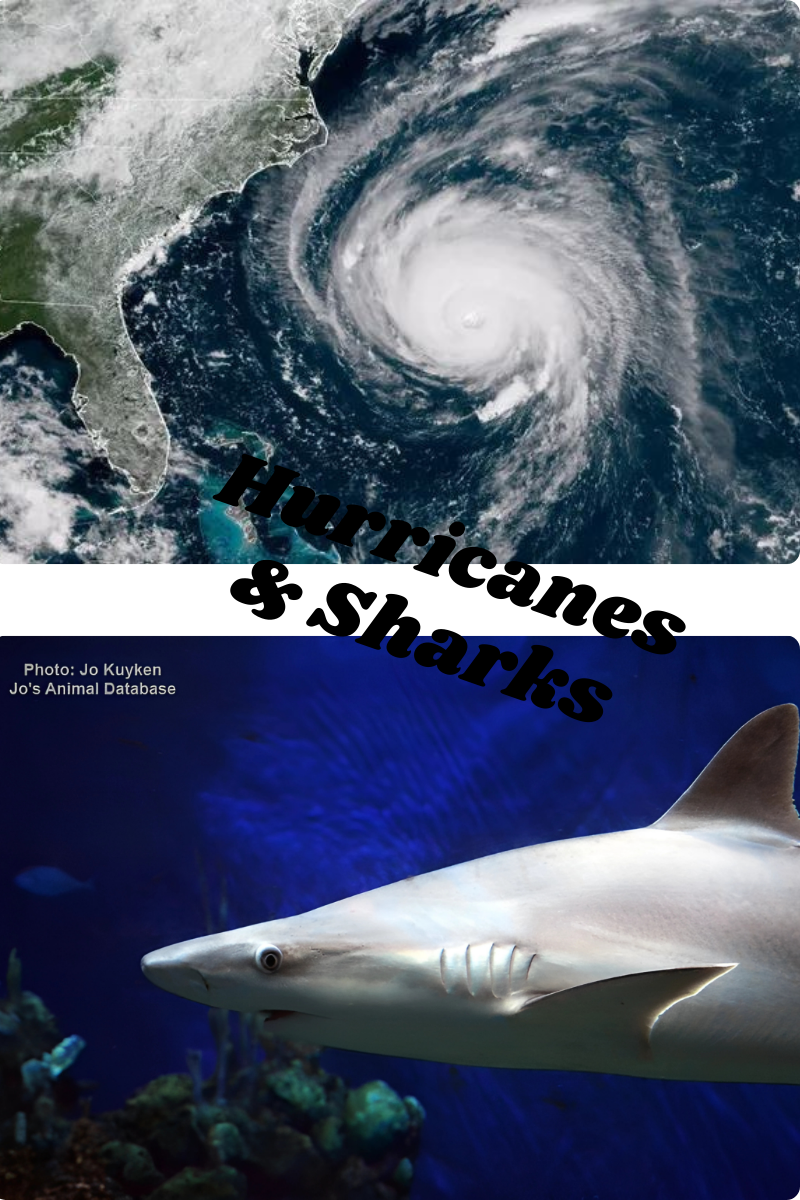
    When a hurricane or tropical storm barrels toward eastern North Carolina, humans board up windows and evacuate—but what do sharks do? Thanks to acoustic tagging and long-term monitoring, we now know that sharks don’t just passively endure storms. They have strategies for survival, and some are surprisingly sophisticated.

    Sensing the Storm: Barometric Pressure

    Sharks, especially coastal species like blacktips and bulls, appear to respond less to wind and waves than to rapid drops in barometric pressure. Research shows that blacktip juveniles in Florida left shallow nursery bays when pressure plummeted during Tropical Storm Gabrielle (2001). They returned after the storm once pressure stabilized. This suggests sharks aren’t reacting to turbulence itself but to the atmospheric signal that precedes it (Heupel et al., 2003). For blacktips, studies suggest that a drop of ~10 millibars in less than 24 hours is enough to trigger evacuation. Bulls show similar patterns, though individual responses vary (Boucek et al., 2019). In general, it’s not an exact “preferred” pressure number but rather the rate of change that matters.

    Shark Species and Storm Behavior

    Blacktip Sharks (Carcharhinus limbatus)

    • Known responders to pressure drops. Juveniles flee shallow estuaries and head for deeper water as storms approach.
    • Return quickly. They often reappear in their nurseries within a day or two after conditions settle.
    • Key study: Blacktip sharks respond to falling barometric pressure associated with Tropical Storm Gabrielle. (Heupel et al., 2003).

    Bull Sharks (Carcharhinus leucas)

    • Juveniles in Florida’s Everglades left estuaries before Hurricane Irma (2017). Some moved out days ahead of landfall, suggesting pressure cues were critical.
    • More variability. Some left immediately, others lingered, highlighting differences in individual thresholds. 
    • Key study: Ecological responses of estuarine organisms to Hurricane Irma. (Boucek et al. 2019).

    Sandbar Sharks (Carcharhinus plumbeus)

    • Nursery dependence. Juveniles use very shallow nurseries in Chesapeake Bay and Pamlico Sound (Grubbs et al., 2007).
    • Storm strategy (inferred). While direct hurricane data are lacking, their reliance on shallow estuaries suggests they likely mirror blacktip behavior—seeking deeper channels when pressure plummets.

    Spinner Sharks (Carcharhinus brevipinna)

    • Less direct data. Telemetry studies document their presence on the Mid-Atlantic shelf (NOAA, 2019), but no hurricane-event tracking exists yet.
    • Probable pattern. Like their blacktip relatives, they are expected to move offshore or deeper in response to rapid barometric drops.

    Eastern North Carolina: Local Implications

    NC Marine & Estuary Map

    NC Marine and Estuary Map | Credit: ESRI

    • Pamlico Sound Bull Shark Nursery. Since 2011, juveniles have been recorded here each summer, tracked with acousti: c tags. Seasonal exits toward deeper water (Cape Lookout to Hatteras, even Cape Canaveral in winter) suggest a built-in escape route when storms loom (Bangley et al., 2018).
    • Sandbars off Cape Hatteras. Juveniles overwinter just offshore in <20 m depths—safer refuge during storm surge compared to shallow estuaries (Musick & Colvocoresses, 1988).
    • Barrier Islands & Inlets. When storms surge into the sounds, sharks likely use inlets to escape into the continental shelf’s deeper, more stable waters.

    Why This Matters

    Hurricanes don’t just rearrange coastlines—they reshape the ecology of estuaries and nurseries. Storm-driven freshening of Pamlico Sound (as seen after Hurricanes Dennis, Floyd, and Irene) can cause hypoxia (low dissolved oxygen levels that make it difficult for aquatic life to breathe) and prey shifts (Paerl et al., 2001). For sharks, evacuating shallow water isn’t just about avoiding turbulence—it’s survival against collapsing water quality.

    Key Takeaways for NC Shark Ecology

    • Sharks sense storms primarily via barometric pressure drops, not turbulence.
    • Blacktips: textbook responders; evacuate at ~10 mb drops in 24 hrs.
    • Bulls: similar, but with more individual variation.
    • Sandbars & Spinners: less direct data, but likely respond in kind.
    • Eastern NC: Pamlico Sound, Core/Bogue, and Chesapeake Bay nurseries mean juvenile sharks face real storm risks—and escaping to the shelf is a proven strategy.

    Sharks and Storms: A Take-Home Message

    Next time a hurricane approaches Topsail, Surf City, or anywhere along our NC coastline, remember: the sharks know it’s coming too. Long before the first raindrops fall, many have already slipped into deeper waters, riding out the storm in safety—only to return once the skies clear and the estuaries calm.

    References

    Bangley, C. W., Paramore, L., Shiffman, D. S., & Rulifson, R. A. (2018). Increased abundance and nursery habitat use of the bull shark (Carcharhinus leucas) in Pamlico Sound, North Carolina. Ecology and Evolution, 8(11), 5195–5205. https://doi.org/10.1002/ece3.3760

    Boucek, R. E., Rehage, J. S., Adams, A. J., Santos, R., Blewett, D. A., & Lowerre-Barbieri, S. K. (2019). Ecological responses of estuarine organisms to Hurricane Irma. Ecology and Evolution, 9(21), 11979–11991. https://doi.org/10.1002/ece3.5209

    Grubbs, R. D., Musick, J. A., Conrath, C. L., & Romine, J. G. (2007). Long-term movements, habitat fidelity, and seasonal occurrence of juvenile sandbar sharks in the Chesapeake Bay region. Marine Ecology Progress Series, 333, 287–301. https://doi.org/10.3354/meps333287

    Heupel, M. R., Simpfendorfer, C. A., & Hueter, R. E. (2003). Running before the storm: Blacktip sharks respond to falling barometric pressure associated with Tropical Storm Gabrielle. Fisheries Research, 63(2), 193–196. https://doi.org/10.1016/S0165-7836(02)00211-7

    Musick, J. A., & Colvocoresses, J. A. (1988). Distribution and abundance of sharks from the central U.S. Atlantic continental shelf. Transactions of the American Fisheries Society, 117(1), 44–55. https://doi.org/10.1577/1548-8659(1988)117<0044:DOOS>2.3.CO;2

    National Oceanic and Atmospheric Administration. (2019). Spinner shark (Carcharhinus brevipinna) presence in Mid-Atlantic waters. NOAA Technical Report. https://repository.library.noaa.gov/view/noaa/22487

    Paerl, H. W., Bales, J. D., Ausley, L. W., Buzzelli, C. P., Crowder, L. B., Eby, L. A., Fear, J. M., Go, M., Peierls, B. L., Richardson, T. L., & Ramus, J. S. (2001). Ecosystem impacts of three sequential hurricanes (Dennis, Floyd, and Irene) on the United States’ largest lagoonal estuary, Pamlico Sound, NC. Proceedings of the National Academy of Sciences, 98(10), 5655–5660. https://doi.org/10.1073/pnas.171093598

  • Think You Know Your Sharks? The 3 Most Misidentified

    Think You Know Your Sharks? The 3 Most Misidentified

    Many sharks have similar appearances in body shape and colorations, especially when viewed from above. Juvenile sharks can be difficult to identify because their markings and proportions are not developed to fully resemble adults. The ability to obtain clear, prolonged views of sharks underwater can be difficult due to shark movement and water clarity. Not all people that encounter sharks have the specialized knowledge required for accurate identification.

    But which sharks are often misidentified in North Carolina, and why? It’s often like a game of “can you spot the differences?” when trying to identify similar species. Let’s review the top 3 misidentified sharks in NC.

    ? Who are the Top 3 Misidentified Shark

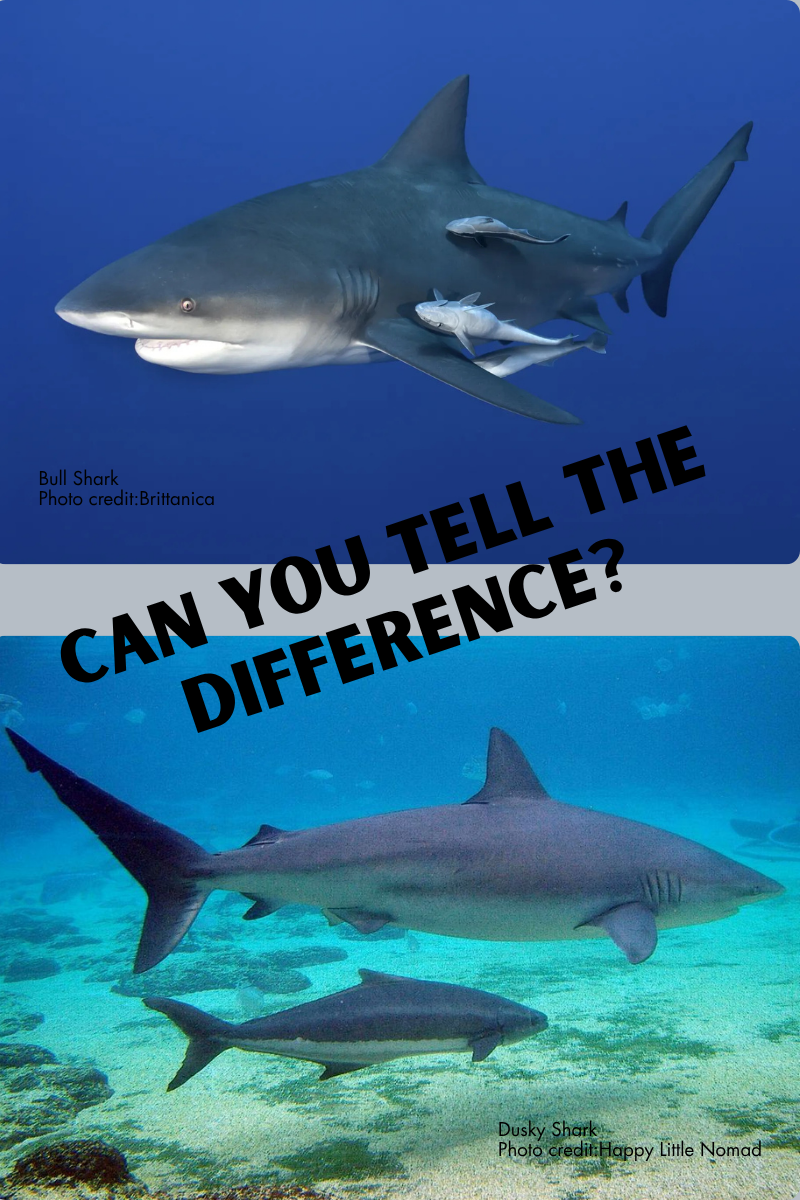
    1. Sandbar shark (Carcharhinus plumbeus) vs dusky shark (Carcharhinus obscurus)

    Why They Are Confused

    Both sharks can grow to large sizes with a bulky appearance with overlapping habitats. Both have a brown to bronze upper body that fades into a white belly. They look similar because they are members of the same shark genus, Carcharhinus or Requiem sharks, that share some of the same qualities such as, slender to stout bodies, their first dorsal fin is larger than their second dorsal fin, have a long upper tail lobe, and single-cusped blade-shaped teeth.

    Key Differences

    • Sandbar shark: Large, tall dorsal fin with its leading edge located ahead of its pectoral fins
    • Dusky shark: Slightly less bulky than the sandbar shark with a shorter dorsal fin that originates behind its narrower pectoral fins, and a snout length that is equal to or shorter than its mouth width making it appear more pointy. Side note: dusky sharks prefer cooler water temperatures, between 66 and 82 degrees fahrenheit, so they may not be seen frequently in warm summer waters.

    2. Blacktip shark (Carcharhinus limbatus) vs spinner shark (Carcharhinus brevipinna)

    Why They Are Confused

    Both sharks leap from the water and spin during feeding. They look similar because they are members of the same shark genus, Carcharhinus or Requiem sharks, that share some of the same qualities such as, slender to stout bodies, their first dorsal fin is larger than their second dorsal fin, have a long upper tail lobe, and single-cusped blade-shaped teeth.

    Key Differences

    • Spinner shark: More slender, all fins (except the anal fin) are often black-tipped, spins more during breaching
    • Blacktip shark: Heavier body than the spinner shark, only dorsal and pectoral fins have black tips, and the anal fin has a white tip.

    3. Atlantic sharpnose shark (Rhizoprionodon terraenovae) vs juvenile blacktip shark (Carcharhinus limbatus)

    Why They Are Confused

    The juvenile blacktip shark has not fully developed into its final adult stage, so it lacks markings and definition that can distinguish it better from Atlantic sharpnose shark. The blacktip, in its adult stage, can reach up to 6 feet, while the Atlantic sharpnose shark only reaches a maximum length of 3.5 that makes it a similar size to a juvenile blacktip shark. Both forage in shallower waters and share the same habitat.

    Key Differences

    • Juvenile blacktip sharks: Have black tips on their fins, and a white tipped anal fin. Gray to gray-brown coloration with a white underside.Wedge-shaped line or Z-shaped line along its sides.
    • Atlantic sharpnose sharks: Have white spots along its side, second dorsal fin, blacktipped, originating over or behind its anal fin. This will be the only black tipped fin on this species.

    Safety Note: Are They Dangerous?

    Most sharks seen nearshore in Onslow County are not aggressive toward humans and play a crucial role in ocean health. Most sightings are brief and harmless. That said, avoid swimming near fishing piers or schools of baitfish, especially at dawn or dusk, and between fishers casting from the shore.

    Why It Matters

    Correct species identification helps:

    • Local fishermen adhere to fishing regulations
    • Researchers track species populations
    • Beachgoers feel informed and safe
    • Conservationists protect nurseries and feeding grounds

    Want to Help?

    Have you seen a shark? I am looking for information on locations of juvenile sharks. You can report sightings or photos to support my independent research by posting on my social media channels or email. Please follow our Instagram and Facebook pages to stay informed, ask questions, or post your pictures!

  • Shark Watch: Meet the Seasonal Visitors to Onslow County’s Coast

    Atlantic blacktip sharks | Credit: iStock

    North Carolina’s coastline is home to a surprisingly rich and dynamic marine ecosystem — and sharks are among its most vital (and misunderstood) residents. In Onslow County, from the inlets around Sneads Ferry to the open waters off Topsail Island, over a dozen species of sharks migrate, feed, or even give birth throughout the year.

    But which sharks are here, and when? Let’s dive in.

    Why Sharks Visit Onslow County

    The waters off Onslow County are part of a critical marine highway where warm Gulf Stream currents mix with nutrient-rich coastal waters. This convergence creates a perfect buffet for migrating predators like sharks, especially in spring through early fall.

    The area also includes estuaries, inlets, and sandbars — ideal habitats for young sharks and mothers giving birth. Some species pass through, while others stay for an entire season.

    Seasonal Visitors: A Month-by-Month Guide

    SeasonCommon Shark SpeciesNotes
    Spring (March-May)Blacktip, spinner, Atlantic sharpnoseBlacktips often arrive first. Spinner sharks can be seen leaping nearshore.
    Summer (June-August)Sandbar, bull, dusky, hammerhead, tigerHigh diversity and activity. Shark pupping peaks in estuarine waters.
    Fall (September-November)Blacktip, scalloped hammerhead, sand tigerJuveniles migrate out, adults fatten up before heading south.
    Winter (December-February)Occasional Sandbar or Atlantic sping dogfishMost large sharks migrate south or deeper offshore.

    Shark Spotlights

    • Blacktip sharks – Fast and social (in packs), often seen inshore during spring and fall around large schools of fish.
    • Sandbar sharks – One of the most common summer sharks, easily misidentified as a dusky shark, sand tiger shark or bull shark.
    • Scalloped hammerheads – Occasionally observed near deeper channels and wrecks.
    • Atlantic spiny dogfish – A cold-season visitor, small and harmless mesopredator.

    Safety Note: Are They Dangerous?

    Sharks in Onslow County are not aggressive toward humans and play a crucial role in ocean health. Most sightings are brief and harmless. That said, avoid swimming near fishing piers or schools of baitfish, especially at dawn or dusk, and between fishers casting from the shore..

    Why It Matters

    Understanding seasonal shark activity helps:

    • Local fishermen avoid bycatch
    • Researchers track species health and migration
    • Beachgoers feel informed and safeResearchers track species health and migration
    • Conservationists protect nurseries and feeding grounds

    Want to Help?

    Have you seen a shark or need help with identification? You can report sightings or photos by posting or emailing me with your questions and to support my independent research. Follow our Instagram and Facebook pages to stay informed, ask questions, or learn how to participate in future citizen science efforts.

  • Sharks of Onslow County: A Closer Look Beneath the Surface

    Atlantic blacktip shark
    Atlantic blacktip sharks, NOAA Fisheries

    North Carolina’s coastline is more than just a scenic destination — it’s a living, shifting ecosystem where over 70 species of sharks either pass through or call home. Here in Onslow County, we sit at the edge of a thriving marine highway where sharks play vital roles in the health and balance of the ocean. This blog is your guide to understanding them — through science, seasonal insight, and observation.

    Who’s Behind This Blog?

    I’m an independent marine scientist based in Onslow County, North Carolina. My research focuses on marine predators, particularly sharks, and their presence in our coastal waters. I started this blog to share what I learn with the local community — from migration patterns to myth-busting to how sharks help keep our ocean healthy.

    Sharks in Our Local Waters

    Many are surprised to learn that North Carolina’s coastal waters support such a wide variety of sharks. Some species are seasonal visitors, others are year-round residents. Here’s a quick snapshot of some that appear regularly in the Onslow County area:

    • Blacktip & spinner sharks – both known for their acrobatic, spinning leaps from the water
    • Sandbar sharks – large, powerful, and often found near sandbars and inlets
    • Bonnethead sharks – smaller relatives of hammerheads with distinctive shovel-shaped heads
    • Atlantic sharpnose sharks – small, sleek, and common in summer
    • Tiger, bull & great white sharks – less common nearshore but known to pass through our deeper waters

    Each season brings changes — both in the number of sharks and the species we see. That’s part of what makes the local waters so dynamic.

    Why They Come and Go

    Shark activity near Onslow County shifts throughout the year depending on:

    • Water temperature – Move with the seasons to avoid colder waters in the winter
    • Prey availability – Sharks follow fish, rays, and crustaceans that can trigger migrations
    • Mating and pupping – Some species use NC’s estuaries and shallow coastlines as nursery grounds

    Most sharks migrate along the Gulf Stream current and smaller coastal currents and eddies, passing through North Carolina during their journeys between cooler and warmer waters.

    Sharks and People: What’s True and What’s Hype?

    You’ve probably seen viral headlines about shark sightings or encounters — but here’s the truth:

    • Shark encounters in NC are extremely rare — you’re far more likely to be injured by beach gear than a shark.
    • Sharks are not targeting humans. Most incidents happen when sharks mistake a person for prey in murky water.
    • Healthy shark populations = healthy oceans. Sharks keep fish populations in balance, helping reefs and seagrasses thrive.

    The more we learn about sharks, the less fear they inspire — and the more respect they earn.

    What You Can Expect from This Blog

    Each week or two, I’ll share:

    • Local shark updates
    • Myth-busting posts
    • Seasonal migration guides
    • Photos, sightings, and stories from the NC coast
    • Educational resources for students and families
    • Ways to get involved in citizen science or local shark conservation

    This blog is for curious minds, beach lovers, teachers, parents, and anyone who’s ever wondered:
    “What’s swimming just offshore?”

    Let’s Stay Connected

    • Follow me on Facebook and Instagram for real-time updates and shark facts.
    • Got questions or sightings to share? Send them my way — I may feature them in a future post.

    Thanks for reading, and welcome to your new window into the wild, fascinating world just beneath the surface.
    ? ? – Angelique Mitchell